ReadWriteThink - Powered by NCTE
  • About
  • Classroom Resources
    • Lesson Plans
    • Teaching Comics
    • Teaching With Primary Resources
    • Calendar
    • Printouts
    • Student Interactives
  • Collections
    • Assessment
    • Authors
    • Booklists
    • Media Literacy
    • Poetry
    • Primary Sources
    • Writing
  • Professional Development
    • Strategy Guides
    • Professional Library
    • Meetings & Events
  • Join NCTE
  • Contact Us
  • About
  • Classroom Resources
    • Lesson Plans
    • Teaching Comics
    • Teaching With Primary Resources
    • Calendar
    • Printouts
    • Student Interactives
  • Collections
    • Assessment
    • Authors
    • Booklists
    • Media Literacy
    • Poetry
    • Primary Sources
    • Writing
  • Professional Development
    • Strategy Guides
    • Professional Library
    • Meetings & Events
  • Join NCTE
  • Contact Us
  • Facebook
  • Twitter
  • Instagram
  • Pinterest
  • YouTube

Breadcrumb

  1. Home

Type

  • Classroom Resources
  • Professional Development

Grades

  • 1 (65)
  • 2 (70)
  • 3 (125)
  • 4 (128)
  • 5 (149)
  • 6 (190)
  • 7 (192)
  • 8 (202)
  • 9 (194)
  • 10 (191)
  • 11 (185)
  • 12 (184)
  • K (58)

Learning Objectives

  • collaboration (121)
  • Comprehension (153)
  • critical thinking (200)
  • digital literacy (44)
  • Grammar (6)
  • inquiry / research (144)
  • listening (51)
  • literary analysis (78)
  • Media literacy (52)
  • metacognition (103)
  • multicultural awareness (47)
  • multimodal literacy (69)
  • oral communication (75)
  • phonological awareness (4)
  • print awareness (39)
  • reading fluency (16)
  • reading genres (100)
  • Spelling (12)
  • text structure / story structure (76)
  • Vocabulary (49)
  • writing genres (104)
  • writing process (107)

Topics

  • (-) Family
  • (-) nonfiction
  • arts
  • careers
  • community
  • drama
  • ELL
  • fiction
  • Mathematics
  • Mobile Learning
  • poetry
  • science
  • seasons / holidays
  • social action
  • social studies / history
  • Sports
  • STEM
Family Message Journals Teach Many Purposes for Writing
Grades
K - 2
|
Lesson Plan
|
Standard Lesson
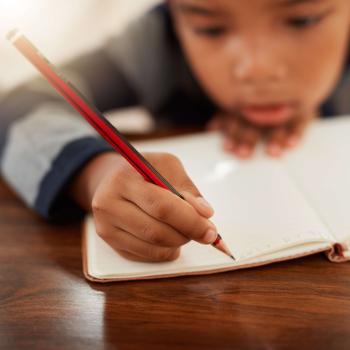
Family Message Journals Teach Many Purposes for Writing
This lesson encourages children to explore authentic reasons for writing by writing messages to their family in a family message journal.
Launching Family Message Journals
Grades
K - 2
|
Lesson Plan
|
Standard Lesson
Launching Family Message Journals
This lesson introduces Family Message Journals—a teacher-tested tool for encouraging family involvement and supporting writing to reflect and to learn.
Writing Reports in Kindergarten? Yes!
Grades
K
|
Lesson Plan
|
Unit
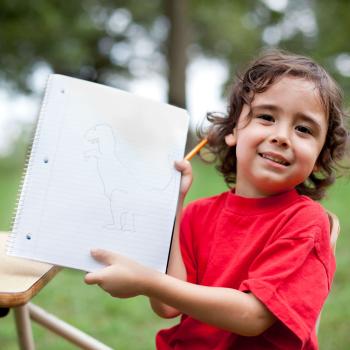
Writing Reports in Kindergarten? Yes!
This lesson encourages young students to see themselves as writers with a message to convey. Three types of reports are provided to show what kindergartners and emergent writers can do.

Have Journal...Will Travel: Promoting Family Involvement in Literacy
Grades
K - 2
|
Lesson Plan
|
Recurring Lesson
Have Journal...Will Travel: Promoting Family Involvement in Literacy
Students build positive memories of literacy activities when they take turns taking home a book bag stuffed with items to encourage literacy interactions with their families.
Biographies: Creating Timelines of a Life
Grades
3 - 5
|
Lesson Plan
|
Standard Lesson
Biographies: Creating Timelines of a Life
In this lesson students explore a number of sources to create a biographical timeline about a selected person. Students collaboratively research and resolve conflicting information they find during their investigation.

Listen, Look, and Learn: An Information-Gathering Process
Grades
K - 2
|
Lesson Plan
|
Minilesson
Listen, Look, and Learn: An Information-Gathering Process

After listening to and discussing the story Score One for the Sloths, primary students research the sloth. Students use a variety of resources, including an information wheel graphic organizer.
Writing and Assessing an Autobiographical Incident
Grades
3 - 5
|
Lesson Plan
|
Unit
Writing and Assessing an Autobiographical Incident
Students build upon their knowledge of biographies to write their own autobiographical incident. After going through a process of revision, they use a rubric to assess their work.
Rosa Parks was born on this day in 1913.
Grades
K - 12
|
Calendar Activity
|
Historical Figure & Event
Rosa Parks was born on this day in 1913.
Rosa Parks was committed to the struggle for social justice and human rights until her death, inspiring millions of people around the world. Today, we celebrate her!
ReadAcrossAmerica
Grades
K - 12
|
Calendar Activity
|
Literacy-Related Event
Read Across America Day: Celebrate a Nation of Diverse Readers

Bring the celebration of reading and literacy into your classroom, library, school, and home all year long.
Fact Fragment Frenzy
Grades
1 - 6
|
Student Interactive
|
Inquiry & Analysis
Fact Fragment Frenzy

Fact Fragment Frenzy provides elementary students with an online model for finding facts in nonfiction text, then invites students to find facts in five sample passages.
Stapleless Book
Grades
K - 12
|
Student Interactive
|
Writing & Publishing Prose
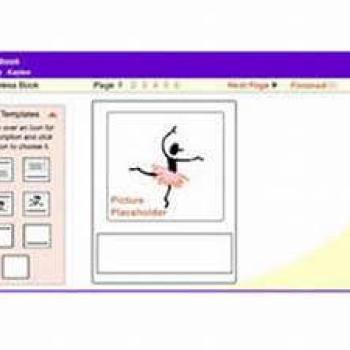
Stapleless Book

The Stapleless Book can be used for taking notes while reading, making picture books, collecting facts, or creating vocabulary booklets . . . the possibilities are endless!
Bio Cube
Grades
3 - 12
|
Student Interactive
|
Organizing & Summarizing
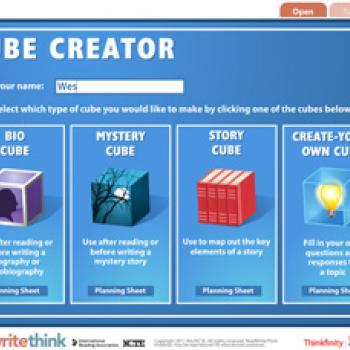
Bio Cube

Bio Cube is a useful summarizing tool that helps students identify and list key elements about a person for a biography or autobiography.
Trading Card Creator
Grades
3 - 12
|
Student Interactive
|
Organizing & Summarizing
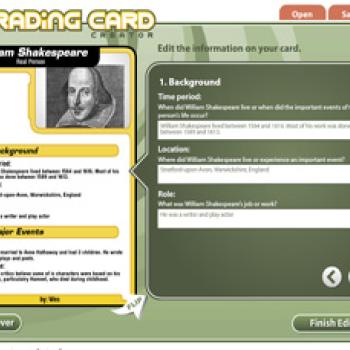
Trading Card Creator

This tool provides a fun and useful way to explore a variety of topics such as a character in a book, a person or place from history, or even a physical object. An excellent tool to for summarizing or as a prewriting exercise for original stories.
Power of Picture Books, The: Using Content Area Literature in Middle School
Grades
5 - 9
|
Professional Library
|
Book
Power of Picture Books, The: Using Content Area Literature in Middle School
Featuring descriptions and activities for fifty exceptional titles, Mary Jo Fresch and Peggy Harkins offer a wealth of ideas for harnessing the power of picture books to improve reading and writing in the content areas.
Reading for Learning: Using Discipline-Based Texts to Build Content Knowledge
Grades
5 - 10
|
Professional Library
|
Book
Reading for Learning: Using Discipline-Based Texts to Build Content Knowledge
Heather Lattimer provides practical, classroom-tested approaches to helping students access and critically respond to content-based texts.
Teaching YA Lit through Differentiated Instruction
Grades
9 - 12
|
Professional Library
|
Book
Teaching YA Lit through Differentiated Instruction
Authors Susan L. Groenke and Lisa Scherff offer suggestions for incorporating YA lit into the high school curriculum.
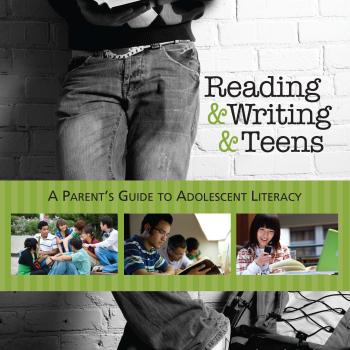
Reading & Writing & Teens: A Parent's Guide to Adolescent Literacy
Grades
6 - 12
|
Professional Library
|
Book
Reading & Writing & Teens: A Parent's Guide to Adolescent Literacy
Offering advice from a host of experts in adolescent literacy, this book helps answer real questions from parents across the country about how to best support their teens as readers and writers.
Technology That Powers Up Learning
Grades
5 - 8
|
Professional Library
|
Journal
Technology That Powers Up Learning
By designing lessons to activate prior knowledge and linking these activities to reading and writing, teachers found that students were more engaged, that they learned more material more quickly, and that they more willingly incorporated reading into their lives.
Grades
9 - 12
|
Professional Library
|
Book
Tim O'Brien in the Classroom: "This too is true: Stories can save us"
As part of the NCTE High School Literature Series, Tim O'Brien in the Classroom focuses on opportunities for classroom discussion and writing assignments, including lessons, open-ended prompts, and student writing samples.
A Failure of the Imagination
Grades
8 - 12
|
Professional Library
|
Journal
A Failure of the Imagination
This article discusses the imaginative activities and assignments that teachers often assign that violate the text around which the lesson is focused and that mislead students about its meaning.

Pagination

  • First page « First
  • Previous page ‹‹
  • Page 1
  • Page 2
  • Page 3
  • Page 4
  • Page 5
  • Page 6
  • Page 7
  • Page 8
  • Page 9
  • …
  • Next page ››
  • Last page Last »

Explore Resources by Grade

  • KindergartenK
  • 1-2
  • 3-4
  • 5-6
  • 7-8
  • 9-10
  • 11-12

RWT-logo

Powered By NCTE

Footer 1 Menu

  • About
  • Classroom Resources
  • Professional Development
  • Collections
  • Contact Us

Footer 2 Menu

  • National Council of Teachers of English
  • Contribute to RWT
  • FAQs
  • Join NCTE

Footer 3 Menu

  • Legal Notices
  • Privacy Policy
  • Promotional Materials
  • Site Demonstrations

Want to stay in touch with RWT and NCTE? Sign up here!

  • Facebook
  • Twitter
  • Instagram
  • Pinterest
  • YouTube

© NCTE 2026. All rights reserved