Students will think this lesson should make the headlines when they finish researching Ernie Pyle's work in preparation for writing their own news articles.

In the Style of Ernie Pyle: Reporting on World War II
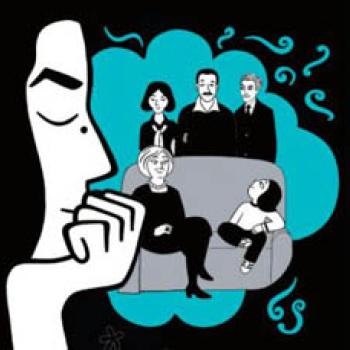
Pictures Tell the Story: Improving Comprehension With Persepolis
Students get the big picture of the Middle East when they read and analyze Marjane Satrapi's graphic novel Persepolis.

Get the GIST: A Summarizing Strategy for Any Content Area
GIST is a summarizing technique that can be used in any content area. Students will learn and apply the strategy while doing online research and writing activities on news stories.

ABC Bookmaking Builds Vocabulary in the Content Areas
V is for vocabulary. A content area unit provides the theme for a specialized ABC book, as students select, research, define, and illustrate a word for each alphabet letter.
Exploring Disability Using Multimedia and the B-D-A Reading Strategy
History takes on new dimensions in this interactive multimedia lesson that emphasizes the B-D-A approach to research as students investigate the experiences of people with disabilities since the early 1800s.
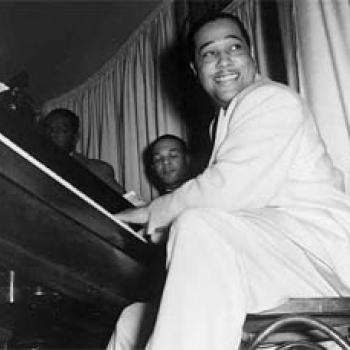
A Harlem Renaissance Retrospective: Connecting Art, Music, Dance, and Poetry
Students research, evaluate, and synthesize information about the Harlem Renaissance from varied resources, create an exhibit, and highlight connections across disciplines (i.e., art, music, and poetry) using a Venn diagram.
Wartime Poetry: Working With Similes
Students analyze a photograph, brainstorm words to describe the characters' senses and feelings, work in pairs to describe a character's experience, and create a poem using their ideas and similes.

Biography Project: Research and Class Presentation
Classroom biography study offers high-interest reading with a purpose, as students begin with inquiry and research, summarize and organize their information, and prepare oral presentations to share with the class.
Guided Comprehension: Monitoring Using the INSERT Technique
Based on the Guided Comprehension Model developed by Maureen McLaughlin and Mary Beth Allen, this lesson introduces students to the comprehension strategy of monitoring.
Guided Comprehension: Self-Questioning Using Question-Answer Relationships
Guided comprehension moves your students beyond decoding to become independent readers. Generating questions to guide reading helps readers make connections with the text and supports independent comprehension of new texts.
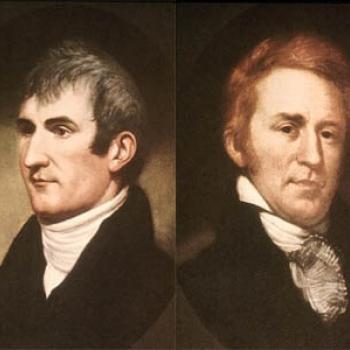
Exploring Cross-Age Tutoring Activities With Lewis and Clark
Interaction and adventure draws high school and elementary school students together as they analyze stories about the Lewis and Clark expedition.

Analyzing the Purpose and Meaning of Political Cartoons
It is important for students to know how to evaluate messages conveyed by the news media. Exploration of the artistic techniques used in political cartoons leads to critical questioning.

Diagram It! Identifying, Comparing, and Writing About Nonfiction Texts
Students compare the traits fact and fiction by using a Venn diagram to compare fiction and nonfiction books about Native Americans.

Using Historical Fiction to Learn About the Civil War
Students in grades 4 and 5 discuss inferential comprehension and visualization as they use a think-aloud questioning strategy to develop a deeper understanding of a historical novel.
Vote for Me! Developing, Writing, and Evaluating Persuasive Speeches
This lesson encourages students in grades 4 and 5 to think critically and write persuasively by focusing on preparing, presenting, and evaluating mock campaign speeches.

Developing Students' Critical Thinking Skills Through Whole-Class Dialogue
"That's my position and I'm sticking to it!" After reading about the Korean War, students will take a position in response to an open-ended question, support their position, and evaluate that support.

Pourquoi Stories: Creating Tales to Tell Why
Where did the stars come from? What makes lightning and thunder? Pourquoi tales are narratives developed by various cultures around the world to explain natural phenomena. Students study three tales and learn about their cultures of origin, then work cooperatively to write and present an original pourquoi tale.
Timelines and Texts: Motivating Students to Read Nonfiction
In an effort to help motivate students to read nonfiction, students are challenged to use a timeline to help them name the year when certain products were invented.

Bringing Economic Vocabulary to Life Through Video Posters
Imagine if vocabulary could come alive with the click of a button! Students create video posters to demonstrate knowledge of new economics vocabulary.
Beyond History Books: Researching With Twin Texts and Technology
Students in grades 4–8 activate prior knowledge and research information about a historic event through fiction and nonfiction literature and exploration of relevant websites.