John Golden offers middle and high school teachers a practical guide for using documentary film in the classroom to improve students' reading, writing, and thinking skills.
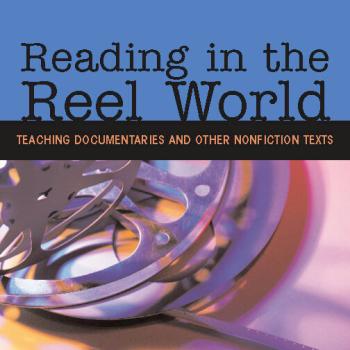
Reading in the Reel World: Teaching Documentaries and Other Nonfiction Texts
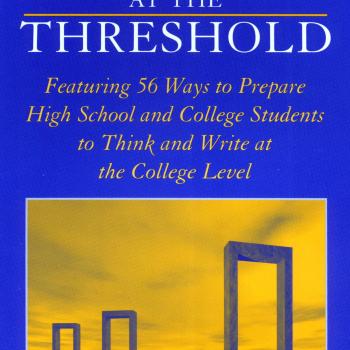
Writing at the Threshold: Featuring 56 Ways to Prepare High School and College Students to Think and Write at the College Level
This book offers both an eloquent philosophy of composition instruction and a useful set of classroom-tested teaching ideas distilled from the author's 28 years of teaching writing.
What Is "College-Level" Writing?
Just what defines "college-level" writing? This collection seeks to engage this essential question with care, patience, and pragmatism.
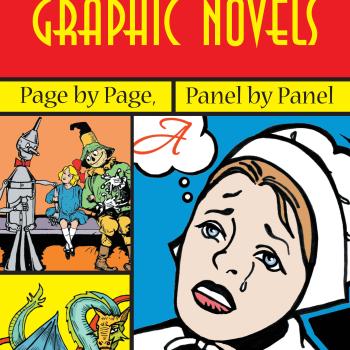
Building Literacy Connections with Graphic Novels: Page by Page, Panel by Panel
This collection of essays by classroom teachers demonstrates how to pair graphic novels with classic literature (including both canonical and YA lit).
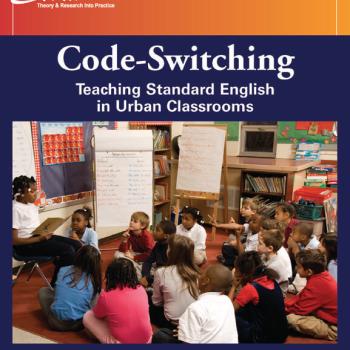
Code-Switching: Teaching Standard English in Urban Classrooms
Wheeler and Swords show K–6 teachers how to use code-switching and contrastive analysis to help students use prior knowledge to translate vernacular English into Standard English.
Reading in the Dark: Using Film as a Tool in the English Classroom
In this practical guide, John Golden makes direct links between film and literary study by addressing reading strategies (e.g., predicting, responding, questioning) and key aspects of textual analysis.
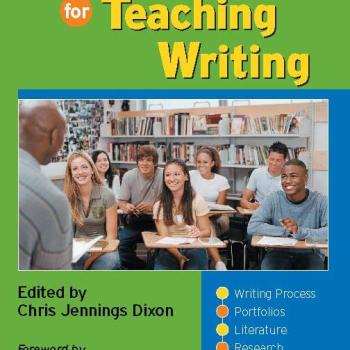
Lesson Plans for Teaching Writing
This collection of lesson plans will help prepare high school and college students for college-level writing.
Engaging Grammar: Practical Advice for Real Classrooms
Amy Benjamin challenges the idea of "skill and drill" grammar instruction, and Tom Oliva provides a teacher's journal chronicling how the concepts in this book can work in a real classroom.
Grammar Alive!: A Guide for Teachers
NCTE's Assembly for the Teaching of English Grammar provides this much-needed resource for teachers who wonder what to do about grammar—how to teach it, how to apply it, how to learn what they themselves were never taught.
Wondrous Words: Writers and Writing in the Elementary Classroom
Katie Wood Ray explains in practical terms the theoretical underpinnings of how elementary and middle school students learn to write from their reading.
The Writing Workshop: Working through the Hard Parts (And They're All Hard Parts)
A practical, comprehensive, and illuminating guide for both new and experienced teachers that confronts the challenges of the writing workshop head-on.

Swish! Pow! Whack! Teaching Onomatopoeia Through Sports Poetry
Students explore poetry about sports, looking closely at the use of onomatopoeia. After viewing a segment of a sporting event, students create their own onomatopoeic sports poems.

Tracking the Ways Writers Develop Heroes and Villains
Everyone knows that Star Wars character Darth Vader is a villain. This lesson asks students to explore how they know such things about heroes and villains they encounter in texts.