Classroom Resources > Resource Type
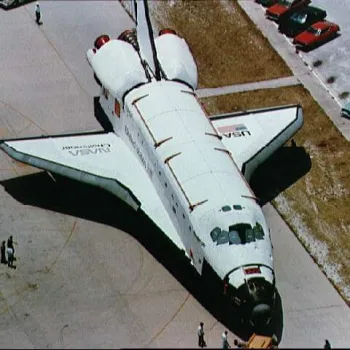
In 1986, the Space Shuttle Challenger exploded, 74 seconds after launching from the Kennedy Space Center in Florida. All seven astronauts on board were killed, including teacher Christa MacAuliffe, who was to have been the first U.S. civilian in space. Hundreds of millions of people around the world watched the explosion on television.
Students will not have first-hand memories of the explosion, so interviewing an adult about the events of that day is one way for students to obtain information while learning more about how to conduct an interview.
In groups or individually, have students interview a parent or another adult on the subject; then, have them share the information they gather. In particular, ask students to consider whether everyone interviewed had the same memories and recollections. Encourage them to hypothesize about possible reasons for the differences.
Alternatively, ask middle or high school students to write about their own recollections of the Columbia disaster from February 2003. Have students compare accounts of the events, again noting differences and possible reasons for those differences. Have students research another historic event from multiple perspectives.
The New York Times Learning Network provides this article about the Challenger disaster that appeared in the Times on the day of the explosion.
This official NASA website offers archives of the 135 space shuttle missions and the ongoing missions of the international space station. Details on space shuttle missions include original launch details, the history of human space flight, and the construction of the shuttle.
This Kennedy Space Center website provides historical information related to the space shuttle program, including mission facts and a reference manual.
In August 2007, Barbara Morgan, who trained with Christa MacAuliffe as back-up candidate for NASA's Teacher in Space program, finally travelled in space as part of the mission STS-118 crew. Read about the mission and Morgan's experience at this NASA page.
NASA and the Challenger Center for Space Science Education shares a video of astronaut-educator Ricky Arnold performing one of McAuliffe’s experiments aboard the International Space Station.
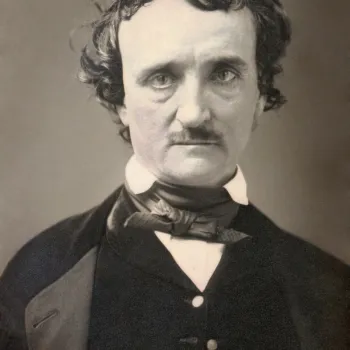
On this date in 1845, American author Edgar Allan Poe's famously eerie poem "The Raven" was published in New York Evening Mirror. Equally praised and panned by critics of the day, the poem made Poe famous throughout America and England. "The Raven" was parodied soon after its publication, and continues to be an important cultural and literary text even today.
Read aloud the opening stanzas of Poe's "The Raven." Ask students to note their reactions to the language of the poem as they listen. The following questions can guide their written or verbal responses:
- What are their impressions of the poem's speaker and atmosphere?
- What emotions/feelings might the speaker be experiencing?
- How can a reader tell the mood and tone of the poem, after hearing only the opening stanzas?
- What words, images, and details does Poe provide to create this effect?
After students have finished, glean from their responses the words and phrases Poe uses to create the voice of the speaker, a figure who is obviously not "normal." Continue reading the poem, or distribute copies to students for their own reading. Discuss the changes or development of students' first impressions as "The Raven" continues.
This interactive study resource offers students a chance to explore the devices of alliteration, assonance, and internal rhyme, as well as learn challenging vocabulary and allusions within "The Raven."
Gathered by the Edgar Allan Poe Society of Baltimore, this site includes the text of Poe's stories and poems. The homepage offers biographical information, details on geographic locations important to Poe, and other articles.
This PBS website offers biographical information about Edgar Allan Poe and links to related Internet resources.
Written by Edgar Allan Poe, this essay discusses his views on writing and explains the logic and reasoning behind the choices he made in "The Raven," citing specific references and examples from the poem.
Hear classic readings of Poe’s "The Raven" by Vincent Price, James Earl Jones, Christopher Walken, Neil Gaiman, Stan Lee and more!
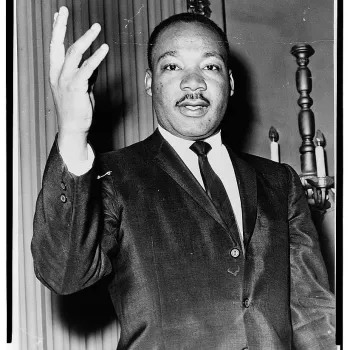
Martin Luther King, Jr. was born on this day in 1929. Following in his father's and grandfather's footsteps, he was ordained as a minister in 1948. Dr. King became one of the most important leaders of the civil rights movement in the U.S., advocating a nonviolent approach to fighting for equal rights. He received the Nobel Peace Prize in 1964. Dr. King was assassinated in Memphis, Tennessee, on April 4, 1968.
Listen to a recording of Martin Luther King's I Have a Dream speech and discuss the meaning of his words. This I Have a Dream lesson plan includes numerous discussion questions that can help guide class exploration of the speech.
Once students understand this speech, ask them how they would convey Dr. King's vision and character without using words. To get started, look at these photographs of Dr. King and historical events in which he was involved. What messages are these photographs communicating?
Using the photographs as a model, have students work in groups or as a class to create a mural that depicts their understanding of Dr. King's vision of peace. The Art and Activism unit from Tolerance.org includes lessons on planning, creating, and sharing murals that you can use to get your own class mural underway. Once the project is complete, display murals throughout your school to honor Dr. King.
On January 20, 2014, people throughout the world will honor the life of Martin Luther King, Jr. Find out how to participate by making this holiday "a day ON, not a day off."
The Seattle Times provides an extensive collection of resources including articles, transcripts, photos, and information about the holiday in King's honor.
Visitors to this extremely comprehensive site will find a chronology, encyclopedia, biography, videos, lesson plans, and more.
This PBS American Experience website offers a collection of resources, including information on Dr. King's philosophy of non-violence, video clips, and an interactive map of U.S. Civil Rights hot spots. Also featured is a teacher's guide to the Citizen King documentary.
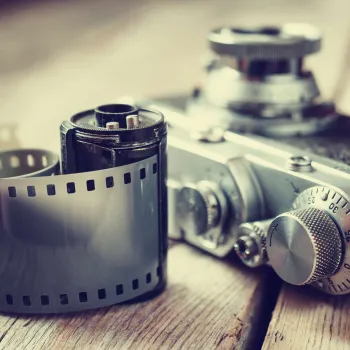
On October 14, 1884, George Eastman received his patent for photographic film. This led the way for the production of the first small hand-held box camera, bringing photography out of the exclusive realm of the professional photographer. Today, the possibilities for bringing photography into the classroom are nearly boundless.
Explore photography and digital imaging to discover new ways of combining visual and textual composition to enhance every area of the curriculum. Create a scrapbook that includes photographs, video clips, audio clips, and student work. First, choose a format based on your available resources. Examples include PowerPoint presentations, websites, videotapes, or booklets. Keep a camera/video equipment handy, and include some of these in your project:
- Students' favorite pieces of writing or artwork, including descriptive captions or commentary
- Videotapes of songs or skits
- Students' descriptions of what they are learning, via a video or audio interview or in writing
- Photomontages of units studied
Work on your scrapbook throughout the year, and then present it to parents at an end-of-year party!
This U.S. Patent and Trademark Office press release describes how George Eastman's invention allowed for the mass production of cameras.
This article from Education World offers two dozen different classroom activities that make use of a digital camera.
On this page of educational technologist Kathy Schrock's website, she provides links to resource pages specifically designed to enhance the use of cameras and other devices in the K–12 classroom.
This lesson plan from Scholastic is designed for grades 6–12.
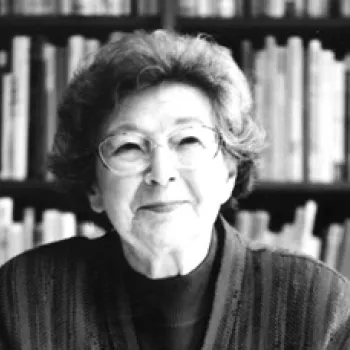
Beverly Cleary was born on April 12, 1916, and has authored dozens of books since her first, Henry Huggins, in 1950. Cleary has won many awards for her writing, including the 1984 Newbery Medal for Dear Mr. Henshaw, and the Newbery Honor for Ramona and Her Father and Ramona Quimby, Age 8. The Beverly Cleary Sculpture Garden honors Cleary's contributions to children's literature and highlights her most memorable characters.
Create your own classroom tribute to Beverly Cleary while students practice persuasive writing. Have students select the characters they believe are the most memorable from Cleary's book and then write short persuasive essays to explain their choices.
- After students select their characters, have them use the Character Map section of the interactive Story Mapping tool to brainstorm ideas about why the characters are memorable.
- Have students use their Character Maps and notes to write persuasive essays that explain why the characters are special and important. Students can map out their essays using the online Persuasion Map.
- Next, provide a variety of art materials (clay, paint, pencils, markers) and have students create sculptures, drawings, or paintings of the characters.
Display students' artwork and writing together in a classroom, cafeteria, or hallway as a Beverly Cleary tribute.
Read about this tribute to Beverly Cleary, and view a gallery of sculpture images.
HarperCollins provides this website for teachers and children. Resources include trivia, author and character information, a booklist, and printable teaching guides.
In this video interview, provided by Reading Rockets, Beverly Cleary discusses how she became a celebrated author.
This brief, kid-friendly biography is accompanied by a list of Cleary's books.
Check out the movie starring Joey King as Ramona Quimby and Selena Gomez as Beezus Quimby.
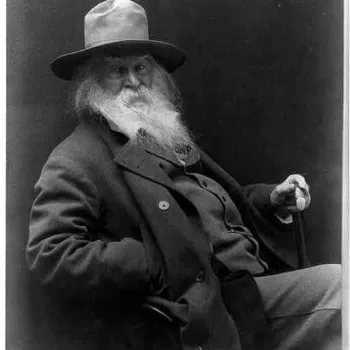
American poet Walt Whitman was born on Long Island, New York, in 1819. In 1855, Whitman self-published the first edition of Leaves of Grass. Several editions of the book, which celebrated its 150th anniversary in 2005, were later published. Whitman wrote other important works, including "O Captain! My Captain!," which was a response to the death of Abraham Lincoln. Walt Whitman died on March 26, 1892.
Invite your students to write and illustrate their own children's stories, using the text from a Walt Whitman poem. First, have students read Whitman's poem "Miracles," from Leaves of Grass. Next, share the picture book Nothing But Miracles, which features the text of the poem. Have a volunteer read the story to the class, and then as a group, discuss the book's illustrations.
- How do the illustrations enhance the telling of this story?
- How did the experience of reading this poem with illustrations differ from reading it without illustration?
After discussing the book, have students select Whitman poems that would make good children's picture books. Have students create illustrations for the poems they select and then publish their books. Share the books with a primary classroom in your school or district. You might also have your students create digital storybooks to share on the Web.
The Academy of American Poets presents this profile of Whitman, with a bibliography of his works and links to selected poems.
The Walt Whitman Archive offers manuscripts, correspondence, biographical information, images, and other resources related to Walt Whitman and his work.
This Learner.org feature provides brief biographical information about Walt Whitman. Also included is a video clip of Out of the Cradle Endlessly Rocking, along with links to related resources.
The Library of Congress offers this online exhibit exploring Whitman's life and work through primary source materials, such as journals, letters, photographs, and etchings.
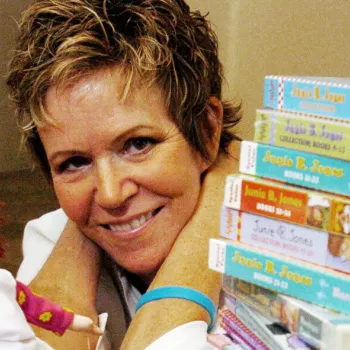
Barbara Park was the author of over two dozen Junie B. Jones books, as well as several stories for older readers including My Mother Got Married and Other Disasters, Skinnybones, and Mick Harte Was Here. Park's books have earned a number of awards, including many children's choice and parents' choice award lists. Titles in the Junie B. Jones series continue to appear on bestseller lists.
Have your students write their own "Junie B." stories after brainstorming issues they've experienced during the school year.
- First have the group make a list of the Junie B. adventures in the books they've read (e.g., cheating, school play, losing a tooth).
- Then ask students to brainstorm a second list of ideas that would make interesting stories.
- Students can work alone or in pairs to write their stories, using one of the ideas from the class list. Have students use the interactive story map to plan their writing.
- After all stories have been completed, have each student or pair share their story with the class.
Have students turn their stories into books, with illustrations, and then work with your school or community librarian to create a library display of all the new stories.
A website for kids, including a bibliography of Junie B. books, interactive and printable activities, as well as information about Park's books for older children.
This Random House resource provides summaries and teacher's guides for all of the Junie B. Jones books. Links are provided to other book series resources as well.
This resource contains a brief biography of Park as well as some notes and a list of some of her Junie B. Jones books.
This site provides links to resources about Barbara Park, including an interview in which she describes her experiences in writing the books.

Often considered to be the first true copyright law, the Statute of Anne drastically changed how copyright worked in Great Britain by naming the author, rather than the publisher, as the holder of the copyright. Later, this law had great influence on emerging U.S. copyright laws. In fact, the first U.S. copyright law began with "An Act for the Encouragement of Learning" —words taken directly from the Statute of Anne.
Create a students' copyright guide as a handy reference for classroom work or the library.
- First, form small groups to conduct web research on copyright issues. Assign groups topics, such as the types of copyright protected works, fair use, court cases, public domain works, and so on. Students can use the interactive Notetaker to help them organize their research findings.
- After students have finished their research, have each group compile their information into a page for the class booklet, by visiting the Printing Press tool and selecting the "flyer" option.
- Collect each group's work and create a booklet. Be sure to create a table of contents and index for the guide, as well as a cover page. Keep a copy of the guide in the library and near photocopying machines.
- You might also want to reproduce the guide and distribute a copy to each student.
This site offers teachers information on copyright issues, including a list of links to online copyright references.
This website provides resources for children, as well as parents and teachers. Included are copyright basics, a quiz, and more.
This series on copyright law and the fair use exceptions is aimed at teachers and covers things such as applying the law to new technologies and district liability.
This student interactive, from CyberBee, answers many questions students may have about intellectual property rights and fair use.
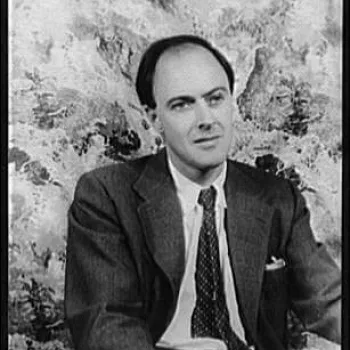
Roald Dahl was born in Wales on September 13th, 1916. His first book for children, The Gremlins, was written in 1943. Following this, Dahl went on to write several of the most popular children's stories of the 20th century, including Charlie and the Chocolate Factory, Matilda, and James and the Giant Peach. Several of Dahl's stories, including these, have been made into motion pictures. He died in 1990.
Have students adapt a Roald Dahl story to picture book format. Read a Roald Dahl story that has been adapted to film (Charlie and the Chocolate Factory, James and the Giant Peach, Matilda) Then show students the film. Have students use the Interactive Venn Diagram or Mobile App to compare and contrast the two versions, focusing on the images in the movie:
- How were the two experiences different? Similar?
- How did the images in the movie affect the story? Your enjoyment of the story?
- What are the benefits of reading a story? Of watching a film?
- How is the story in the movie different? Why do you think this is so?
Then have students create original picture book versions of the story. Afterwards, have students share their books and then add them to the classroom library.
This site offers news, contests, quizzes, activity ideas, and more to help readers around the world celebrate Roald Dahl Day on his birthday.
Roald Dahl's official site features a biography, photo gallery, author interview, online activities, and more.
The BBC Wales provides this audio interview with Roald Dahl’s relatives and related biographical information.
This site offers activites, suggestions, and ideas for celebrating Roald Dahl Month all September long!
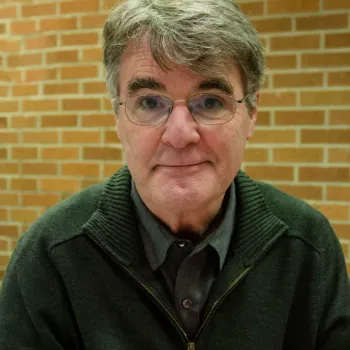
Born in England, Macaulay came to the U.S. as a child. He received his B.A. in architecture in 1969 and has since worked as an illustrator, graphic designer, and author. Macaulay is well known for his books on architectural structures, which feature a unique genre blend of fact and fiction. He has earned a number of awards for his work, including the Caldecott Medal (for Black and White) and Honor Awards (for Castle and Cathedral).
Invite your students to explore Macaulay's use of multiple genres by composing original multigenre texts using the interactive Multigenre Mapper. This tool invites students to create original works that include one drawing and three texts.
- First, select a topic for students' multigenre texts. You might choose a subject you are currently studying in science or social studies or let students choose their own topics.
- Next, ask students to brainstorm a set of subtopics and possible writing genres (for example, poetry, recipes, fables, journal entries, or news articles) that could be used to share the subtopics with readers in an engaging way.
- Have students use the Multigenre Mapper Planning Sheet to write rough drafts of their texts.
- Finally, have students visit the interactive Multigenre Mapper to compose their texts online.
Have students print and share their final texts, explaining how they blended different genres to create their final products. Create a display or index of the texts so that other students in the school can enjoy them. Include some of Macaulay's texts to tie the project together.
David Macaulay's site at Houghton Mifflin offers information about Macaulay and his books. Highlights include a video of Macaulay at work, animated demonstrations and slide shows of parts of his books, and the text of some of his speeches and interviews.
This workshop from the "Write in the Middle" program focuses on multigenre writing and includes a related reading from the NCTE journal Language Arts.
PBS offers this companion site to their series Building Big, hosted by David Macaulay. The site offers an Educator's Guide to the series, as well as several interactive features.