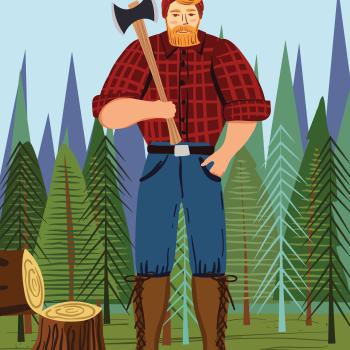
Groups of students read and discuss American folklore stories, each group reading a different story. Using a jigsaw strategy, the groups compare character traits and main plot points of the stories. A diverse selection of American folk tales is used for this lesson, which is adaptable to any text set.
American Folklore: A Jigsaw Character Study

Graphing Plot and Character in a Novel
In this graphical mapping project, students assign a value to the events, characters, and themes in a novel and think about how the elements of the story are all interconnected.

Once Upon a Time Rethought: Writing Fractured Fairy Tales
Students read and analyze fairy tales, identifying their common elements. They then write their own "fractured" fairy tales by changing one of the literary elements found in the original.
Using Picture Books to Teach Plot Development and Conflict Resolution
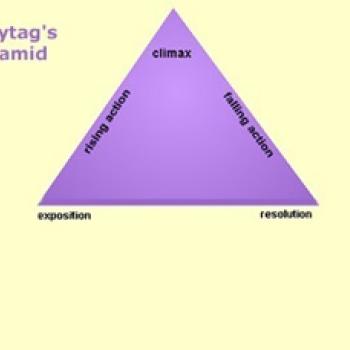
Students read picture books to explore the concepts of plot development and conflict resolution. They first learn about the connections between reading and writing, and then revise their own writing.

A Genre Study of Letters With The Jolly Postman
Students read The Jolly Postman, in which a postman delivers letters to storybook characters. They explore different types of mail and categorize letters from the book and their own mail.
Unwinding A Circular Plot: Prediction Strategies in Reading and Writing
Students use graphic organizers to explore plot in circular stories while focusing on prediction and sequencing. After exploring the features of circular plot stories, students write their own stories.
Comics in the Classroom as an Introduction to Narrative Structure
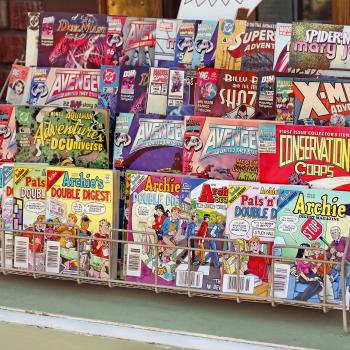
This lesson uses comic strip frames to define plot and reinforce the structure that underlies a narrative. Students finish by writing their own original narratives.

Authoring an Epilogue That Helps Our Characters Live On
This lesson uses One Green Apple by Eve Bunting to teach how characters change across a text. It will also guide students through writing an epilogue to accompany their independent book.

Designing Elements of Story in Little Blue and Little Yellow
In this series of four lessons, students will explore key elements of design in Little Blue and
Little Yellow to learn about setting, character relationships, and plot.

Book Report Alternative: The Elements of Fiction
Students identify the elements of fiction in a book they have read and share summaries of them by writing and illustrating their own mini-book.
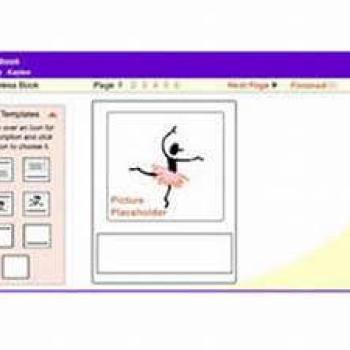
Stapleless Book
The Stapleless Book can be used for taking notes while reading, making picture books, collecting facts, or creating vocabulary booklets . . . the possibilities are endless!
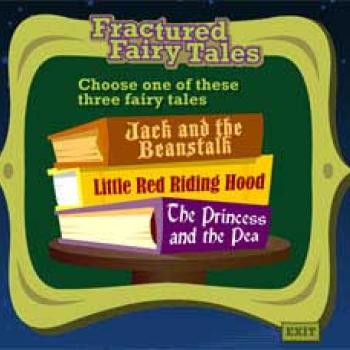
Fractured Fairy Tales
The Fractured Fairy Tale tool encourages students to create their own fractured fairy tales.

Narrative Pyramid
After students read a short story or chapter of a novel, they can use the Narrative Pyramid to reflect on key ideas and details.

Sequence of Events Chart
This graphic organizer helps students see the sequential or cause-effect relationships between multiple events in a text.
Depend on the Text! How to Create Text-Dependent Questions
Teachers need to create text-dependent questions to elicit close reading. When answering these questions, students learn to reread and think deeply about the text.

Promote Deep Thinking! How to Choose a Complex Text
Complex texts promote deep thinking and critical analysis by students. Through close reading of a complex text, students' independent reading abilities also increase.

Get Close to Think Deeply: Creating Primary-Level Close Readings
Close readings allow primary students to engage with complex texts. Through repeated reading, students build a deep understanding of the text and critical thinking skills.

Developing Inferential Comprehension Through DL-TA and Discussion Webs
Students will love unwrapping this lesson about before, during, and after reading activities based on Margaree King Mitchell's book, Grandaddy's Gift.
Charting Characters for a More Complete Understanding of the Story
Character Perspective Charting allows students to compare multiple characters and their points of view to better understand a story.
Guided Comprehension: Evaluating Using the Meeting of the Minds Technique
Based on the Guided Comprehension Model developed by Maureen McLaughlin and Mary Beth Allen, this lesson introduces students to the strategy of evaluating, using the Meeting of the Minds technique.