After critiquing a list of conventions for the genre, students read, view, or listen to a classic
mystery, and then produce a mystery of their own, reflecting on the purposeful ways in which
they adhered to or altered the genre conventions.

Investigating Genre: The Case of the Classic Detective Story

Tragic Love: Introducing Shakespeare's Romeo and Juliet
This lesson introduces students to William Shakespeare's Romeo and Juliet by having them examine the ideas of tragedy and tragic love by connecting the story to their own lives.

Joining the Conversation about Young Adult Literature
Students create a persuasive case calling for the adoption of a particular young adult literature title into their school's language arts curriculum by writing letters or speeches.

Preparing for the Journey: An Introduction to the Hero Myth
Students read a variety of picture books that contain elements of the hero's journey and use an online interactive tool to analyze the stories.

Exploring Irony in the Conclusion of All Quiet on the Western Front
After reading All Quiet on the Western Front, students discuss the novel's ironic ending, then compose alternate titles and endings for the book, and design new book covers.

Blogtopia: Blogging about Your Own Utopia
Students work together to create their own utopias, using blogs as the primary source of publication.

From Dr. Seuss to Jonathan Swift: Exploring the History behind the Satire
Use Dr. Seuss's The Butter Battle Book as an accessible introduction to satire. Reading, discussing, and researching this picture book paves the way for a deeper understanding of Gulliver's Travels.

Exploring Satire with Shrek
The movie Shrek introduces the satirical techniques of exaggeration, incongruity, reversal, and parody. Students brainstorm fairy tale characteristics, identify satirical techniques, then create their own satirical versions of fairy tales.

Short Story Fair: Responding to Short Stories in Multiple Media and Genres
In this activity, students read short stories and create presentations in multiple media to share in a Short Story Fair. At the fair, students explore and respond to the displays.

Freedom of Speech and Automatic Language: Examining the Pledge of Allegiance
This lesson has students explore freedom of speech by examining the Pledge of Allegiance from a historical and personal perspective and in relationship to fictional situations in novels.

Paying Attention to Technology: Exploring a Fictional Technology
Students complete a short survey to establish their beliefs about technology. They compare their opinions to the ideas in a novel that depicts technology (such as 1984 or Fahrenheit 451).

Weaving the Multigenre Web
Students analyze the elements of a novel in many different genres and then hyperlink these pieces together on student-constructed Websites.

Unlocking the Underlying Symbolism and Themes of a Dramatic Work
This lesson plan invites students to consider characters from Lorraine Hansberry's A Raisin in the Sun. Students explore a selected character and write poems about objects associated with that character.

Ghosts and Fear in Language Arts: Exploring the Ways Writers Scare Readers
Students analyze scary stories to 'break the code" of horror writing and use what they learn to write scary stories of their own.

Teaching the Epic through Ghost Stories
In this lesson, students connect to the oral tradition of epic storytellers by sharing their own oral tales of ghosts and goblins and monsters.
Understanding Irony
This lesson enables students to define the three types of irony, identify and differentiate among examples of the types of irony, and demonstrate their understanding of each type.

"Blind Date with a Book": Creating Lifelong Readers
This multi-lesson learning project encourages students to read engaging texts at their grade level and also works to promote habitual, independent reading in all students.
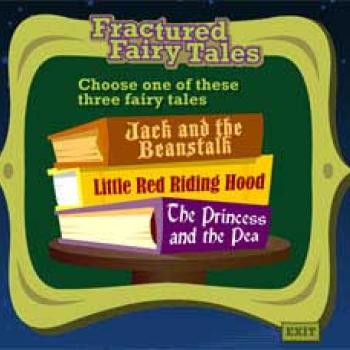
Fractured Fairy Tales
The Fractured Fairy Tale tool encourages students to create their own fractured fairy tales.
Reading Shakespeare with Young Adults
Dakin explores different methods for getting students engaged--and excited--about Shakespeare's plays as they learn to construct meaning from the texts' sixteenth-century language and connect it to their twenty-first-century lives.
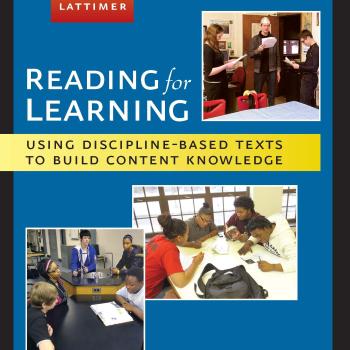
Reading for Learning: Using Discipline-Based Texts to Build Content Knowledge
Heather Lattimer provides practical, classroom-tested approaches to helping students access and critically respond to content-based texts.