ReadWriteThink - Powered by NCTE
  • About
  • Classroom Resources
    • Lesson Plans
    • Teaching Comics
    • Teaching With Primary Resources
    • Calendar
    • Printouts
    • Student Interactives
  • Collections
    • Assessment
    • Authors
    • Booklists
    • Media Literacy
    • Poetry
    • Primary Sources
    • Writing
  • Professional Development
    • Strategy Guides
    • Professional Library
    • Meetings & Events
  • Join NCTE
  • Contact Us
  • About
  • Classroom Resources
    • Lesson Plans
    • Teaching Comics
    • Teaching With Primary Resources
    • Calendar
    • Printouts
    • Student Interactives
  • Collections
    • Assessment
    • Authors
    • Booklists
    • Media Literacy
    • Poetry
    • Primary Sources
    • Writing
  • Professional Development
    • Strategy Guides
    • Professional Library
    • Meetings & Events
  • Join NCTE
  • Contact Us
  • Facebook
  • Twitter
  • Instagram
  • Pinterest
  • YouTube

Breadcrumb

  1. Home

Type

  • Classroom Resources
  • Professional Development

Grades

  • 1 (4)
  • 2 (4)
  • 3 (11)
  • 4 (12)
  • 5 (16)
  • 6 (27)
  • 7 (30)
  • 8 (30)
  • 9 (34)
  • 10 (33)
  • K (4)
  • (-) 11 (31)

Learning Objectives

  • (-) reading genres (31)
  • collaboration (52)
  • Comprehension (58)
  • critical thinking (134)
  • digital literacy (16)
  • Grammar (1)
  • inquiry / research (78)
  • listening (25)
  • literary analysis (45)
  • Media literacy (45)
  • metacognition (66)
  • multicultural awareness (33)
  • multimodal literacy (39)
  • oral communication (38)
  • phonological awareness (1)
  • print awareness (13)
  • reading fluency (2)
  • Spelling (1)
  • text structure / story structure (18)
  • Vocabulary (13)
  • writing genres (42)
  • writing process (29)

Topics

  • (-) social studies / history
  • arts
  • careers
  • community
  • drama
  • ELL
  • Family
  • fiction
  • Mathematics
  • nonfiction
  • poetry
  • science
  • seasons / holidays
  • social action
  • Sports
  • STEM
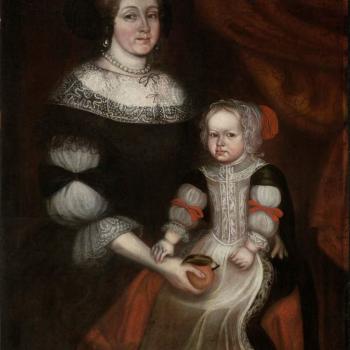
An Exploration of <em>The Crucible</em> through Seventeenth-Century Portraits
Grades
9 - 12
|
Lesson Plan
|
Standard Lesson
An Exploration of The Crucible through Seventeenth-Century Portraits
In this lesson, students incorporate analyses of characters from The Crucible with examinations of original seventeenth-century portraits of Puritans to create a visual portrait of the character. The project culminates in a "Portrait Gallery Walk" where students present and defend their artwork.
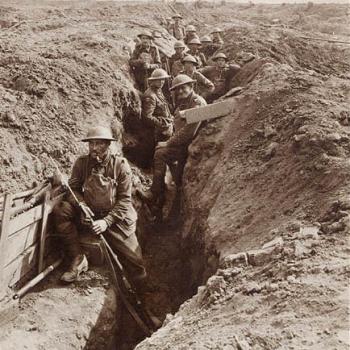
Exploring Irony in the Conclusion of <em>All Quiet on the Western Front</em>
Grades
9 - 12
|
Lesson Plan
|
Standard Lesson
Exploring Irony in the Conclusion of All Quiet on the Western Front

After reading All Quiet on the Western Front, students discuss the novel's ironic ending, then compose alternate titles and endings for the book, and design new book covers.
Exploring Audience and Purpose with a Single Issue
Grades
9 - 12
|
Lesson Plan
|
Standard Lesson
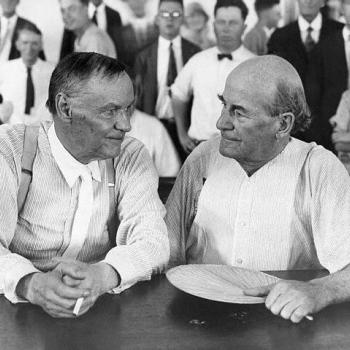
Exploring Audience and Purpose with a Single Issue
Students explore the concepts of audience and purpose by focusing on an issue that divided Americans in 1925, the debate of evolution versus creationism raised by the Scopes Monkey Trial.
Grades
9 - 12
|
Lesson Plan
|
Standard Lesson
From Dr. Seuss to Jonathan Swift: Exploring the History behind the Satire
Use Dr. Seuss's The Butter Battle Book as an accessible introduction to satire. Reading, discussing, and researching this picture book paves the way for a deeper understanding of Gulliver's Travels.
Analyzing the Stylistic Choices of Political Cartoonists
Grades
9 - 12
|
Lesson Plan
|
Standard Lesson
Analyzing the Stylistic Choices of Political Cartoonists
Students explore and analyze the techniques that political (or editorial) cartoonists use and draw conclusions about why the cartoonists choose those techniques to communicate their messages.
Using Student-Centered Comprehension Strategies with Elie Wiesel's <em>Night</em>
Grades
9 - 12
|
Lesson Plan
|
Unit
Using Student-Centered Comprehension Strategies with Elie Wiesel's Night
Working in small groups, students read and discuss Elie Wiesel's memoir Night and then take turns assuming the "teacher" role, as the class works with four different comprehension strategies.

Grades
9 - 12
|
Lesson Plan
|
Standard Lesson
Freedom of Speech and Automatic Language: Examining the Pledge of Allegiance
This lesson has students explore freedom of speech by examining the Pledge of Allegiance from a historical and personal perspective and in relationship to fictional situations in novels.
Grades
9 - 12
|
Lesson Plan
|
Standard Lesson
Renaissance Humanism in Hamlet and The Birth of Venus
After reading Shakespeare's Hamlet, students identify, analyze, and explain how elements in Botticelli's painting Birth of Venus and examples from the play illustrate the philosophy of Renaissance Humanism.
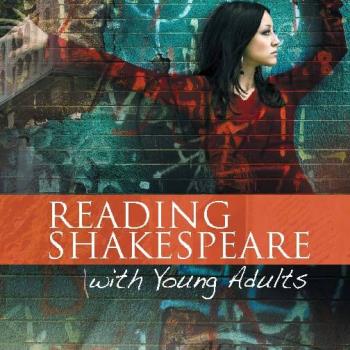
Reading Shakespeare with Young Adults
Grades
9 - 12
|
Professional Library
|
Book
Reading Shakespeare with Young Adults
Dakin explores different methods for getting students engaged--and excited--about Shakespeare's plays as they learn to construct meaning from the texts' sixteenth-century language and connect it to their twenty-first-century lives.

Grades
6 - 12
|
Nonfiction Roundup

With each annual crop of new nonfiction, teens have the opportunity to discover and explore new disciplinary worlds. Tune in to hear about an array of recently-published nonfiction titles that will engage teens in learning about history, science, economics, and medicine. You'll hear about junk food and advertising, the atomic bomb and civil rights, bird watching and volcanoes – books written in a variety of formats for a variety of teen readers.

Grades
6 - 12
|
International Books for Teens

In this episode, you'll hear about books in a range of genres that give teens insight into the social and political conditions young people face around the globe. Together they offer a sustained look at war, poverty, and the struggle for human rights, but they also speak volumes about ordinary people and their capacity for hope and resilience.

Grades
6 - 12
|
Life Stories

Life stories are books that trace defining moments and turning points in people's lives. By exploring how individuals overcome obstacles and discover their passions – or fall prey to mistakes and inner demons – life stories illustrate how human beings navigate the complexities of living. Tune in to hear about a variety of life stories – some that celebrate lives of success, others that mourn lives tragically lost or wasted.

Grades
6 - 12
|
A Conversation with Patricia McCormick

While all YA authors focus in some way on the process of young people coming of age, very few do so with the depth and versatility you will find in the novels of Patricia McCormick. Tune in to hear the story behind her latest novel, Never Fall Down, the harrowing and heartbreaking account of Khmer Rouge survivor Arn Chorn-Pond.

Grades
6 - 12
|
Teens as Change Agents

Books featuring teens as change agents call attention to young people who are lobbying for change in their schools, communities, and the larger world. Tune in to hear about teens who work for change by participating in political campaigns, defying social hierarchies, and even going to war.

Grades
6 - 12
|
Exploring History

Hear about an amazing range of books that explore history, including works of fiction as well as non-fiction, biographies, graphic novels, verse novels, and investigative journalism.

Grades
6 - 12
|
A Conversation with Walter Dean Myers

If there is anyone in the world of children's and young adult literature who could be described as a living legend, it's Walter Dean Myers. Tune in to hear how his own experiences as a reader have shaped his approach to storytelling, what he seeks to offer young people through his writing, and the thinking behind a select handful of his novels – books that incorporate concepts as varied as magical realism, the social contract, and oral histories with our nation's war veterans.

Supporting Student Comprehension in Content Area Reading
Grades
Grades
6 - 12
|
Strategy Guide
Supporting Student Comprehension in Content Area Reading
In this strategy guide, you'll learn a few simple, yet powerful, techniques to encourage students to use peer talk and writing to enhance their understanding of content area texts.

Preparing Students for Success with Reading in the Content Areas
Grades
Grades
6 - 12
|
Strategy Guide
Preparing Students for Success with Reading in the Content Areas
In this strategy guide, you'll learn how to determine the level and type of support you need to provide students based on careful preparation as a content area expert.

Reading with Purpose in the Content Areas
Grades
Grades
6 - 12
|
Strategy Guide
Reading with Purpose in the Content Areas
In this strategy guide, you'll learn how to organize students and instruction to establish a sense of purpose for reading authentic texts in the content areas.

Reading in the content areas
Grades
Grades
K - 12
|
Strategy Guide Series
Reading in the Content Areas
In this Strategy Guide Series, you'll get information and ideas about teaching reading in the different content areas.

Pagination

  • Page 1
  • Page 2
  • Next page ››
  • Last page Last »

Explore Resources by Grade

  • KindergartenK
  • 1-2
  • 3-4
  • 5-6
  • 7-8
  • 9-10
  • 11-12

RWT-logo

Powered By NCTE

Footer 1 Menu

  • About
  • Classroom Resources
  • Professional Development
  • Collections
  • Contact Us

Footer 2 Menu

  • National Council of Teachers of English
  • Contribute to RWT
  • FAQs
  • Join NCTE

Footer 3 Menu

  • Legal Notices
  • Privacy Policy
  • Promotional Materials
  • Site Demonstrations

Want to stay in touch with RWT and NCTE? Sign up here!

  • Facebook
  • Twitter
  • Instagram
  • Pinterest
  • YouTube

© NCTE 2026. All rights reserved