Students increase their media literacy skills by critically examining and revising junk mail.
Investigating Junk Mail: Negotiating Critical Literacy at the Mailbox

Authentic Persuasive Writing to Promote Summer Reading
Turn summer reading lists from a teacher-centered requirement to a student-driven exploration by asking students to create brochures and flyers that suggest books to explore during the summer months.

Imagine That! Playing with Genre through Newspapers and Short Stories
Students identify genre characteristics for short stories and newspaper articles then practice both genres by turning a short story into a news article and an article into a short story.
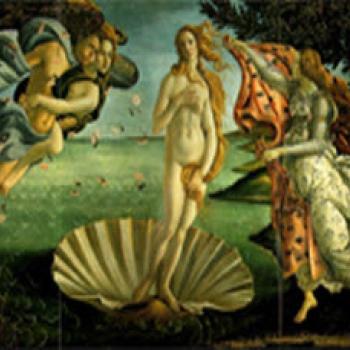
Renaissance Humanism in Hamlet and The Birth of Venus
After reading Shakespeare's Hamlet, students identify, analyze, and explain how elements in Botticelli's painting Birth of Venus and examples from the play illustrate the philosophy of Renaissance Humanism.

Book Report Alternative: Writing Resumes for Characters in Historical Fiction
Students write resumes for historical fiction characters. They first explore help wanted ads to see what employers want, and then draft resumes for the characters they've chosen.

Reading and Analyzing Multigenre Texts
Students develop a definition of multigenre texts by exploring multigenre picture books. They brainstorm what it takes to read these texts successfully and discuss strategies needed to comprehend the texts.
Unwinding A Circular Plot: Prediction Strategies in Reading and Writing
Students use graphic organizers to explore plot in circular stories while focusing on prediction and sequencing. After exploring the features of circular plot stories, students write their own stories.

Animal Study: From Fiction to Facts
Students listen to fiction and nonfiction read-alouds and explore selected Websites to identify factual information about animals. This lesson focuses on ants, but can be adapted to any animal.

Weaving the Multigenre Web
Students analyze the elements of a novel in many different genres and then hyperlink these pieces together on student-constructed Websites.
Unlocking the Underlying Symbolism and Themes of a Dramatic Work
This lesson plan invites students to consider characters from Lorraine Hansberry's A Raisin in the Sun. Students explore a selected character and write poems about objects associated with that character.

Childhood Remembrances: Life and Art Intersect in Nikki Giovanni's "Nikki-Rosa"
Students explore what Carol Jago calls the place "where life and art intersect" by reading Nikki Giovanni's poem, "Nikki-Rosa," and then writing about childhood memories of their own.

Genre Study: A Collaborative Approach
Students explore multiple genres through genre studies. They record evidence of genre characteristics on bookmarks as they read, and finish by giving a book review for their classmates.

Living the Dream: 100 Acts of Kindness
This lesson provides the "action piece" for any study of Dr. Martin Luther King, Jr. In this project, students participate in Dr. King's dream by doing 100 acts of kindness.

Is a Sentence a Poem?
Students use their own poetry to analyze syntax, imagery, and meaning in a one-sentence poem by a canonical author to decide what makes it a poem.
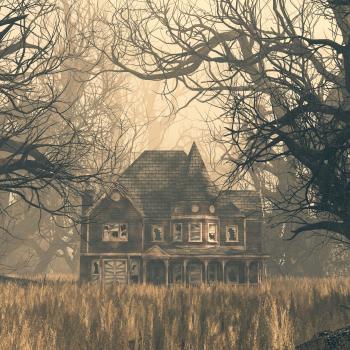
Ghosts and Fear in Language Arts: Exploring the Ways Writers Scare Readers
Students analyze scary stories to 'break the code" of horror writing and use what they learn to write scary stories of their own.

Teaching the Epic through Ghost Stories
In this lesson, students connect to the oral tradition of epic storytellers by sharing their own oral tales of ghosts and goblins and monsters.
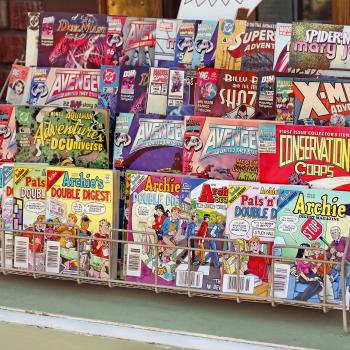
Comics in the Classroom as an Introduction to Narrative Structure
This lesson uses comic strip frames to define plot and reinforce the structure that underlies a narrative. Students finish by writing their own original narratives.

Comic Makeovers: Examining Race, Class, Ethnicity, and Gender in the Media
Students explore stereotypes in the media and representations of race, class, ethnicity, and gender by analyzing comics over a two-week period and then re-envisioning them with a "comic character makeover."
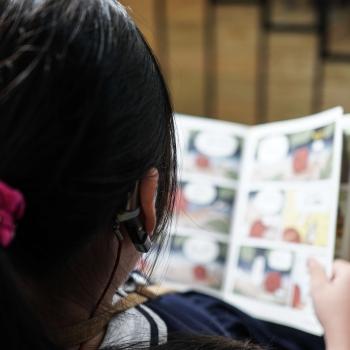
Comics in the Classroom as an Introduction to Genre Study
Multidimensional, challenging, and popular with students, comics provide an excellent way to introduce the concept of genres.

An Introduction to Julius Caesar Using Multiple-Perspective Universal Theme Analysis
This resource is an introduction to William Shakespeare's tragic play, The Tragedy of Julius Caesar, through the study of universal themes using multiple-perspective investigations of betrayal scenarios.