Students interview other students, choose significant life events, rate them, graph them, and write about one or more, in this activity that integrates mathematical graphing with writing.
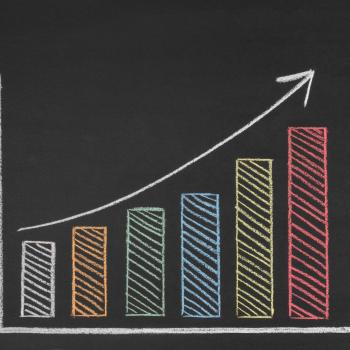
Bio-graph: Graphing Life Events
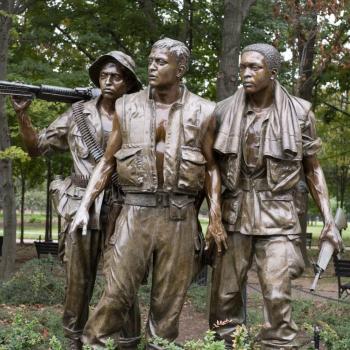
Love of War in Tim O'Brien's "How to Tell a True War Story"
Students explore the theme of love of war through texts on camaraderie among soldiers. They then compose a visual collage depicting their beliefs about the relationship between love and war.

Cultural Connections and Writing for Change
A little understanding can go a long way. After learning about difficulties that Palestinian youths face, students will write a letter to an official discussing these issues.

Wartime Poetry: Working With Similes
Students analyze a photograph, brainstorm words to describe the characters' senses and feelings, work in pairs to describe a character's experience, and create a poem using their ideas and similes.

The Houdini Box: What Did Houdini Hide? Writing Creative Endings
Students are encouraged to understand a book that the teacher reads aloud to create a new ending for it using the writing process.

The Magic of Three: Techniques for the Writer's Craft
Students learn to use tricolons—a writer's technique of putting words and phrases into groups of threes—to add rhythm and power to their writing.
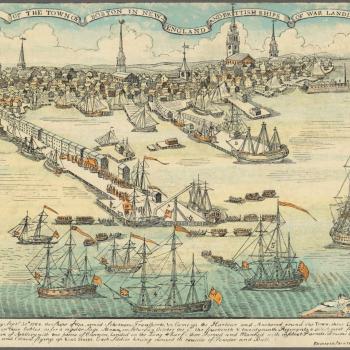
Learning About Research and Writing Using the American Revolution
Students across the board will get a kick out of researching a historical figure from the American Revolution to create an acrostic poem.

E-pals Around the World
With e-pals, students develop real-life writing and social experiences, learn the format of a friendly letter and parts of an e-mail message, and discover other cultures, languages, and geographic areas.
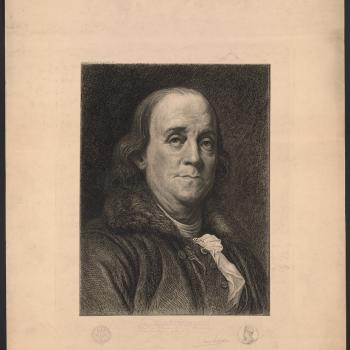
History Comes Alive: Developing Fluency and Comprehension Using Social Studies
Let the power of imagination and inference serve as a "time machine" to bring Benjamin Franklin into the classroom! History and science come to life in a dialogue with Franklin the inventor, developed through lesson activities that incorporate research, imagination, writing, visual arts, and drama.

Digital Reflections: Expressing Understanding of Content Through Photography
Striking images can leave lasting impressions on viewers. In this lesson, students make textselfworld connections to a nature- or science-related topic as they collaboratively design a multimedia presentation.
My Life/Your Life: A Look at Your Parents' Past
Past and present come together when students interview their parents and create a skit that compares their parents' experiences as middle schoolers with the students' own lives.

Play Ball! Encouraging Critical Thinking Through Baseball Questions
Cooperation and critical thinking are the name of the game as students use baseball facts they find online to create trivia questions for a class Jeopardy game.
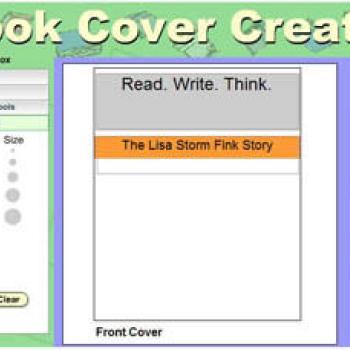
Book Cover Creator
The Book Cover Creator is designed to allow users to type and illustrate front book covers, front and back covers, and full dust jackets. Students can use the tool to create new covers for books that they read as well as to create covers for books they write individually or as a class.

Today is Benjamin Franklin's birthday.
Students discuss Benjamin Franklin's contributions to postal history, investigate the roles of the Postmaster General, and write letters to their classmates using the Letter Generator.

Gold was discovered in California in 1848.
Students read letters from the Gold Rush and follow up by writing an imaginary letter to a family member about their experience using the Letter Generator.

Write letters that make things happen!
In a small group or as individuals, students write letters related to a unit of study or particular topic they have studied.

Sally Ride, first American woman in space, was born in 1951.
After exploring information about Sally Ride on the StarKids Who's Who site, students write a letter using the Letter Generator to Dr. Ride's foundation, Sally Ride Science.

Commercial ice cream is first sold in the U.S. in 1786.
After finding advertisements from the past, students evaluate them and discuss how ads have changed over the years. Students then create an advertisement for a new flavor of ice cream.
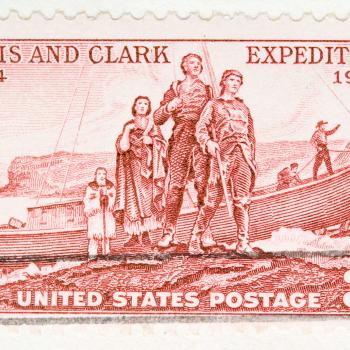
The Lewis and Clark Expedition reached the Pacific Ocean in 1805.
Students look at Kenneth Holder's paintings of the Lewis and Clark trail and transform their notes into a descriptive paragraph as if they were a member of the expedition.
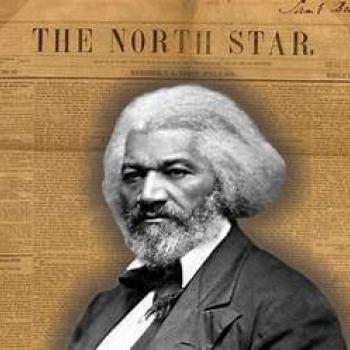
Frederick Douglass began publication of The North Star today in 1847.
Students read and discuss an editorial written by Frederick Douglass and then write the opening editorial for a contemporary publication devoted to a social cause important to them.