After students have read a book about the Holocaust, such as The Diary of Anne Frank or Night by Elie Wiesel, students will view Life is Beautiful and complete discussion questions to challenge their ability to analyze literature using film.
Life is Beautiful: Teaching the Holocaust through Film with Complementary Texts
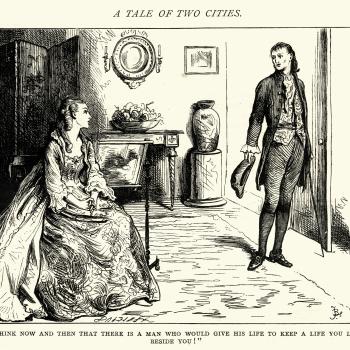
A Tale of a Few Text Messages: A Character Study of A Tale of Two Cities
Students use A Tale of Two Cities to explore relationships, plot points, character traits, and background by writing text messages between characters within the novel.

Glogging About Natural Disasters
After researching various natural disasters, students share their findings with each other using glogs, or through poster presentations.
Book Report Alternative: Glog That Book!
In this alternative book report, students identify the elements of fiction in books they have read by creating glogs, interactive multimedia posters, and then share their glogs.
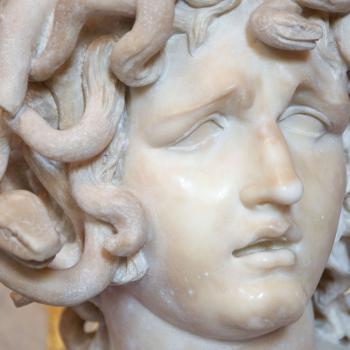
Digitally Telling the Story of Greek Figures
In this lesson students research Greek gods, heroes, and creatures and then share their findings through digital storytelling.
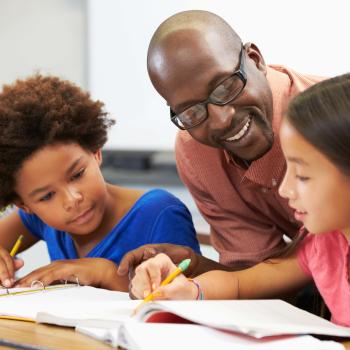
Authoring an Epilogue That Helps Our Characters Live On
This lesson uses One Green Apple by Eve Bunting to teach how characters change across a text. It will also guide students through writing an epilogue to accompany their independent book.
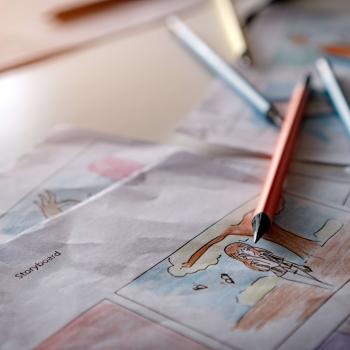
Storyboarding the Transformation from Dr. Jekyll into Mr. Hyde
Students imagine and storyboard their own vision of the transformation of Dr. Jekyll into Mr. Hyde and then evaluate movie portrayals.

What's the Purpose?: Examining a Cold Manipulation of Language
With a crafty pen, Truman Capote wrote In Cold Blood to create a new genre and shock his audience. This lesson will help students examine Capote's manipulation of language as he forces his audience to take a different look at murderers and consider a different definition of nonfiction. His unique purpose leaves students an interesting text to consider.

Designing Elements of Story in Little Blue and Little Yellow
In this series of four lessons, students will explore key elements of design in Little Blue and
Little Yellow to learn about setting, character relationships, and plot.

Literature Response in Primary Classrooms
This step-by-step literature response template for use with read-alouds asks students to use drawing and writing to respond to increasingly-complex prompts which address literary elements as well as personal connections.

Audience & Purpose: Evaluating Disney's Changes to the Hercules Myth
What drives changes to classic myths and fables? In this lesson students evaluate the changes Disney made to the myth of "Hercules" in order to achieve their audience and purpose.

Developing Citizenship Through Rhetorical Analysis
Students analyze rhetorical strategies in online editorials, building knowledge of strategies and awareness of local and national issues. This lesson teaches students connections between subject, writer, and audience and how rhetorical strategies are used in everyday writing.

Vocabulary Solutions: A Mixture of Science, Conversation, and Writing
In this lesson, students conduct a science experiment and later discuss the events of the lab during shared writing. Students explain the procedure in their own words and then revise to include content specific vocabulary. Finally, students reflect on new words added to their writing using the Trading Card Creator interactive.
Sharing Information about Careers with Infographics
Students research careers of their own choosing. Then using Piktochart, students create their own infographics to illustrate their research.

Highlighting Out-of-School Language Expertise with Pop Culture Dictionaries
Students compose dictionary entries for words and phrases from pop culture texts (e.g., television shows, movies, lyrics, YouTube videos), connecting their definitions to their personal use of the terms.
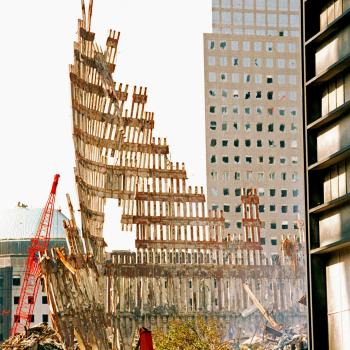
Huge Mistakes that Led to Catastrophe: Learning about Human-made Disasters throughout History
After researching various human-made disasters such as the BP oil spill, the sinking of the Titanic, and the Great Chicago Fire, students share their research in oral presentations. Then students pair up to compare and contrast their disasters using the Venn Diagram Student Interactive or the Venn diagram Mobile App.

Picture This: Using Instagram to Report
After taking a field trip that students document using mobile app Instagram, students become new reporters as they use the interactive Printing Press to tell about their experiences.
Summarizing with Haikus
Using the Haiku Poem App or the Haiku Poem Interactive, students summarize papers they have written using the traditional format of a haiku.

Learning about Clouds with Haikus
Using a mobile app or Interactive activity, students write haikus describing various types of clouds that they have studied.

Greetings from the Biomes of the World
To share their research on biomes, students use iPads to create postcards from all over the world.