Students are introduced to Old English and the poetic devices of alliteration, kenning, and compounding in preparation for reading the epic poem Beowulf.
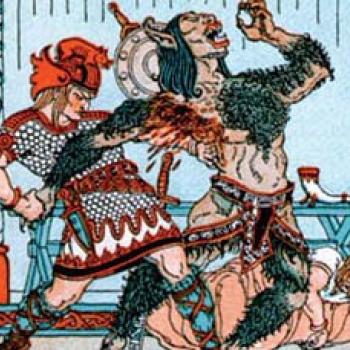
An Introduction to Beowulf: Language and Poetics
The History Behind Song Lyrics
Students research the items listed in the song "We Didn't Start the Fire" by Billy Joel, noting their historical relevance, and then document their findings using an online chart.
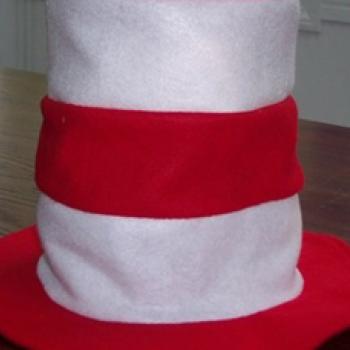
Id, Ego, and Superego in Dr. Seuss's The Cat in the Hat
Dr. Seuss's The Cat in the Hat is used as a primer to teach students how to analyze a literary work using plot, theme, characterization, and psychoanalytical criticism.

Literary Characters on Trial: Combining Persuasion and Literary Analysis
Students stage a mock trial for a literary character, with groups of students acting as the prosecution, defense, and jury.
Weather Detectives: Questioning the Fact and Folklore of Weather Sayings
Students adopt a skeptical stance and become weather detectives who ask "Why?" and "Why not?" as they investigate the history and validity of some common weather sayings.
The Year I Was Born: An Autobiographical Research Project
Students explore the year they were born through interviews and research, and then weave the details into a newspaper or booklet, written from another person's point of view.

Investigating the Holocaust: A Collaborative Inquiry Project
Students explore a variety of resources as they learn about the Holocaust. Working collaboratively, they investigate the materials, prepare oral responses, and produce a topic-based newspaper to complete their research.

Freedom of Speech and Automatic Language: Examining the Pledge of Allegiance
This lesson has students explore freedom of speech by examining the Pledge of Allegiance from a historical and personal perspective and in relationship to fictional situations in novels.

Propaganda Techniques in Literature and Online Political Ads
Students analyze propaganda techniques used in pieces of literature and political advertisements. They then look for propaganda in other media, such as print ads and commercials.
Looking for the History in Historical Fiction: An Epidemic for Reading
This lesson pairs the reading of historical fiction with nonfiction to introduce students to the large themes of history.

Voting! What's It All About?
Students explore a variety of sources for information about voting. They evaluate the information to determine if it is fact or opinion, and then create a graffiti wall about voting.
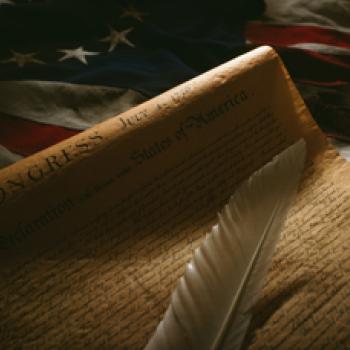
Exploring Free Speech and Persuasion with Nothing But the Truth
Students read Avi's Nothing But the Truth and examine the First Amendment and student rights, and then decide whether the rights of the novel's protagonist, Philip, are violated.
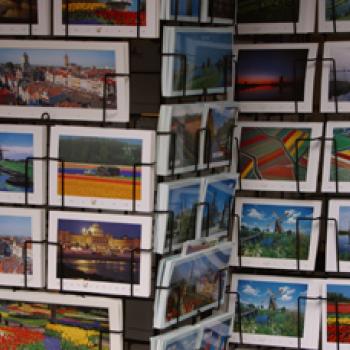
Mail Time! An Integrated Postcard and Geography Study
Children write and receive postcards from friends and family, and then chart where all those postcards come from on a classroom map.
Introducing the Venn Diagram in the Kindergarten Classroom
In this lesson, kindergarten students manipulate hula hoops and real objects, as they use Venn diagrams to problem solve, explore, and record information to share with others.

Creating Question and Answer Books through Guided Research
This series of activities is designed to teach research strategies. Students use KWL charts to guide their inquiry and publish their results in a collaborative question and answer book.

Paying Attention to Technology: Exploring a Fictional Technology
Students complete a short survey to establish their beliefs about technology. They compare their opinions to the ideas in a novel that depicts technology (such as 1984 or Fahrenheit 451).

Examining Transcendentalism through Popular Culture
Using excerpts from the works of Ralph Waldo Emerson and Henry David Thoreau, comics, and songs from different musical genres, students examine the characteristics of transcendentalism.
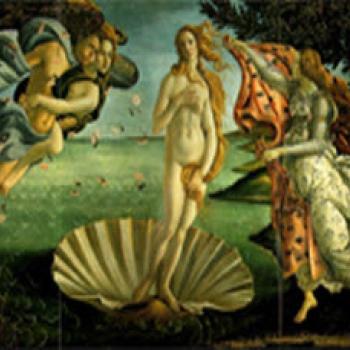
Renaissance Humanism in Hamlet and The Birth of Venus
After reading Shakespeare's Hamlet, students identify, analyze, and explain how elements in Botticelli's painting Birth of Venus and examples from the play illustrate the philosophy of Renaissance Humanism.

Book Report Alternative: Writing Resumes for Characters in Historical Fiction
Students write resumes for historical fiction characters. They first explore help wanted ads to see what employers want, and then draft resumes for the characters they've chosen.

Animal Study: From Fiction to Facts
Students listen to fiction and nonfiction read-alouds and explore selected Websites to identify factual information about animals. This lesson focuses on ants, but can be adapted to any animal.