This lesson has students explore freedom of speech by examining the Pledge of Allegiance from a historical and personal perspective and in relationship to fictional situations in novels.

Freedom of Speech and Automatic Language: Examining the Pledge of Allegiance

Propaganda Techniques in Literature and Online Political Ads
Students analyze propaganda techniques used in pieces of literature and political advertisements. They then look for propaganda in other media, such as print ads and commercials.
Looking for the History in Historical Fiction: An Epidemic for Reading
This lesson pairs the reading of historical fiction with nonfiction to introduce students to the large themes of history.

Voting! What's It All About?
Students explore a variety of sources for information about voting. They evaluate the information to determine if it is fact or opinion, and then create a graffiti wall about voting.
Exploring Free Speech and Persuasion with Nothing But the Truth
Students read Avi's Nothing But the Truth and examine the First Amendment and student rights, and then decide whether the rights of the novel's protagonist, Philip, are violated.
Mail Time! An Integrated Postcard and Geography Study
Children write and receive postcards from friends and family, and then chart where all those postcards come from on a classroom map.

Creating Classroom Community by Crafting Themed Poetry Collections
Students create poetry collections with the theme of "getting to know each other." They study and then write a variety of forms of poetry to include in their collections.
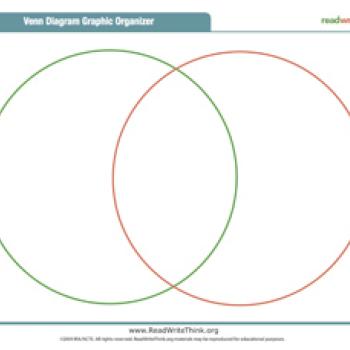
Introducing the Venn Diagram in the Kindergarten Classroom
In this lesson, kindergarten students manipulate hula hoops and real objects, as they use Venn diagrams to problem solve, explore, and record information to share with others.

Color Poems—Using the Five Senses to Guide Prewriting
Students use their five senses as a prewriting tool to guide their poetry writing as they compose free-form poems using imagery to describe a color.
Compiling Poetry Collections and a Working Definition of Poetry
This unit introduces students to a variety of poetic forms and elements, as they compile their own collections of poetry.

Examining Transcendentalism through Popular Culture
Using excerpts from the works of Ralph Waldo Emerson and Henry David Thoreau, comics, and songs from different musical genres, students examine the characteristics of transcendentalism.

Acrostic Poems: All About Me and My Favorite Things
Students create acrostic poems using their names and the names of things that are important to them.
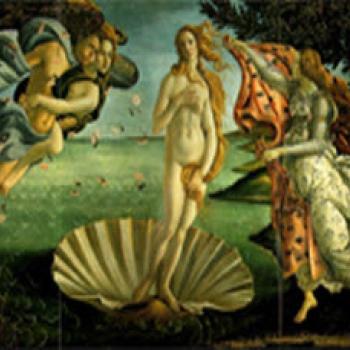
Renaissance Humanism in Hamlet and The Birth of Venus
After reading Shakespeare's Hamlet, students identify, analyze, and explain how elements in Botticelli's painting Birth of Venus and examples from the play illustrate the philosophy of Renaissance Humanism.

Book Report Alternative: Writing Resumes for Characters in Historical Fiction
Students write resumes for historical fiction characters. They first explore help wanted ads to see what employers want, and then draft resumes for the characters they've chosen.
Making Connections to Myth and Folktale: The Many Ways to Rainy Mountain
Following the model of N. Scott Momaday's The Way To Rainy Mountain, students write three-voice narratives based on Kiowa folktales, an interview with an Elder, and personal connections to theme.
Writing Poetry with Rebus and Rhyme
This lesson encourages students to use rhyming words to write rebus poetry modeled on rebus books, which substitute pictures for the words that young students cannot yet identify or decode.
Unlocking the Underlying Symbolism and Themes of a Dramatic Work
This lesson plan invites students to consider characters from Lorraine Hansberry's A Raisin in the Sun. Students explore a selected character and write poems about objects associated with that character.

Childhood Remembrances: Life and Art Intersect in Nikki Giovanni's "Nikki-Rosa"
Students explore what Carol Jago calls the place "where life and art intersect" by reading Nikki Giovanni's poem, "Nikki-Rosa," and then writing about childhood memories of their own.
Every Punctuation Mark Matters: A Minilesson on Semicolons
Students analyze stylistic choices and grammar use in authentic writing, focusing on the use of the semicolon in Martin Luther King Jr.'s "Letter from Birmingham Jail."
Living the Dream: 100 Acts of Kindness
This lesson provides the "action piece" for any study of Dr. Martin Luther King, Jr. In this project, students participate in Dr. King's dream by doing 100 acts of kindness.