After reading and analyzing short examples of travel writing and discussing conventions of the genre, students write their own travel articles.

Beyond "What I Did on Vacation": Exploring the Genre of Travel Writing

Designing Effective Poster Presentations
Students explore the genre of posters, review informational writing and visual design, and then design poster presentations to share in class or at a school-wide fair.

The Children's Picture Book Project
In this lesson students evaluate published children's picture storybooks. Students then plan, write, illustrate, and publish their own children's picture books.
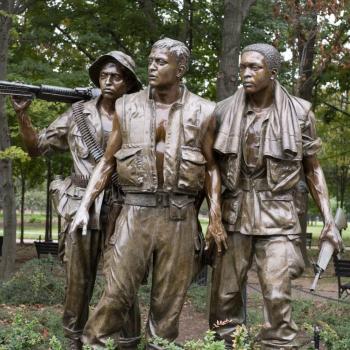
Love of War in Tim O'Brien's "How to Tell a True War Story"
Students explore the theme of love of war through texts on camaraderie among soldiers. They then compose a visual collage depicting their beliefs about the relationship between love and war.

Analyzing and Podcasting About Images of Oscar Wilde
Students analyze images of Oscar Wilde used to publicize his 1882 American lecture tour. They then compare a caricature to another researched image, sharing this analysis in a podcast.

BOOKMATCH: Scaffolding Independent Book Selection
This lesson will be turning heads and pages as students learn how to choose appropriate books for independent reading exercises and later evaluate their choices.

Latino Poetry Blog: Blogging as a Forum for Open Discussion
In this lesson, students use blogs to hold discussions about the effect of the factors of culture, history, and environment on Latino poetry.

Four Simple Steps to Small-Group Guided Writing
Students will go batty about the three writing strategies they learn in this lesson centered on Nicola Davies' Bat Loves the Night.

Earth Verse: Using Science in Poetry
Students shape up their reading, writing, and listening skills in this lesson by creating original diamante, acrostic, and shape poems about science.

Hoax or No Hoax? Strategies for Online Comprehension and Evaluation
Are your students easily fooled? You'll find out in this lesson in which students carefully and critically examine hoax websites to determine their validity.
Promoting Cultural Values Through Alphabet Books
C is for Culture in this lesson in which students research a culture different from their own and compile an alphabet book that showcases cultural symbols for each letter of the alphabet.

Semicolons and Swift: Analyzing Punctuation and Meaning
This lesson will help punctuation make a mark on students as they read Jonathan Swift's work and analyze his use of punctuation.
Thoughtshots Can Bring Your Characters to Life!
Students will walk a mile in the shoes of Solomon Singer as they learn how to use flashbacks, flash-aheads, and internal dialogue to develop realistic characters.
Make a Splash! Using Dramatic Experience to "Explode the Moment"
Students will have a blast as they use descriptive language to write about an "explosive" and dramatic moment in their lives.
Plotting a Plan to Improve Writing: Using Plot Scaffolds
Students really get into character in this lesson as they act out the parts of a script and analyze character motivations and dialogue.
Descriptive Video: Using Media Technology to Enhance Writing
Students will have a roaring good time when they watch a scene from The Lion King as a way to compare standard and described programming media.
Spelling in Parts: Learning to Spell, Write, and Read Polysyllabic Words
How do you spell polysyllabic? While this word may be a bit too advanced for students, they will definitely be spelling polysyllabic words using a strategy called Spelling in Parts.
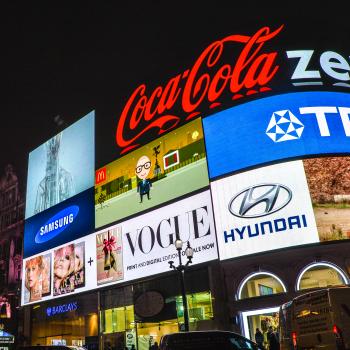
Exploring Consumerism Where Ads and Art Intersect
Students add up the effect of images and persuasive language to analyze the art and words in advertisements.
In the Style of Ernie Pyle: Reporting on World War II
Students will think this lesson should make the headlines when they finish researching Ernie Pyle's work in preparation for writing their own news articles.
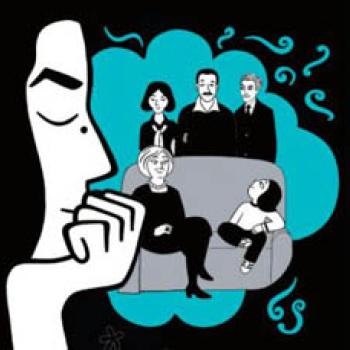
Pictures Tell the Story: Improving Comprehension With Persepolis
Students get the big picture of the Middle East when they read and analyze Marjane Satrapi's graphic novel Persepolis.