ReadWriteThink - Powered by NCTE
  • About
  • Classroom Resources
    • Lesson Plans
    • Teaching Comics
    • Teaching With Primary Resources
    • Calendar
    • Printouts
    • Student Interactives
  • Collections
    • Assessment
    • Authors
    • Booklists
    • Media Literacy
    • Poetry
    • Primary Sources
    • Writing
  • Professional Development
    • Strategy Guides
    • Professional Library
    • Meetings & Events
  • Join NCTE
  • Contact Us
  • About
  • Classroom Resources
    • Lesson Plans
    • Teaching Comics
    • Teaching With Primary Resources
    • Calendar
    • Printouts
    • Student Interactives
  • Collections
    • Assessment
    • Authors
    • Booklists
    • Media Literacy
    • Poetry
    • Primary Sources
    • Writing
  • Professional Development
    • Strategy Guides
    • Professional Library
    • Meetings & Events
  • Join NCTE
  • Contact Us
  • Facebook
  • Twitter
  • Instagram
  • Pinterest
  • YouTube

Breadcrumb

  1. Home

Type

  • Classroom Resources
  • Professional Development

Learning Objectives

  • collaboration (41)
  • Comprehension (53)
  • critical thinking (47)
  • digital literacy (9)
  • Grammar (14)
  • inquiry / research (22)
  • listening (24)
  • literary analysis (54)
  • Media literacy (5)
  • metacognition (19)
  • multicultural awareness (11)
  • multimodal literacy (19)
  • oral communication (23)
  • phonological awareness (9)
  • print awareness (6)
  • reading fluency (10)
  • reading genres (36)
  • Spelling (7)
  • text structure / story structure (25)
  • Vocabulary (29)
  • writing genres (69)
  • writing process (63)

Topics

  • arts
  • careers
  • community
  • drama
  • ELL
  • Family
  • fiction
  • Mathematics
  • Mobile Learning
  • nonfiction
  • poetry
  • science
  • seasons / holidays
  • social action
  • social studies / history
  • Sports
  • STEM
Found Poems/Parallel Poems
Grades
6 - 8
|
Lesson Plan
|
Standard Lesson
Found Poems/Parallel Poems
Students compose found and parallel poems based on a descriptive passage they have chosen from a piece of literature they are reading.
Grades
3 - 5
|
Lesson Plan
|
Standard Lesson
Color Poems—Using the Five Senses to Guide Prewriting
Students use their five senses as a prewriting tool to guide their poetry writing as they compose free-form poems using imagery to describe a color.
Theme Poems: Writing Extraordinary Poems About Ordinary Objects
Grades
3 - 5
|
Lesson Plan
|
Standard Lesson
Theme Poems: Writing Extraordinary Poems About Ordinary Objects

Students select a familiar object online, build a bank of words related to the object, and write theme poems that are printed and displayed in class.

Grades
9 - 12
|
Lesson Plan
|
Minilesson
Is a Sentence a Poem?
Students use their own poetry to analyze syntax, imagery, and meaning in a one-sentence poem by a canonical author to decide what makes it a poem.
Theme Poems: Using the Five Senses
Grades
1 - 3
|
Lesson Plan
|
Standard Lesson
Theme Poems: Using the Five Senses
Students write theme poems in a flash using the picture book Flicker Flash by Joan Bransfield Graham and the online, interactive Theme Poems tool.
Grades
1 - 2
|
Lesson Plan
|
Standard Lesson
Acrostic Poems: All About Me and My Favorite Things

Students create acrostic poems using their names and the names of things that are important to them.

Diamante Poems
Grades
K - 12
|
Student Interactive
|
Writing Poetry
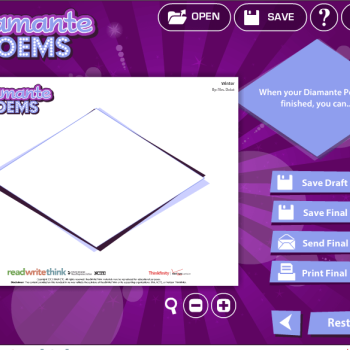
Diamante Poems

This online tool enables students to learn about and write diamante poems.
AcrosticPoem
Grades
K - 12
|
Student Interactive
|
Writing Poetry
Acrostic Poems

This online tool enables students to learn about and write acrostic poems. Elements of the writing process are also included.
Theme Poems
Grades
K - 5
|
Student Interactive
|
Writing Poetry
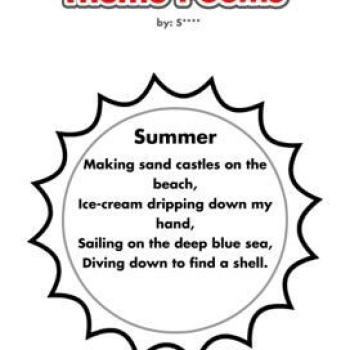
Theme Poems

Formerly known as Shape Poems, this online tool allows elementary students to write poems in various shapes.

Grades
K - 2
|
Lesson Plan
|
Standard Lesson
A Bear of a Poem: Composing and Performing Found Poetry
Children find favorite words, phrases, and sentences from familiar stories. Working together, they combine their words and phrases to create a poem. The poem is then shared as performance poetry.
Grades
3 - 5
|
Write Theme Poems

Use shape and theme poems, or poems that look like the things they describe, as a fun way to introduce children to poetry.
Haiku Poem Interactive
Grades
3 - 12
|
Student Interactive
|
Writing Poetry
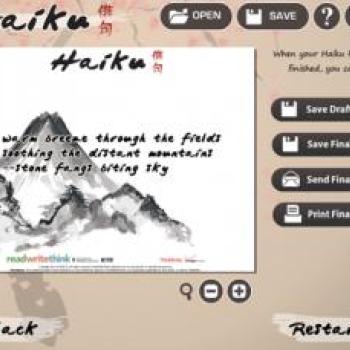
Haiku Poem Interactive
Students can learn about and write haiku using this interactive that guides them through the writing process.

Alliteration in Headline Poems
Grades
6 - 8
|
Lesson Plan
|
Minilesson
Alliteration in Headline Poems
Students will be introduced to the term alliteration and create a headline poem consisting of 25 words that contain at least three examples of alliteration.
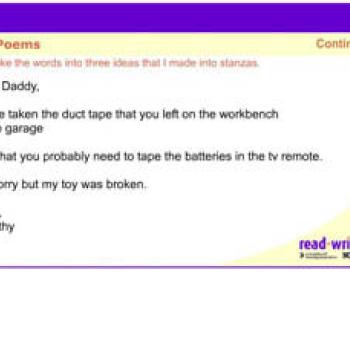
Letter Poem Creator
Grades
3 - 12
|
Student Interactive
|
Writing Poetry
Letter Poem Creator

The Letter Poem Creator provides an online model for the thought process involved in creating poems based upon a letter; then, students are invited to experiment with letter poems independently.

A Poem of Possibilities: Thinking about the Future
Grades
11 - 12
|
Lesson Plan
|
Standard Lesson
A Poem of Possibilities: Thinking about the Future
After reading John Updike's "Ex-Basketball Player," students write poems describing themselves five years in the future. The teacher takes the poems and mails them to students in five years.
Participate in Poem in Your Pocket Day!
Grades
3 - 6
|
Calendar Activity
|
Literacy-Related Event
Participate in Poem in Your Pocket Day!

Students select a poem and create a Stapleless Book using the interactive tool.

Composing Cinquain Poems with Basic Parts of Speech
Grades
3 - 5
|
Lesson Plan
|
Standard Lesson
Composing Cinquain Poems with Basic Parts of Speech
Reinforce student understanding of parts of speech through the analysis of sample cinquain poems followed by the creation of original cinquains.
Letter Poems Deliver: Experimenting with Line Breaks in Poetry Writing
Grades
3 - 5
|
Lesson Plan
|
Standard Lesson
Letter Poems Deliver: Experimenting with Line Breaks in Poetry Writing
Students explore letter poems and experiment with writing letters as poems, using the placement of line breaks to enhance rhythm, sound, meaning, and appearance.
Put That on the List: Independently Writing a Catalog Poem
Grades
9 - 12
|
Lesson Plan
|
Standard Lesson
Put That on the List: Independently Writing a Catalog Poem
In this follow-up to writing collaborative catalog poems, students write individual catalog poems about what really matters in their lives, based on Carver's poem "The Car."
Put That on the List: Collaboratively Writing a Catalog Poem
Grades
9 - 12
|
Lesson Plan
|
Standard Lesson
Put That on the List: Collaboratively Writing a Catalog Poem
Using the structure of a list poem, students combine creative expression with poetic techniques and language exploration in order to write group poems about what really matters in their lives.

Pagination

  • Page 1
  • Page 2
  • Page 3
  • Page 4
  • Page 5
  • Page 6
  • Page 7
  • Page 8
  • Next page ››
  • Last page Last »

Explore Resources by Grade

  • KindergartenK
  • 1-2
  • 3-4
  • 5-6
  • 7-8
  • 9-10
  • 11-12

RWT-logo

Powered By NCTE

Footer 1 Menu

  • About
  • Classroom Resources
  • Professional Development
  • Collections
  • Contact Us

Footer 2 Menu

  • National Council of Teachers of English
  • Contribute to RWT
  • FAQs
  • Join NCTE

Footer 3 Menu

  • Legal Notices
  • Privacy Policy
  • Promotional Materials
  • Site Demonstrations

Want to stay in touch with RWT and NCTE? Sign up here!

  • Facebook
  • Twitter
  • Instagram
  • Pinterest
  • YouTube

© NCTE 2025. All rights reserved