Students learn about alliteration, and then practice using alliteration in acrostic poems, tongue twisters, alphabet books, and number books.
Alliteration All Around
All About Alliteration: Responding to Literature Through a Poetry Link
Studied students stupefy! Students learn about alliteration by listening to an alliterative read-aloud and apply the knowledge they gain to the creation of their own poem and illustration.
Dynamite Diamante Poetry
Introduce gerunds and review nouns, adjectives, and verbs through engaging read-alouds; then apply these concepts through collaborative word-sorting and poetry-writing activities.
Building Classroom Community Through the Exploration of Acrostic Poetry
What do your students think about each other? Find out as you teach them the concepts of acrostic poems and challenge them to write an uplifting acrostic about a classmate.

Theme Poems: Writing Extraordinary Poems About Ordinary Objects
Students select a familiar object online, build a bank of words related to the object, and write theme poems that are printed and displayed in class.
Zines for Kids: Multigenre Texts About Media Icons
Special edition! Students use ReadWriteThink tools to create magazines about prominent figures using a variety of writing genres and styles.
Peace Poems and Picasso Doves: Literature, Art, Technology, and Poetry
Students apply think-aloud strategies to reading and to composition of artwork and poetry. They research symbols of peace as they prewrite, compose, and publish their poetry.

A Race With Grace: Sports Poetry in Motion
In this lesson, athletics, aesthetics, and poetics intersect in new ways as developing literacy learners experiment together with the forms of language.

Multipurpose Poetry: Introducing Science Concepts and Increasing Fluency
Creepy crawlers, hoppers, and fliers are the focus of this lesson in which students chorally read poems about insects and use the Internet to locate facts about their assigned insects.
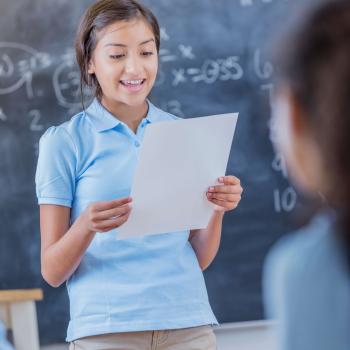
Poetry: A Feast to Form Fluent Readers
Students improve their reading fluency by selecting a poem online to perform in class.
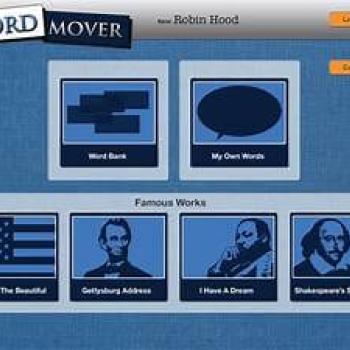
Word Mover
Word Mover allows children and teens to create "found poetry" by choosing from word banks and existing famous works; additionally, users can add new words to create a piece of poetry by moving/manipulating the text.
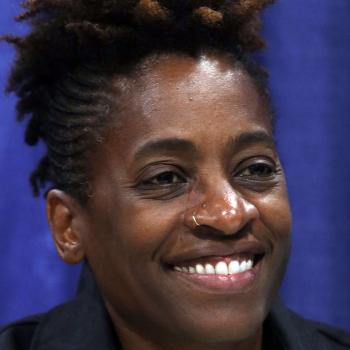
Author Jacqueline Woodson was born today.
Students read the poem "February 12, 1963" and write a poem to commemorate their own birthday.

Today is World Read Aloud Day.
Students celebrate the power of words by reading aloud to their classmates and spreading the word of global literacy to their friends and family.

Poet Nikki Giovanni was born in 1943.
Using the poem "My First Memory (of Librarians)," students connect memory, their senses, and the language of poetry.

Gwendolyn Brooks published Bronzeville Boys and Girls in 1956.
After students have read and discussed several poems from Brooks' collection, they create a poetry anthology for their own family, neighborhood, or classroom.
Participate in Poem in Your Pocket Day!
Students select a poem and create a Stapleless Book using the interactive tool.

Valentine's Day is today!
Students find examples of figurative language and write an original example of each device, illustrate, and share them with the class.

Science writer Seymour Simon was born in 1931.
Students select and explore a scientific topic in detail using Simon's nonfiction science books and then use what they learn to write original poetry on the topic.
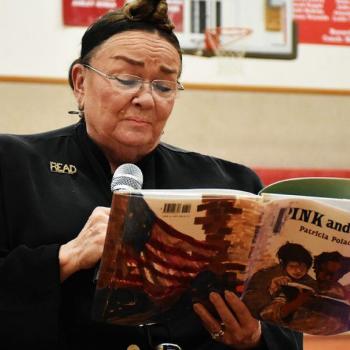
Children's author Patricia Polacco was born in 1944.
Students share family stories of their own by writing original poems and reviewing parts of speech using the Diamante Poems tool.
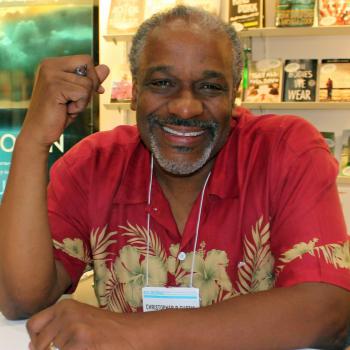
Newbery Medal winner Christopher Paul Curtis was born in 1953.
Students brainstorm a list of civil rights-related issues and use the Acrostic Poems interactive to create poems.