Students debate about incorporating service-learning into their school's curriculum.

The Great Service-Learning Debate & Research Project

Songs of Our Lives: Using Lyrics to Write Stories
Students learn about the life and music of John Lennon, write a short story from their lives integrating lyrics from some of their favorite songs, and create a class book of stories.

The Mysteries of Harris Burdick: Using Illustrations to Guide Writing
Students use illustrations from The Mysteries of Harris Burdick as a guide to write mysteries
and then present their stories to the class for students to discuss to which illustration each
story corresponds.

Facilitating Student-Led Seminar Discussions with The Piano Lesson
August Wilson's play The Piano Lesson invites students to ask a number of questions—big
and small. Students learn how to create effective discussion questions and then put them to use in student-led discussions.

Analyzing Famous Speeches as Arguments
Students are often asked to perform speeches, but rarely do we require students to analyze speeches as carefully as we study works of literature. In this unit, students are required to identify the rhetorical strategies in a famous speech and the specific purpose for each chosen device. They will write an essay about its effectiveness and why it is still famous after all these years.
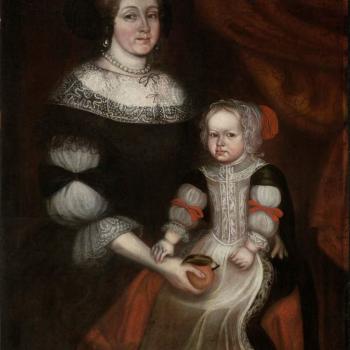
An Exploration of The Crucible through Seventeenth-Century Portraits
In this lesson, students incorporate analyses of characters from The Crucible with examinations of original seventeenth-century portraits of Puritans to create a visual portrait of the character. The project culminates in a "Portrait Gallery Walk" where students present and defend their artwork.
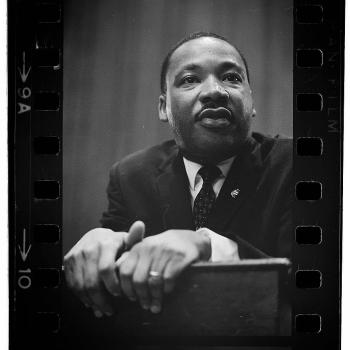
I Have a Dream: Exploring Nonviolence in Young Adult Texts
Students will identify how Martin Luther King Jr.'s dream of nonviolent conflict-resolution is reinterpreted in modern texts. Homework is differentiated to prompt discussion on how nonviolence is portrayed through characterization and conflict. Students will be formally assessed on a thesis essay that addresses the Six Kingian Principles of Nonviolence.

If a Body Texts a Body: Texting in The Catcher in the Rye
Students imagine the possibilities afforded by text messaging technology in The Catcher in the Rye; They compare and contrast major forms of communication, select points in the novel to represent with text messages, and share and discuss their creative work.
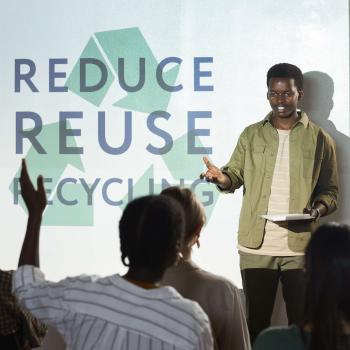
Creating Better Presentation Slides through Glance Media and Billboard Design
This lesson introduces the concept of "glance media" through an analysis of billboards. Students apply design concepts by creating a slide presentation to accompany an existing historical speech.

A "Brief, Urgent Message": Theme in Slaughterhouse-Five
As a culminating activity for Slaughterhouse-Five, students make a compilation album (a CD with 6-8 tracks) that reflects their analysis, understanding, and reaction to the ideas in the novel Slaughterhouse-Five.
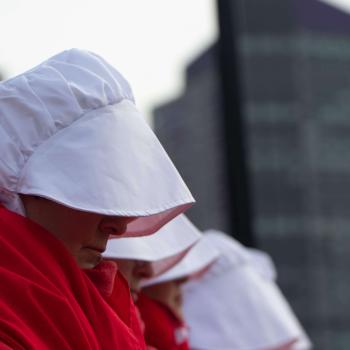
Language and Power in The Handmaid's Tale and the World
Students work in small groups to examine Margaret Atwood's use of and observations about language in The Handmaid's Tale. Through this activity, students discover and articulate overarching thematic trends in the book and then can extend their observations about official or political language to examples from their own world.

Speaking Poetry: Exploring Sonic Patterns Through Performance
Using their voices as interpretive instruments, students gain a deeper appreciation of the art of poetry as they prepare a recitation of the frequently anthologized poem "Those Winter Sundays."
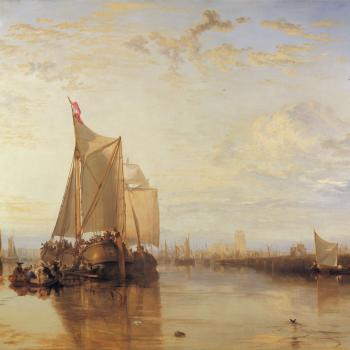
An Exploration of Romanticism Through Art and Poetry
Students use art and poetry to explore and understand major characteristics of the Romantic period.

Stairway to Heaven: Examining Metaphor in Popular Music
Students explore figurative language by examining the lyrics of popular songs.

Judging a Book by its Cover: The Art and Imagery of The Great Gatsby
Students explore The Great Gatsby's allusion to art and its use of visual imagery and conclude their study by designing their own cover for the novel.

Decoding The Matrix Exploring Dystopian Characteristics through Film
This lesson uses clips from The Matrix and other dystopian movies to introduce students to the characteristics found in dystopian works, such as Brave New World, Fahrenheit 451, and 1984.

Outside In: Finding A Character's Heart Through Art
This activity, inspired by the paintings of Edward Hopper and the stories of Raymond Carver, challenges students to get inside contemporary life and characters through the creation of monologues.
The Comic Book Show and Tell
Students craft comic scripts using clear, descriptive, and detailed writing that shows (illustrates) and tells (directs). After peers create an artistic interpretation of the script, students revise their original scripts.

Defining Literacy in a Digital World
Through listing and observation, students identify the many texts that they read and composeincluding books and magazines, television shows, movies, audio broadcasts, hypertexts, and animations.

Exploring Language and Identity: Amy Tan's "Mother Tongue" and Beyond
Students explore the idea of "different Englishes" by reading Amy Tan's "Mother Tongue" and writing literacy narratives about their own use of different language for different audiences and purposes.