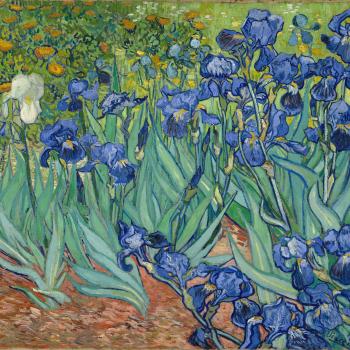
In this lesson, students explore ekphrasis—writing inspired by art. Students find pieces of art that inspire them and compose a booklet of poems about the pieces they have chosen.
Ekphrasis: Using Art to Inspire Poetry

Analyzing Grammar Pet Peeves
By analyzing Dear Abby's "rant" about bad grammar usage, students become aware that attitudes about race, social class, moral and ethical character, and "proper" language use are intertwined.
Students as Creators: Exploring Multimedia
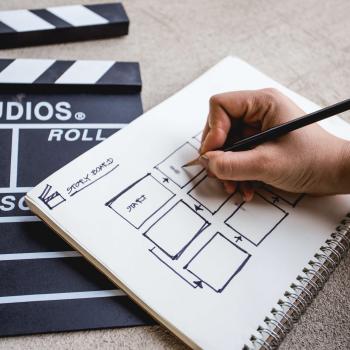
Students are introduced to the genre of multimedia presentations through a review and analysis of online presentations. They then apply what they have learned to create their own multimedia presentations.

Beyond "What I Did on Vacation": Exploring the Genre of Travel Writing
After reading and analyzing short examples of travel writing and discussing conventions of the genre, students write their own travel articles.

The Correspondence Project: A Lesson of Letters
After exploring business and friendly letter formats, students write letters for various audiences and real-world purposes.

Exploring Change through Allegory and Poetry
Students read an example of allegory, review literary concepts, complete literary elements maps and plot diagrams, create a pictorial allegory, and write diamante poems related to the theme of change.

Designing Effective Poster Presentations
Students explore the genre of posters, review informational writing and visual design, and then design poster presentations to share in class or at a school-wide fair.

Technology and Copyright Law: A "Futurespective"
Students research and report on instances of how copyright laws have adapted to encompass new technologies. They write articles predicting copyright issues that may arise with new and future technologies.

Copyright Law: From Digital Reprints to Downloads
Students investigate how and why copyright law has changed over time, and apply this information to recent copyright issues, creating persuasive arguments based on the perspective of a particular group.

Worth Its Weight: Letter Writing with "The Things They Carried"
This lesson uses a letter-writing activity based on Tim O'Brien's story "The Things They Carried" to build empathy as students examine the weight they symbolically carry in their own lives.

It's My Life: Multimodal Autobiography Project
Students express themselves verbally, visually, and musically by creating multimodal autobiographies, exchanging ideas with other students and sharing important events in their lives through PowerPoint presentations.

Developing Characterization in Raymond Carver's "A Small, Good Thing"
Students read Raymond Carver's story "A Small, Good Thing," focusing on characterization in order to develop one of the static charactersthe hit-and-run driver who causes Scotty's deathmore fully.
Finding Poetry in Prose: Reading and Writing Love Poems
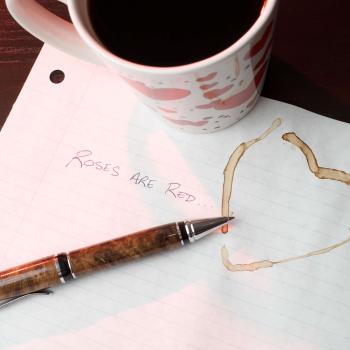
After reading several poems that expand the definition of love poetry, students compose found poems based on a personal memoireither their own or a love story of another writer.

Many Years Later: Responding to Gwendolyn Brooks' "We Real Cool"
Students analyze the Gwendolyn Brooks' poem "We Real Cool" and then write about how the character's pool hall days might influence who the character becomes fifty years in the future.

The Children's Picture Book Project
In this lesson students evaluate published children's picture storybooks. Students then plan, write, illustrate, and publish their own children's picture books.

Bio-graph: Graphing Life Events
Students interview other students, choose significant life events, rate them, graph them, and write about one or more, in this activity that integrates mathematical graphing with writing.
Love of War in Tim O'Brien's "How to Tell a True War Story"
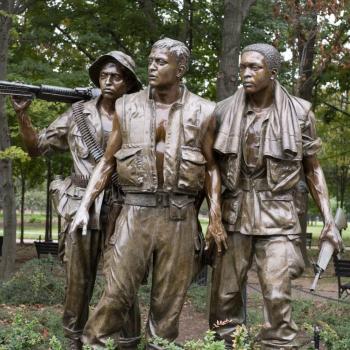
Students explore the theme of love of war through texts on camaraderie among soldiers. They then compose a visual collage depicting their beliefs about the relationship between love and war.
When Less IS More—Understanding Minimalist Fiction
This lesson pairs Ernest Hemingway's short story "Cat in the Rain' with Raymond Carver's "Little Things" to guide students to an understanding of the characteristics of minimalist fiction.

Analyzing and Podcasting About Images of Oscar Wilde
Students analyze images of Oscar Wilde used to publicize his 1882 American lecture tour. They then compare a caricature to another researched image, sharing this analysis in a podcast.

Reaching Across Time: Scaffolded Engagements With a 19th-Century Text
Students in the 21st century need to build background knowledge and fill in textual gaps to enter the unfamiliar world of "Bartleby the Scrivener: A Story of Wall Street."