As part of their study of Richard Wright's Black Boy, students research and reflect on the current black-white racial divide in America. By examining the work of literature in the context of contemporary events, students will deepen their understanding of the work and of what it means to be an American today.

Examining the Legacy of the American Civil Rights Era
Fantastic Characters: Analyzing and Creating Superheroes and Villains
Students analyze characterization by creating their own superheroes or super-villains,
complete with related gadgets and settings.

The Mysteries of Harris Burdick: Using Illustrations to Guide Writing
Students use illustrations from The Mysteries of Harris Burdick as a guide to write mysteries
and then present their stories to the class for students to discuss to which illustration each
story corresponds.
Facilitating Student-Led Seminar Discussions with The Piano Lesson
August Wilson's play The Piano Lesson invites students to ask a number of questions—big
and small. Students learn how to create effective discussion questions and then put them to use in student-led discussions.
American Folklore: A Jigsaw Character Study
Groups of students read and discuss American folklore stories, each group reading a different story. Using a jigsaw strategy, the groups compare character traits and main plot points of the stories. A diverse selection of American folk tales is used for this lesson, which is adaptable to any text set.

Texting a Response to Lord of the Flies
Students use Lord of the Flies to explore communication styles and techniques by writing text messages from one of the novel's characters to an imagined audience off the island.

A "Brief, Urgent Message": Theme in Slaughterhouse-Five
As a culminating activity for Slaughterhouse-Five, students make a compilation album (a CD with 6-8 tracks) that reflects their analysis, understanding, and reaction to the ideas in the novel Slaughterhouse-Five.

Joining the Conversation about Young Adult Literature
Students create a persuasive case calling for the adoption of a particular young adult literature title into their school's language arts curriculum by writing letters or speeches.

Blurring Genre: Exploring Fiction and Nonfiction with Diary of a Worm
After reading several examples of how a published author incorporates facts in fiction writing, students research a topic of their choice and write fictional diary entries that incorporate factual information.

Modeling Academic Writing Through Scholarly Article Presentations
Students prepare an already published scholarly article for presentation, with an emphasis on identification of the author's thesis and argument structure.

Judging a Book by its Cover: The Art and Imagery of The Great Gatsby
Students explore The Great Gatsby's allusion to art and its use of visual imagery and conclude their study by designing their own cover for the novel.

Travel Brochures: Highlighting the Setting of a Story
Readers are often transported to the places mentioned in texts through words and descriptions. This lesson invites students to create travel brochures about the setting of texts they have read.

From Dr. Seuss to Jonathan Swift: Exploring the History behind the Satire
Use Dr. Seuss's The Butter Battle Book as an accessible introduction to satire. Reading, discussing, and researching this picture book paves the way for a deeper understanding of Gulliver's Travels.
Finding the Science Behind Science Fiction through Paired Readings
Students read science fiction texts and then use nonfiction texts to extrapolate the scientific principles presented as they discuss the "what ifs" within the context of scientific principles.

Decoding The Matrix Exploring Dystopian Characteristics through Film
This lesson uses clips from The Matrix and other dystopian movies to introduce students to the characteristics found in dystopian works, such as Brave New World, Fahrenheit 451, and 1984.

Outside In: Finding A Character's Heart Through Art
This activity, inspired by the paintings of Edward Hopper and the stories of Raymond Carver, challenges students to get inside contemporary life and characters through the creation of monologues.
The Comic Book Show and Tell
Students craft comic scripts using clear, descriptive, and detailed writing that shows (illustrates) and tells (directs). After peers create an artistic interpretation of the script, students revise their original scripts.
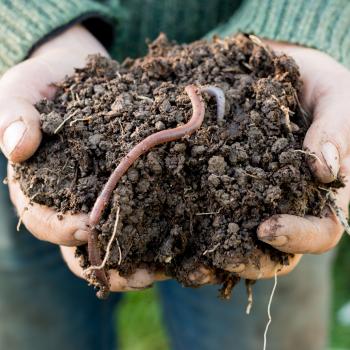
Digging Up Details on Worms: Using the Language of Science in an Inquiry Study
This lesson, in which students research worms in order to create a classroom habitat, incorporates reading and writing across content areas as well as math and science activities.

Plot Structure: A Literary Elements Mini-Lesson
Students learn that the plot structure described by Freytag's Pyramid is actually quite familiar as they diagram the plots of a familiar story, a television show, and a narrative poem.
Audio Broadcasts and Podcasts: Oral Storytelling and Dramatization
After exploring Orson Welles' 1938 broadcast of H. G. Wells' War of the Worlds, students create their own audio dramatization of a text they have read.