The old cliche, "A picture is worth a thousand words" is put to the test when students write their own narrative interpretations of events shown in an image.

A Picture's Worth a Thousand Words: From Image to Detailed Narrative
Writing a Flashback and Flash-Forward Story Using Movies and Texts as Models
Using the film The Sandlot, students are introduced to the literary devices of flashbacks and flash-forwards. They then write their own stories using those devices.

Draw a Story: Stepping from Pictures to Writing
Students draw a series of pictures that tell a story, including character action, problem and solution. They ‘read' their story to others, transcribe it into writing, and create an accordion book.

Playing with Prepositions through Poetry
Students play with and explore prepositions during a whole group reading of Ruth Heller's Behind the Mask, and then by composing and publishing prepositional poems based on the book's style.
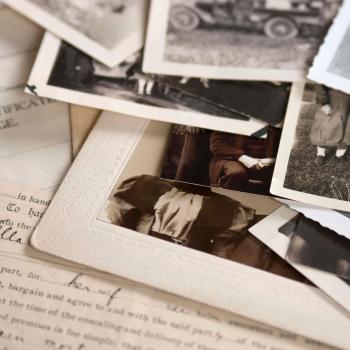
Rummaging for Fiction: Using Found Photographs and Notes to Spark Story Ideas
In this lesson, students use found notes and found photographs as inspiration to help them identify subjects, settings, characters, and conflicts for pieces of creative writing.
Polishing Preposition Skills through Poetry and Publication
Students deepen and refine their understanding of prepositions by reading Ruth Heller's Behind the Mask. They write preposition poetry and create a study guide using an online tool.
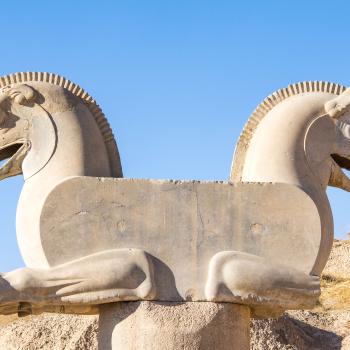
Gaining Background for the Graphic Novel Persepolis: A WebQuest on Iran
To prepare students for reading the graphic novel Persepolis, this lesson uses a WebQuest to focus students' research on finding reliable information about Iran before and during the Islamic Revolution.
Assessing Cultural Relevance: Exploring Personal Connections to a Text
As a class, students evaluate a nonfiction or realistic fiction text for its cultural relevance to themselves personally and as a group.

Creating a Persuasive Podcast
Students learn how to get their voice out on the web when they research issues important to them and compose a persuasive podcast to post online.
Learning Clubs: Motivating Middle School Readers and Writers
Students participate in learning clubs, select content area topics, and draw on textsincluding websites, printed material, video, and musicto investigate their topics, and share their learning using similar media.

Recording Readers Theatre: Developing Comprehension and Fluency With Audio Texts
Students investigate audio texts of mystery stories, evaluate them in terms of both literary and audio qualities, and create Readers Theatre scripts, which they use to record their own podcasts.

Critical Literacy in Action: Multimodal Texts on Global Warming
Students will really warm up to this lesson about global warming as they study multimedia materials and use a variety of comprehension strategies.