This lesson asks students to analyze the features of a poet's work then create their own poems based on the original model.

Literary Parodies: Exploring a Writer's Style through Imitation

A Bear of a Poem: Composing and Performing Found Poetry
Children find favorite words, phrases, and sentences from familiar stories. Working together, they combine their words and phrases to create a poem. The poem is then shared as performance poetry.
Discovering Traditional Sonnet Forms
Students read sonnets, charting the poems' characteristics and using their observations to deduce traditional sonnet forms. They then write original sonnets, using a poem they have analyzed as a model.
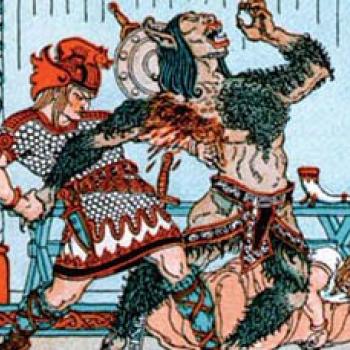
Reading Literature in Translation: Beowulf as a Case Study
Using several translations of the same passage of Beowulf, this lesson introduces students to the idea that translation is not an objective practice, but that it involves "imaginative reconstruction."
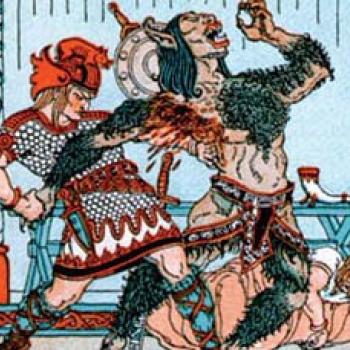
An Introduction to Beowulf: Language and Poetics
Students are introduced to Old English and the poetic devices of alliteration, kenning, and compounding in preparation for reading the epic poem Beowulf.
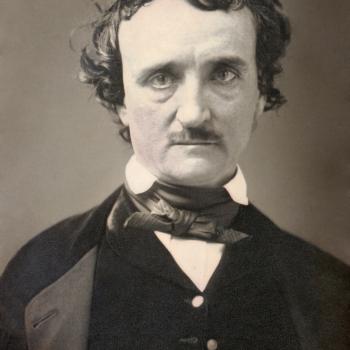
Modeling Reading and Analysis Processes with the Works of Edgar Allan Poe
Explore reading strategies using Edgar Allan Poe's "The Raven" and other works. Students read Poe's works in both large- and small-group readings then conclude with a variety of projects.

Creating Classroom Community by Crafting Themed Poetry Collections
Students create poetry collections with the theme of "getting to know each other." They study and then write a variety of forms of poetry to include in their collections.

Color Poems—Using the Five Senses to Guide Prewriting
Students use their five senses as a prewriting tool to guide their poetry writing as they compose free-form poems using imagery to describe a color.

Compiling Poetry Collections and a Working Definition of Poetry
This unit introduces students to a variety of poetic forms and elements, as they compile their own collections of poetry.

Acrostic Poems: All About Me and My Favorite Things
Students create acrostic poems using their names and the names of things that are important to them.
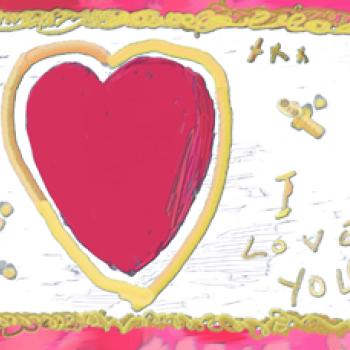
Writing Poetry with Rebus and Rhyme
This lesson encourages students to use rhyming words to write rebus poetry modeled on rebus books, which substitute pictures for the words that young students cannot yet identify or decode.
Unlocking the Underlying Symbolism and Themes of a Dramatic Work
This lesson plan invites students to consider characters from Lorraine Hansberry's A Raisin in the Sun. Students explore a selected character and write poems about objects associated with that character.

Childhood Remembrances: Life and Art Intersect in Nikki Giovanni's "Nikki-Rosa"
Students explore what Carol Jago calls the place "where life and art intersect" by reading Nikki Giovanni's poem, "Nikki-Rosa," and then writing about childhood memories of their own.

Exploring the Power of Martin Luther King, Jr.'s Words through Diamante Poetry
Students explore the ways that powerful and passionate words communicate the concepts of freedom, justice, discrimination, and the American Dream in Martin Luther King, Jr.'s "I Have a Dream" speech.

Is a Sentence a Poem?
Students use their own poetry to analyze syntax, imagery, and meaning in a one-sentence poem by a canonical author to decide what makes it a poem.

Varying Views of America
Students work together to analyze three poems about America with varying points of view.
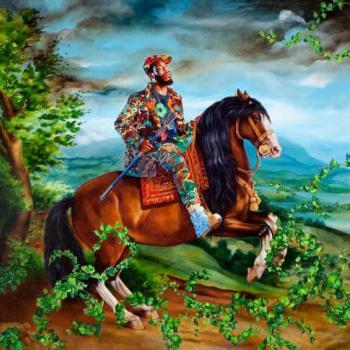
Locating Purpose in Allusion through Art and Poetry
Through this lesson, students will learn how to use the literary term "allusion" in discussing how and why authors and artists draw on and transform subject material.

Making History Come Alive Through Poetry and Song
Students compare the sinking of the Edmund Fitzgerald with the song, "The Wreck of the Edmund Fitzgerald," then create their own poetry about a historical event.

Talking Poetry with Blabberize
Students will be motivated to share their poetry through an online tool the features recording and animation.
Animate that Haiku!
Following the traditional form of the haiku, students publish their own haikus using Animoto, an online web tool to produce slideshows that blend text and music.