Focus students' attention on alliteration in this ocean-themed unit. Students explore alliteration in framing texts then compose their own class book to explore figurative language in their own writing.
Ferocious Fighting Fish: An Ocean Unit Exploring Beginning Word Sounds

Completing the Circle: The Craft of Circular Plot Structure
Students identify, explore and apply the elements of circle plot structures to their own stories by using graphic organizers, reading and writing stories, and using checklists to assess their work.

Bridging Literature and Mathematics by Visualizing Mathematical Concepts
During interactive read-aloud sessions, students identify how an author conveys mathematical information about animals' sizes and abilities. They then conduct research projects focusing on the same mathematical concepts.

Exploring Sets through Math-Related Book Pairs
After reading two math-related books, students investigate their home and school environments to find examples of objects that come in sets and then create their own books on sets.
Reading Literature in Translation: Beowulf as a Case Study
Using several translations of the same passage of Beowulf, this lesson introduces students to the idea that translation is not an objective practice, but that it involves "imaginative reconstruction."
An Introduction to Beowulf: Language and Poetics
Students are introduced to Old English and the poetic devices of alliteration, kenning, and compounding in preparation for reading the epic poem Beowulf.

Exploring Satire with The Simpsons
This lesson uses an example from popular culture, The Simpsons, as a means to explore the literary technique of satire and to analyze a satirical work.
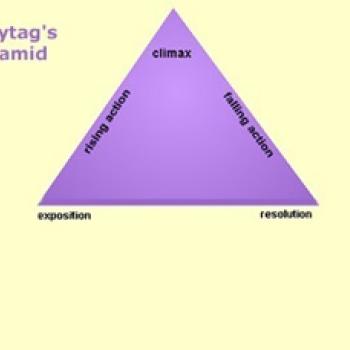
Using Picture Books to Teach Plot Development and Conflict Resolution
Students read picture books to explore the concepts of plot development and conflict resolution. They first learn about the connections between reading and writing, and then revise their own writing.

Reader Response in Hypertext: Making Personal Connections to Literature
Students write a narrative of place, a character sketch, an extended metaphor poem and a persuasive essay then link all four texts to quotations they have selected from a novel.

Using Snowflake Bentley as a Framing Text for Multigenre Writing
Using Snowflake Bentley as a model, students create a working definition of multigenre text and then use that definition to create their own multigenre piece about winter or another theme.
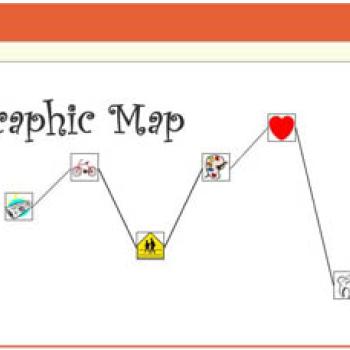
Mapping Characters Across Book Series
Students work on a guided characterization project, using a graphic map to illustrate the ways a character from a book series grows and evolves over the course of the story.

Freedom of Speech and Automatic Language: Examining the Pledge of Allegiance
This lesson has students explore freedom of speech by examining the Pledge of Allegiance from a historical and personal perspective and in relationship to fictional situations in novels.

Propaganda Techniques in Literature and Online Political Ads
Students analyze propaganda techniques used in pieces of literature and political advertisements. They then look for propaganda in other media, such as print ads and commercials.
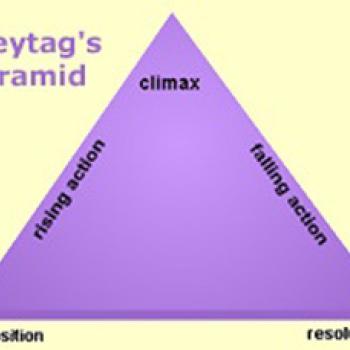
Teaching Plot Structure through Short Stories
Students use an online graphic organizer to analyze the plot structure of "Jack and the Beanstalk" and three short stories.

Exploring Literature through Letter-Writing Groups
Students discuss literature through a series of letter exchanges, as a one-time assignment or throughout the year with the students discussing, and making connections among, a number of literary works.
Exploring Free Speech and Persuasion with Nothing But the Truth
Students read Avi's Nothing But the Truth and examine the First Amendment and student rights, and then decide whether the rights of the novel's protagonist, Philip, are violated.
Writing ABC Books to Enhance Reading Comprehension
Using the alphabet as an organizing structure, students analyze literary elements in a book they have read and organize their observations in an alphabet book.

Happily Ever After? Exploring Character, Conflict, and Plot in Dramatic Tragedy
By exploring the decisions points in a tragedy, students consider how the plot of the story can change if the key characters make a different choice at the turning point.

Paying Attention to Technology: Exploring a Fictional Technology
Students complete a short survey to establish their beliefs about technology. They compare their opinions to the ideas in a novel that depicts technology (such as 1984 or Fahrenheit 451).

A Genre Study of Letters With The Jolly Postman
Students read The Jolly Postman, in which a postman delivers letters to storybook characters. They explore different types of mail and categorize letters from the book and their own mail.