Using different writing/drawing materials (e.g., markers, color pencils, pastels, etc.), students learn how to communicate different moods and/or feelings to support their written ideas and how authors do the same through their work.

Color My World: Expanding Meaning Potential through Media

Analyzing Famous Speeches as Arguments
Students are often asked to perform speeches, but rarely do we require students to analyze speeches as carefully as we study works of literature. In this unit, students are required to identify the rhetorical strategies in a famous speech and the specific purpose for each chosen device. They will write an essay about its effectiveness and why it is still famous after all these years.
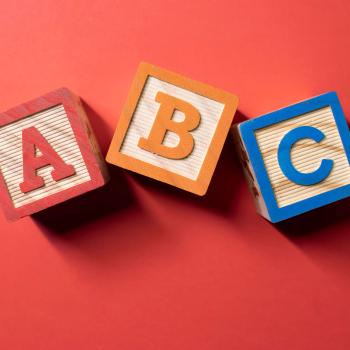
Our Community: Creating ABC Books as Assessment
Students create alphabet books, which are used as an integrated assessment with science, health, social studies, and any other content area. This lesson plans looks at the theme of community.

A Genre Study of Letters With The Jolly Postman
Students read The Jolly Postman, in which a postman delivers letters to storybook characters. They explore different types of mail and categorize letters from the book and their own mail.
Life is Beautiful: Teaching the Holocaust through Film with Complementary Texts
After students have read a book about the Holocaust, such as The Diary of Anne Frank or Night by Elie Wiesel, students will view Life is Beautiful and complete discussion questions to challenge their ability to analyze literature using film.

Authoring an Epilogue That Helps Our Characters Live On
This lesson uses One Green Apple by Eve Bunting to teach how characters change across a text. It will also guide students through writing an epilogue to accompany their independent book.

Audience & Purpose: Evaluating Disney's Changes to the Hercules Myth
What drives changes to classic myths and fables? In this lesson students evaluate the changes Disney made to the myth of "Hercules" in order to achieve their audience and purpose.

Developing Citizenship Through Rhetorical Analysis
Students analyze rhetorical strategies in online editorials, building knowledge of strategies and awareness of local and national issues. This lesson teaches students connections between subject, writer, and audience and how rhetorical strategies are used in everyday writing.

Research Building Blocks: Skim, Scan, and Scroll
In this lesson from a research skills unit, students read informational text, looking for supporting details. They practice skimming and scanning print resources, and scrolling through electronic resources.

A Musical Prompt: Postcards From the Concert
Students won't miss a beat in this musical lesson that combines listening with personal response on a postcard.
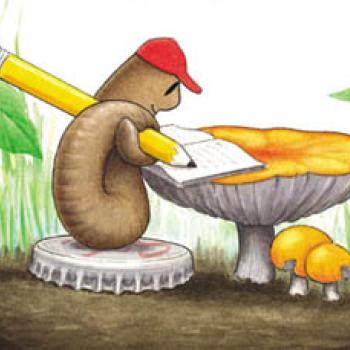
Fact or Fiction: Learning About Worms Using Diary of a Worm
Students often believe that fiction writers make everything up, seldom realizing how research worms its way into entertaining writing. In this lesson, students read Diary of a Worm to find out how fact merges with fiction.

Using Science Texts to Teach the Organizational Features of Nonfiction
Students explore organizational features of nonfiction science. Students then work together to create a two-page spread using those features to present information about their local environment.
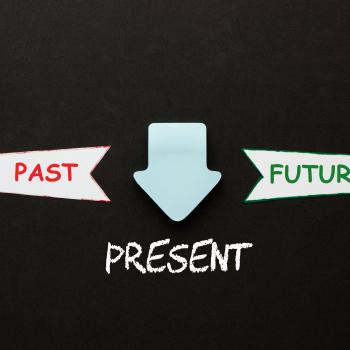
Timelines and Texts: Motivating Students to Read Nonfiction
In an effort to help motivate students to read nonfiction, students are challenged to use a timeline to help them name the year when certain products were invented.

What is Poetry? Contrasting Poetry and Prose
Students often find poetry frustrating and meaningless. By helping students think critically about the differences between poetry and prose, this introduction sets the stage for different strategies for comprehending poetic texts.

How-To Writing: Motivating Students to Write for a Real Purpose
It's not easy surviving fourth grade (or third or fifth)! In this lesson, students brainstorm survival tips for future fourth graders and incorporate those tips into an essay.

The Connection Between Poetry and Music
Students won't miss a beat in this reading fluency lesson that combines music and poetry.

Collaborating, Writing, Linking: Using Wikis to Tell Stories Online
Students become online authors in this lesson in which they write and post a short story using wiki technology.

And the Question Is... Writing Good Survey Questions
There's no question that students will be able to compose good survey questions by the end of this lesson.
And the Question Is... Evaluating the Validity of a Survey
In this lesson, students learn to ask the right questions about the validity of surveys.
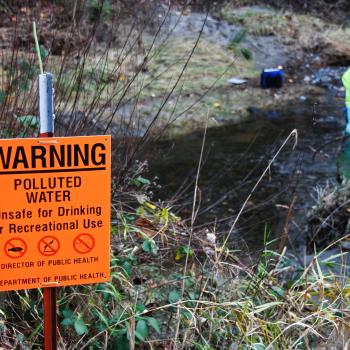
Reading and Writing About Pollution to Understand Cause and Effect
Students get to write a whale of a tale when they complete a graphic organizer sequencing the journey of a mountain fish to a polluted waterway.