Classroom Resources > Resource Type
President Woodrow Wilson signed the law that proclaimed June 14 each year to be celebrated as the national holiday of Flag Day. Every year since 1916, this day has been a day of patriotic celebration.
Share with your students the songs from Patriotic Melodies from the Performing Arts Encyclopedia of the Library of Congress. Ask your students to consider how America, Americans, and the flag are represented in the various songs and to hypothesize about the reasons for the differences that they notice. With 27 songs to choose from, each student can work on a separate song or small groups can tackle several songs. The songs range from well-known tunes such as "When Johnny Came Marching Home" and "You're a Grand Old Flag" to more obscure songs like the "Library of Congress March."
This Library of Congress site includes historical background, photos, and artwork that explain how the flag and Flag Day came into being. Have students write their own stories about their personal interaction with the flag, or have them interview members of their family or community and write their stories.
The American Flag Foundation encourages all Americans to "pause for the pledge" at 7:00 p.m. on Flag Day. This site includes information on the program and a collection of educational resources including flag Q&A, flag etiquette and retiring, and information on the Pledge.
This site provides historical information about the U.S. flag, as well as images of each of the official versions of the flag throughout America's history. The site also features a variety of patriotic writings, including poems, essays, letters, and songs.
From the Verizon Literacy Network, this interactive activity includes 25 hidden flags for users to find, along with an interesting fact about the flag at each location.

On June 12, 1942, Anne Frank received a small red and white diary as a present for her 13th birthday. The diary, which she named Kitty, was her companion for just over two years. Frank's last entry in the diary was dated August 1, 1944. Her family's secret hiding place was raided three days later, on August 4. She died of typhus in the Bergen-Belsen concentration camp in February or March of 1945.
Explore the ways that eyewitness reports shape our understanding of events we can't see first-hand. Introduce students to this topic using a lesson (adapted to your grade level), such as Through the Eyes of a Refugee, which examines the first-hand reports of an Afghan refugee, or Evaluating Eyewitness Reports, which examines first-hand accounts of the Great Chicago Fire.
Then have students break into small groups for an end-of-the-year research project. First, provide an outline or list of the main topics you've studied during the year. Or, have students use their textbook as a reference. Have each group select an event to research, taking care that topics are not too broad, such as "World War II." Using primary source documents, have students research the event using eyewitness accounts. A good source of primary documents can be found at the American Slave Narratives website. Finally, have each group present their research to the class, for an end-of-the-year review session.
Visit this site for biographical information about Anne Frank as well as resources for students and teachers. The site includes photographs and excerpts from Frank's diary.
This collection of links offers a wealth of Holocaust information. There are maps, a glossary, and information on concentration camps, Nazi Germany, and more.
This United States Holocaust Memorial Museum website uses text, images, and audio to provide an overview of the Holocaust.
Scholastic provides this collection of Anne Frank resources. There is a teacher's guide, an interview with a childhood friend, and several online activities.
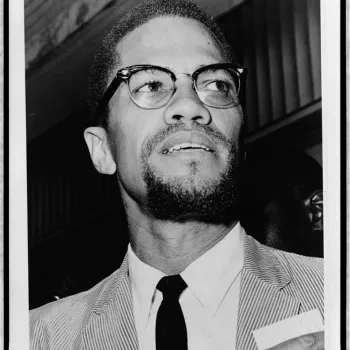
Named Malcolm Little by his parents in 1925, Malcolm X became one of the most prominent militant black nationalist leaders in the United States. He was a spokesperson for the Nation of Islam and founder of both the Muslim Mosque, Inc., and the Organization of Afro-American Unity. Malcolm X was assassinated in 1965.
What do names tell us about people? Ask students to write about the origin of their own names in their journals. How did they come to be named? Who made the decision about their official names? What nicknames do they have? What names do they like or dislike and why? If they could pick out their own names, what would they select?
After students have had time to reflect and write on this topic, explore the names Malcolm X used during his lifetime: Malcolm Little, Detroit Red, Malcolm X, el-Hajj Malik el-Shabazz, and Omowale. Students may have an easier time understanding Malcolm X's switches if they consider Esperanza's desire to change her name in Sandra Cisneros's House on Mango Street. Share this excerpt with students, and then hold a class discussion about the different names Malcolm X used during his life. Next to each name, ask the class to brainstorm adjectives that might be used to describe Malcolm X during that period in his life.
Links at this site provide resources about Malcolm X and his life. Included are an audio archive of his speeches, photographs, a timeline, links to related Internet resources, and more.
This site from Columbia University includes new research and multimedia materials about Malcolm X. Research for an upcoming biography about Malcolm X is included in the site, as well as numerous digital interviews with people who knew him.
This Encyclopaedia Britannica entry on Malcolm X includes biographical information, as well as suggestions for further reading and links to other people and places related to black history.
This historical article, from the New York Times Learning Network, discusses an interview with Malcolm X, given the week before he was killed by assassins identified as Black Muslims.
In 1971, National Public Radio (NPR) began the first commercial-free, live radio broadcasts. Financed by the Corporation for Public Broadcasting and listener contributions, NPR offers news, music, and other programs free to the public through more than 860 public radio stations. More than 26 million listeners tune in to over 130 hours of original NPR programming each week, including programs produced by local stations and other radio networks.
National Public Radio's commercial-free programming is largely financed by listener contributions. By not relying on advertising revenues, NPR and other public radio stations are able to produce programs that differ from those of commercial radio stations.
List some of the programs offered by a local NPR station (e.g., Fresh Air, All Things Considered, Morning Edition, or Living on Earth). Ask students to make some predictions about the content of each program based upon the program's title. Divide students into groups and instruct each group to listen to one of these programs once or more during the course of a week and report on its contents to the class. Discussions that might follow such reporting could include questions such as:
- What did you learn as a result of listening to this show?
- Is this a program that might be of interest to someone your age? Why or why not?
- How might this program be different if it aired on a commercial radio station?
On the NPR website, students can listen to archived broadcasts of NPR programs. There are links to NPR programming such as Car Talk and Latino USA, as well as an audio search feature that enables listeners to search for a story that they have heard on the radio.
This collaboration between NPR and the National Geographic Society produces and broadcasts stories on the natural world and threatened environments, diverse cultures, adventure, and exploration and discovery.
This companion website to NPR's Radio Diaries includes archived audio files and transcripts. The site features information on how students can create their own radio diaries.
This page from the NPR site offers stories about education topics from a variety of NPR shows.
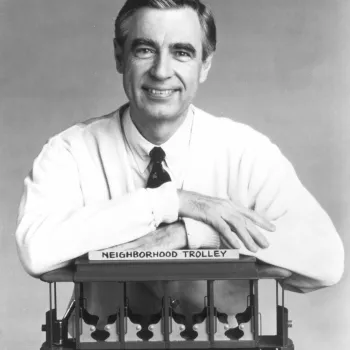
Fred Rogers, better known as "Mister Rogers," began developing his ideas for children's programming in the 1950s. Mister Rogers' Neighborhood began in 1967; a year later, PBS began broadcasting the show. The last original Mister Rogers' Neighborhood aired in 2001, making it the longest-running PBS program at the time.
Ask students to think of movies, TV shows, and books they remember from their childhood. Encourage them to identify those from when they were very young. Ask students to choose an item from the list that they have not seen or read in a long time and to describe everything they remember-the plot, characters, and other elements as well as their associated feelings.
Next, ask students to revisit the item or to ask an adult about it. Students can respond by writing what they think about the text now that they are older: Do they still like it? What details did they remember? What did they NOT remember about it? Finally, ask students to explain whether they would share it with a child of their own or a younger sibling.
This is the official PBS website for Mister Rogers' Neighborhood. It includes many activities designed to stimulate the imagination.
NPR maintains this collection of articles about and interviews with Fred Rogers. It includes a special broadcast of his 30th anniversary show.
The Fred Rogers Company provides this page devoted to Rogers. Featured on the site are a biography, images, and a timeline of Rogers' life.
This site features lyrics and samples of the songs from the Grammy-winning Songs from the Neighborhood, a compilation of songs written by Fred Rogers and performed by 12 popular vocalists.
The beloved TV host on love, peace, and why you're special.

Since 1929, the Academy of Motion Picture Arts and Sciences, with over 6,000 members, has given awards for the best in film. The first ceremony, with 250 people in attendance, took place during a banquet held in the Hollywood Roosevelt Hotel. Tickets cost $10 and the entire ceremony is said to have taken less than an hour-a far cry from the four-hour, star-studded extravaganzas of today.
Students love to watch and talk about movies. With persuasion, they can even be convinced to write about movies. For younger and middle-grade students, you can ask them to make lists of their favorite and their least favorite movies. Looking over these lists, students can then brainstorm qualities that make a film good or bad. Examples might include acting, special effects, and humor. Ask them to rank these qualities from the most to least important and then to explain why the top three are the most important elements to look at in a film.
Next, have students apply these criteria to a film they have seen by writing a movie review that makes their critical stance clear. Older students can take this activity one step further by comparing their review to that of another critic. After reading through one or more reviews, students should write an answer to one of the critics, defending their own reviews and critical stance.
The official website of the Academy of Motion Picture Arts and Sciences, this site includes lists of the current year's nominees and winners. There is also information on previous years' ceremonies.
In 1998, the American Film Institute announced their list of the 100 greatest American movies of all time, and this updated version was created ten years later. This list can be compared to a list of past Oscar winners.
The British equivalent to the Oscar.com website, the BAFTA website includes information on categories, nominees, and winners.
This page from Lincoln City Libraries features a list of past winners of the Best Picture Oscar which are based upon novels, plays, and short stories.
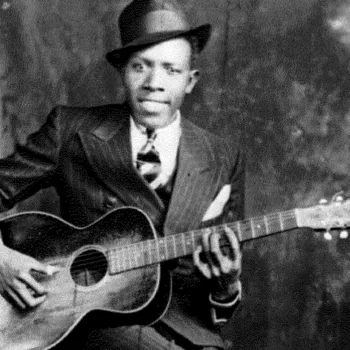
Known as the "King of the Delta Blues," Robert Johnson was born May 8, 1911, in Hazelhurst, Mississippi. His legendary recordings of such blues standards as "Cross Road Blues" and "Sweet Home Chicago" have had an astounding influence on blues singers and rock musicians for generations. His amazing talent and mysterious death in 1938 sparked an old blues folk tale that he sold his soul to the Devil in exchange for his ability to play the guitar.
Having students write their own blues lyrics is a great way to teach rhythm, rhyme, and word choice. The most common form of the blues is referred to as the "12-bar blues" because of the twelve measures that are typical of the style. Share a blues song with your students before they begin to write, and distribute copies of the lyrics to a song with this structure. You may want to play a clip from Robert Johnson's "Cross Road Blues."
After looking at the lyrics, ask students to identify the structure used. They should be able to see that the lyrics of a 12-bar blues song often follow an AAB pattern. "A" refers to the first and second four-bar verses, and "B" is the third four-bar verse. In a 12-bar blues song, the first and second lines are repeated, and the third line is a response to them-often with a twist.
Next, brainstorm a list of subjects with your students about things that might give them "the blues." Then, have students choose a topic and try to write a blues song that follows the pattern they identified. Invite adventurous students to perform their songs!
This thorough University of Virginia resource features a biography, song lyrics, and critical analyses of Johnson's work.
This site anchors a multi-media celebration that raises awareness of the blues and its contribution to American culture and music worldwide.
The Robert Johnson Blues Foundation is dedicated to preserving the music and memory of Robert Johnson through the provision of art education, competitions and scholarships.
This National Park Service site includes an overview of two styles of blues and extensive biographies of thirty bluesmen and blueswomen who created a rich legacy of American music that forms the foundation of today's popular music.
Since 1984, the National PTA has designated time each May for communities nationwide to honor teachers for their work with children. Parents, students, and schools across America celebrate Teacher Appreciation Week to show appreciation for the work and dedication of teachers and reaffirm the commitment to parent-teacher partnerships.
In celebration of Teacher Appreciation Week, read a book about a teacher such as Thank You, Mr. Falker, Miss Nelson is Missing, or a Magic School Bus story with Ms. Frizzle. Why are the teachers in these stories special? Have a class discussion about some of your students' favorite teachers. Then have students try these follow-up activities:
- Compare a favorite teacher to a teacher from a book with the Interactive Venn Diagram.
- Write a letter to a favorite teacher using the Letter Generator.
- Create a character map of either Miss Nelson or another storybook teacher with the Story Mapping tool.
- Use the Essay Map to plan and write an essay on why they would or would not like to be a student in one of the storybook teachers' classrooms.
- Read and present another book about a special teacher. Older students may choose books like The Miracle Worker by William Gibson, Tuesdays with Morrie by Mitch Albom, or A Lesson Before Dying by Ernest Gaines.
This National PTA resource offers ideas to help parents, students, and schools honor teachers during Teacher Appreciation Week.
The National Education Association offers these activities, appropriate for a Teacher Appreciation Week celebration.
This page from Reading Rockets celebrates teachers through notes of appreciation from parents, videos of authors and illustrators talking about their favorite teachers, and a link for users to send their own e-cards to teachers they appreciate.

As a child growing up in Holland, Leo Lionni taught himself how to draw. He earned a doctorate in economics from the University of Genoa, but began his career as an author and illustrator of children's books in 1959. His first book Little Blue and Little Yellow came from a story written for his grandchildren during a boring train ride. He is the winner of four Caldecott awards.
After reading several of Lionni's stories, play the game Guess the Story. Invite a student to pull a sentence strip that describes one of Lionni's messages from a box. (Older students can create the sentence strips in collaborative groups.) Students should explain what the message means and the book it is from. Some suggested messages include the following:
- Let's work together.
- Take time to smell the roses.
- You are never alone when you have a friend.
- Don't take your family for granted.
- Everybody is special.
- Be happy with who you are.
As a follow-up, have your students write and illustrate their messages with the ReadWriteThink Stapleless Book.
This site gives an excellent introduction to children in grades K through 5 about Leo Lionni’s life, his art work, and his children’s books. The site includes excellent printable activities and videos of Lionni’s art making process.
This packet contains a variety of useful activities made by teachers, for teachers to accompany the Leo Lionni books, as well as original artwork on display at the Castellani Art Museum.
This page provides information about Leo Lionni's life and learns how experiences and events in his life influenced on his work.

When the Brooklyn Bridge was opened, its span across the East River in New York was the longest in the world, and its two stone landings were the tallest structures in North America. Designed by John Roebling and completed by his son and daughter-in-law Washington and Emily Roebling, the bridge stirred controversy over its cost, size, safety, and even its very necessity.
Celebrate the Roebling family's achievement and explore the literary concept of point of view by sharing with students a pair picture books that highlight the controversies over the construction and opening of the Brooklyn Bridge. The two books, Twenty-One Elephants by Phil Bildner and Twenty-One Elephants and Still Standing by April Jones Prince use the same historical event as their centerpiece: the crossing of the bridge from Manhattan to Brooklyn by the elephants from P. T. Barnum's circus.
- Begin by showing students the first pictures of the two books and asking them to predict how the stories might be similar and different. Students will note that both stories will likely discuss the construction of the bridge, but will have different points of view.
- Ask students to confirm or clarify their predictions as you read the two stories.
- After reading, have students discuss the similarities and differences between the books based on the two points of view. Which book had a more personal perspective? Which was more informative? How were similar events portrayed differently? Which book did they prefer?
- Have pairs of students apply their observations by writing two complementary pieces about a recent classroom event (e.g., a school performance, a field trip, or a classroom party). Have one student write an account from a general observer's perspective, while the other writes from the perspective of a student in the classroom.
- Ask students to share their writing and discuss how they chose different details, used different forms of expression, and conveyed different stories about the same event.
This resource focuses on construction of the Brooklyn Bridge within the historical and political context of the late 19th century. It also treats the bridge as a geographic symbol and work of art which inspires writers, artists, and ordinary Americans who cross the bridge or view it from afar.
This site provides history, video, pictures, and speeches associated with the bridge.
This page features the American Memory entry for John A. Roebling's birthday. Included is a collection of primary documents on the Brooklyn Bridge and bridges throughout the United States.
The bridges section of PBS's Building Big website offers information about the science behind bridges, bridge architects, and some famous bridges.