
On June 1, 1980, Ted Turner introduced the Cable News Network (CNN), the first all-news television network. CNN has since provided news coverage and features 24 hours a day. News seekers can now find up-to-date coverage on CNN.com and CNNRADIO, or sign up for e-mail alerts of breaking news stories.
New technologies have made it easier than ever for people to get the news. This is in stark contrast to previous centuries, when there were fewer news sources and it could take days or even months for important news to travel long distances. Have students brainstorm a list of modern news sources, such as newspapers, radio, the Internet, television, e-mail, or text messaging. Next, have students brainstorm a list of news sources from previous centuries, such as telegrams or the town crier.
Arrange the class in small groups and assign each group one of these news sources to research. Students should find out when and where the method was first used, when people stopped using it, and so on. Then have students work together using the ReadWriteThink Interactive Timeline to create a visual timeline showing the evolution of the news over time. See also the Timeline Tool page for information and activity ideas.
CNN offers teachers a variety of tools for the classroom, including a calendar of programming events, reference tools, Web links, teaching tips, and lesson plans.
Published by the American Society of Newspaper Editors, this website offers teachers a variety of resources, including lesson plans, teaching tips, and a database of high school newspapers.
The Newseum offers online exhibits about a variety of news and journalism topics, as well as brief descriptions of some of their physical exhibits.
This site from the Journalism Education Association offers information on publishing articles and podcasts online. Included also are tips on how to promote high school newspaper websites.
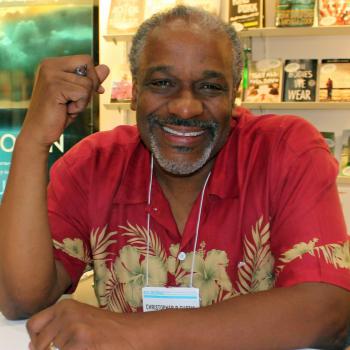
Christopher Paul Curtis, born in Flint, Michigan, in 1953, has earned high praise for his first two novels. Bud, Not Buddy won both the Newbery and Coretta Scott King Medals in 2000 and several other literary awards. The Watsons Go to Birmingham-1963 was a 1996 Newbery Honor Award winner. Curtis continues to write about engaging, interesting characters, and published his most recent book, Mr Chickee's Messy Mission, in 2007.
In The Watsons Go to Birmingham-1963, Curtis examines America's stuggle for civil rights, through the eyes of a family that gets caught up in the turmoil of 1963. Have your students explore a civil rights issue by writing poetry, using the Acrostic Poems interactive. First, as a class, brainstorm a list of civil rights issues, notable figures, places, and events from American history. Examples could include Birmingham, Martin Luther King, Jr., segregation, and Rosa Parks. Then have students use the Acrostic Poems interactive to create their poems.
If you do not have access to the Internet, students can create acrostic poems without using the interactive. First, have each student select a topic for his or her poem. Next, ask them to brainstorm a list of key words that describe or remind them of their topic. Then have students use the list of words they generated to help them write their poems.
Curtis's website offers a collection of resources for teachers and young writers. There is information on his books, teachers' guides, tips for writers, and more.
This page offers an interview with author Christopher Paul Curtis, including information about Curtis's books, writing, career, and background.
This brief biography, from Kidsreads, offers a short interview with Curtis. The page also features links to reviews of Curtis' books.
This page from the ALAN Review features information about Curtis's novel in addition to an interdisciplinary unit. There are math, geography, history, and language arts activities, as well as assessment and project ideas.
Get Caught Reading is a nationwide public service campaign launched by the Association of American Publishers to remind people of all ages how much fun it is to read. May is officially Get Caught Reading month, but the celebration lasts throughout the year. Get Caught Reading is supported by hundreds of celebrities, including LL Cool J, Dylan and Cole Sprouse, and the newest addition, Olivia the Pig.
Celebrate Get Caught Reading Month with a reading-related service project. Try one of these activities with your students:
- Plan an intergenerational reading day. Invite seniors to visit your school, or arrange a trip for your students to a local senior center. Have students select books to read to adults, and invite adults to share a favorite story with students. Extend an ongoing invitation to guest readers, perhaps on a monthly basis.
- Organize a book drive to collect new or nearly new books to supplement your classroom or school library, or to donate to families or a local children's hospital.
Be sure to have a camera on hand to "catch your students reading" on film throughout the month. You can also have students organize a community "Get Caught Reading" campaign by taking photos of members of their families and community figures (firefighters, grocers, local police officers, etc.) caught reading, and creating a school display.
The Get Caught Reading website offers resources for teachers, librarians, and kids. Look for literacy fact sheets, artwork, and information on getting involved.
The Northwest Territories Literacy Council offers this reproducible guide to Get Caught Reading. Included are ideas for promoting this and other literacy programs, as well as reproducible bookmarks and posters.
Reading Connects offers this page, filled with suggestions for promoting reading at school.
KidsReads.com helps kids select books that appeal to them by offering kid-friendly reviews and information about children's books and authors. The information is searchable by author, series, and special features. The companion site Teenreads.com focuses on young adult literature.

Circle this date on your calendar! Picture book author Laura Joffe Numeroff was born in Brooklyn, New York, in 1953. Her books, such as If You Give a Mouse a Cookie and If You Give a Moose a Muffin, rely on circular plot structure to tell their stories.
Because of their circular plot structure, Numeroff's books are natural resources for classroom activities on cause and effect and making predictions. Using one of Numeroff's books as a model, students can use the circle plot structure as a culminating project for nearly any unit of study. For instance, consider such project titles as the following:
- If You Tax Our Tea, for a unit on colonial America
- If You Recycle an Aluminum Can, for a unit on the process of recycling
- If You Visit a Rainforest, for a unit on the plants and animals in a rainforest
The online Circle Plot Diagram can help students gather their ideas, and then they can publish their work with the ReadWriteThink Printing Press.
Find a biography and full bibliography on this site.
This PBS website uses documentary film, photography, artwork, and music to honor and explore Native American storytelling, including the importance of circles and cycles in Native American stories.
This page offers links for teachers to resources related to Laura Numeroff and her books. Included are links to biographical information about Numeroff, as well as lesson plans and activities for several of her books.

On July 7, 1983, Samantha Smith, a U.S. schoolgirl, flew to the Soviet Union at the invitation of Premier Yuri Andropov, all because of a letter that she wrote. Smith wrote a letter to Andropov asking, "Why do you want to conquer the whole world, or at least our country?" The Soviet leader replied to her letter, and Samantha ultimately visited the nation, becoming a good-will ambassador.
Have your students write their own letters that make things happen. Students can write individual letters, or work in small groups or as a full group. Letter writing can be a culminating project after you've completed a unit of study on a particular topic. For instance, if you've just completed a unit on animals, students might write letters to the local zoo, praising them for the ways that they care for animals or making suggestions for changes. After exploring freedom of speech in a censorship unit, students might write letters to the editor of the local newspaper explaining their feelings about specific books that are (or aren't) included in the library.
In addition to the resources available in the Letter Generator and on the Letter Generator page, there are resources available from Gallaudet University that demonstrate how to write advocacy letters. The American Civil Liberties Union provides tips on writing letters to the editor and letters to elected officials, which can be useful for projects where students are looking at issues of civil rights, freedom of speech, and student rights.
This site includes information about Samantha Smith, her famous letter to Andropov, her subsequent work as a goodwill ambassador, and the continuing work of the foundation devoted to her memory.
Students can find tips from Arthur on letter and e-mail writing, which can serve as a resource for independent letter writing.
The FIRE Student Network recognizes the importance of advancing civil liberties in schools. Visit the site for resources on the topic.
View the Fairness and Accuracy in Reporting site for resources that help identify and respond to inaccurate or unfair news coverage.

The legend of the Pied Piper of Hamelin has been recounted in a number of literary works by authors including the Brothers Grimm and poet Robert Browning. Though legend says that the Pied Piper led the children out of Hamelin on June 26, 1284, Browning used the date July 22, 1376, for rhyming purposes.
Have you ever wondered what things would look like in Hamelin from the rats' point of view? Read aloud The Amazing Maurice and His Educated Rodents by Terry Pratchett, winner of the 2001 Carnegie Medal. The synopsis of the book included in this resource guide shows why librarians in the United Kingdom named this book the "outstanding book for children and young people" published in 2001.
After sharing this book with students, have them compare Pratchett's version with Browning's version. After discussing how perspective changes the story, you can have students look at other fairy tale retellings such as Jon Scieszka's The True Story of the Three Little Pigs.
The Indiana University Libraries site includes an electronic version of the 1888 edition of Browning's poem with scanned images of the illustrations by Kate Greenaway.
For background information on Browning, visit the Academy of American Poets site. This site also features some of his poems, including "The Pied Piper of Hamelin."
This page from the University of Pittsburgh offers several versions of the Pied Piper tale, including the Brothers Grimm version and Browning's version.

"That's one small step for man, one giant leap for mankind." With those words, Neil Armstrong was the first person to step on the moon. Armstrong's historic first step on July 20, 1969, was a hallmark mission in the U.S. space program and marked the first time humans stood physically on a celestial object other than Earth. See Armstrong's biography for a movie showing the historic moment.
The words Armstrong spoke (audio from NASA) as he stepped onto the moon were carefully chosen. Even so, Armstrong is reported to have made a mistake. NASA planned for Armstrong to say, "That's one small step for a man, one giant leap for mankind" (emphasis mine); however, he left out the word "a" when he stepped onto the moon's surface. Begin your exploration of Armstrong's famous words by discussing the all-important difference that one word can make. Take the opportunity to discuss the gendered language that Armstrong uses as well.
After exploring Armstrong's words in detail, turn to a discussion of why those words were chosen. In a speech at Rice University on September 12, 1962, President John F. Kennedy said, "We choose to go to the moon! We choose to go to the moon in this decade and do the other things-not because they are easy, but because they are hard. Because that goal will serve to organize and measure the best of our abilities and skills, because that challenge is one that we are willing to accept, one we are unwilling to postpone, and one which we intend to win."
How do Armstrong's words connect to Kennedy's, how do they connect to the mission at large, and how do they represent the space program?
This webpage developed by NASA Kids celebrates the 45-year anniversary of Armstrong landing on the moon. The site is intended for elementary readers, and includes photos and a tool to calculate your weight on other planets.
This site from Smithsonian includes basic historical facts about Apollo 11, along with photos and actual audio files of Armstrong's first words on the moon.
The Smithsonian National Air and Space Museum is host to this collection of pages featuring details on the Apollo missions, including quotations from the people involved, photos with the ability to zoom, and a list of artifacts in the gallery.

John Newbery, an 18th-century English children's book publisher and seller, was born on July 19, 1713. The American Library Association's Newbery Medal, awarded to the most distinguished children's fiction book each year, honors Newbery's work.
Your class can publish books and other documents just like Newbery. Have each student choose a book that is special-it could be a favorite book or a book that reminds him or her of something special-then write a short story about why the book was chosen and why it deserves special mention.
Using the Stapleless Book Planning Sheet, students can plan the pages of their own stories before entering the information in the Stapleless Book tool. For longer projects, students can use the ReadWriteThink Printing Press.
The American Library Association awards the Newbery Medal annually. This site includes information about the award, the application process, and a complete list of the distinguished books.
This section of author Susan Kapuscinski Gaylord's site includes instructions for such projects as making accordion books, index card books, wish scrolls, and stick and elastic band books.
The Newbery Video, Part I written by Mona Kerby and funded by the International Reading Association highlights favorite Newbery Award books and authors. Authors include: Lloyd Alexander, Sharon Creech, Sid Fleischman, Karen Hesse, Lois Lowry, Phyllis Reynolds Naylor, Katherine Paterson, and Jerry Spinelli. Part 2 of the video continues the discussions with authors and includes student projects and commentary.
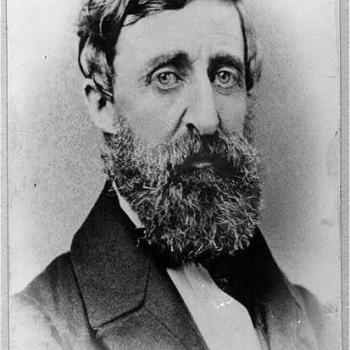
Henry David Thoreau was born on July 12, 1817. Thoreau is best known for his book Walden, which chronicles the two years that he lived in a small hut near the edge of Walden Pond.
Take your class on a nature walk near your school, or have them focus on a natural setting nearby. As students walk or view the setting, ask them to take note of the details of the surroundings and make a mental "snapshot" of the location in their minds.
Once they return to class, have students write their notes during a focused writing session, making sure to capture the details of the setting. After the initial writing session, students can revise and polish their writing and create a class booklet of the nature walk, using the ReadWriteThink Printing Press.
This biography of Thoreau, published by the Academy of American Poets, links to a collection of online texts including Walden.
After reading passages from Walden with your students, have them compare Thoreau's description of the pond with the photographs on this website.
This entry on Thoreau includes a complete biography with links to related materials and readings. The site provides extensive information about Thoreau, including links about his work as a surveyor and pencil maker.
Students can keep a record of their own nature observations in a field journal, as described in this resource from the American Museum of Natural History. A number of diverse example pages, including drawings, charts, and narrative observations from the field journals of actual scientists, are included.

In 1925, from July 10 to July 21, John Scopes was on trial for teaching the idea of evolution in his public school classroom in Dayton, Tennessee. The court case, dubbed the "Trial of the Century," featured two of the most famous attorneys in the United States-Clarence Darrow and William Jennings Bryan.
The Scopes Trial focused on the evolution of mammals, but the word evolution can refer to other objects and processes, such as tools, computers, and automobiles. Have your students brainstorm a list of objects and processes that have changed over time. Then, individually or in small groups, invite students to choose and focus on one item from the list. Allow them to use the interactive Timeline tool to sketch out the changes, or evolution, of the items that they have chosen. View more tips to learn more about the tool. After considering the changes that have occurred for the items, have students examine the significance of the changes. In their opinions, have the changes affected the world for the better or for worse? Students can then share their information and opinions with the whole class.
Conclude the project by posting all of the timelines on your classroom wall, creating a giant timeline of the evolution of the items your students have investigated. Invite students to look for patterns as well as to connect the timelines to historical events that occurred during the same time period. For a more structured activity, try the resources in the ReadWriteThink lesson Timelines and Texts: Motivating Students to Read Nonfiction.
This website, developed by PBS, features detailed information about the Scopes, or “Monkey” Trial, including images from the famous courthouse in Dayton, Tennessee.
Part of the University of Missouri, Kansas City School of Law collection Famous Trials in American History, this site highlights documents related to the Scopes Trial.
This article, featured in the National Geographic Magazine, tells about life in Dayton, Tennessee 75 years after the Scopes Trial took place there.
This NPR resource offers a timeline of events surrounding the Scopes trial, as well as audio of an All Things Considered feature on the subject.