
Naturalist Joy Adamson's novel Born Free made people aware of the dreadful loss of habitat and wildlife in Kenya, where she and her husband George lived. She pledged all the money earned by her books to wildlife preservation. She was murdered in Kenya on January 3, 1980, by a servant.
Chances are that your students have never seen the movie Born Free. Frequently, younger students do not realize that lions are in the cat family, and this video provides an excellent springboard to a study of cats for students in grades K-2. Create a KWL chart on cats and begin researching these fascinating animals. Students can use the ReadWriteThink Animal Study student interactive to organize the information they gather about lions. Try the Investigating Animals: Using Nonfiction for Inquiry-based Research or Animal Study: From Fiction to Facts lesson plans for more structured activities.
Older students can take action to help ensure the survival of endangered species, such as the Cape Lion, by writing persuasive letters lobbying for programs and resources that protect the animals and their habitats. The Can You Convince Me? Developing Persuasive Writing lesson plan provides all the resources required for such a project.
This National Geographic site brings the sounds and images of lions in their natural habitat to your classroom. Resources include audio and video clips.
Learn about the cats who make their home at the National Zoo in Washington, D.C. Included are links to information about conservation, an image gallery, and a "Tiger Cam."
This PBS Nature site explores the reasons for the declining population of African lions and searches for solutions to the problem.
The San Diego Zoo site includes details on lions and their lives, fun facts, and conservation efforts. The "At the Zoo" tab offers information on the lions who have lived at the San Diego Zoo.

On this date in 1845, American author Edgar Allan Poe's famously eerie poem "The Raven" was published in New York Evening Mirror. Equally praised and panned by critics of the day, the poem made Poe famous throughout America and England. "The Raven" was parodied soon after its publication, and continues to be an important cultural and literary text even today.
Read aloud the opening stanzas of Poe's "The Raven." Ask students to note their reactions to the language of the poem as they listen. The following questions can guide their written or verbal responses:
- What are their impressions of the poem's speaker and atmosphere?
- What emotions/feelings might the speaker be experiencing?
- How can a reader tell the mood and tone of the poem, after hearing only the opening stanzas?
- What words, images, and details does Poe provide to create this effect?
After students have finished, glean from their responses the words and phrases Poe uses to create the voice of the speaker, a figure who is obviously not "normal." Continue reading the poem, or distribute copies to students for their own reading. Discuss the changes or development of students' first impressions as "The Raven" continues.
This interactive study resource offers students a chance to explore the devices of alliteration, assonance, and internal rhyme, as well as learn challenging vocabulary and allusions within "The Raven."
Gathered by the Edgar Allan Poe Society of Baltimore, this site includes the text of Poe's stories and poems. The homepage offers biographical information, details on geographic locations important to Poe, and other articles.
This PBS website offers biographical information about Edgar Allan Poe and links to related Internet resources.
Written by Edgar Allan Poe, this essay discusses his views on writing and explains the logic and reasoning behind the choices he made in "The Raven," citing specific references and examples from the poem.
Hear classic readings of Poe’s "The Raven" by Vincent Price, James Earl Jones, Christopher Walken, Neil Gaiman, Stan Lee and more!
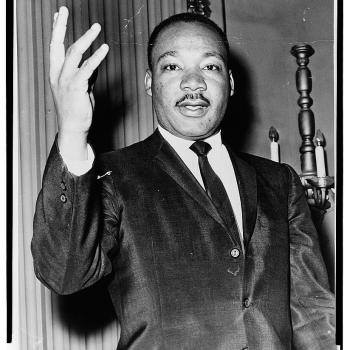
Martin Luther King, Jr. was born on this day in 1929. Following in his father's and grandfather's footsteps, he was ordained as a minister in 1948. Dr. King became one of the most important leaders of the civil rights movement in the U.S., advocating a nonviolent approach to fighting for equal rights. He received the Nobel Peace Prize in 1964. Dr. King was assassinated in Memphis, Tennessee, on April 4, 1968.
Listen to a recording of Martin Luther King's I Have a Dream speech and discuss the meaning of his words. This I Have a Dream lesson plan includes numerous discussion questions that can help guide class exploration of the speech.
Once students understand this speech, ask them how they would convey Dr. King's vision and character without using words. To get started, look at these photographs of Dr. King and historical events in which he was involved. What messages are these photographs communicating?
Using the photographs as a model, have students work in groups or as a class to create a mural that depicts their understanding of Dr. King's vision of peace. The Art and Activism unit from Tolerance.org includes lessons on planning, creating, and sharing murals that you can use to get your own class mural underway. Once the project is complete, display murals throughout your school to honor Dr. King.
On January 20, 2014, people throughout the world will honor the life of Martin Luther King, Jr. Find out how to participate by making this holiday "a day ON, not a day off."
The Seattle Times provides an extensive collection of resources including articles, transcripts, photos, and information about the holiday in King's honor.
Visitors to this extremely comprehensive site will find a chronology, encyclopedia, biography, videos, lesson plans, and more.
This PBS American Experience website offers a collection of resources, including information on Dr. King's philosophy of non-violence, video clips, and an interactive map of U.S. Civil Rights hot spots. Also featured is a teacher's guide to the Citizen King documentary.

Judy Blume has written books for all ages. Her books have received close to 100 awards and have been translated into 20 languages. Judy Blume continues to write books that delight all ages.
Tales of a Fourth Grade Nothing is a perfect read-aloud. Students will enjoy listening to the adventures of Farley Drexel, a.k.a. Fudge. When you finish reading the book, ask your students what they thought was the funniest part of the story. Invite students to work individually or with a partner to create cartoons of the scenes they liked most. They can use the Comic Strip Planning Sheet to get started. If students have computer access, have them use the Comic Creator to create their strips. Visit the Comic Creator page for more information about using this tool in the classroom. This activity can be done with any of Blume's humorous stories.
This is Blume's official website. Students can read her biography, view photos, watch a video about her latest book, learn some writing tips, and more!
This resource from Scholastic includes a biography of Blume, an interview with her, and a list of her books.
This ARTSEDGE guide is used before and after a Kennedy Center performance of Tales of a Fourth Grade Nothing. It includes activities that can easily be adapted for classroom use without attendance at a performance.
A panel of authors discuss their favorite Blume books, how they related to the universal challenges and horrors of growing up that Blume put on the page, and her impact on their work.

Amelia Earhart was born in 1897. Once she began flying in 1921, she quickly set numerous women's altitude, speed, and distance records. On this day in 1935, Earhart became the first person-male OR female-to fly solo from Hawaii to California. On June 1, 1937, Earhart began her last journey: to fly around the world. After successfully flying 22,000 miles, she failed to arrive at a scheduled stop on Howland Island in the Pacific. No trace of her or her plane has ever been found.
Heroes come in many shapes, sizes, situations, and packages. A hero to one person is not necessarily a hero to another. This day in history provides a chance for students to explore the definition of a hero. Have students ask at least three people (one who is their age, one who is younger, and one who is older) these questions:
- Who is someone you identify as a hero?
- Why do you think that person is a hero?
Once they've gathered their interview answers, ask students to share them with the class. Have them explore, as a class, the characteristics that are repeated and the reasons for any commonalities found in the results. Additionally, ask students to note anything particularly unusual in the responses. Then, use the interactive Venn diagram to create a classroom Venn diagram with three circles, each identifying one of the most common characteristics of a hero. Finally, have students place each of the heroes' names on the appropriate place in the Venn diagram.
When everyone has had a chance to share their findings, students can create posters that include pictures of their own heroes and words that describe the qualities that make each one heroic.
This Library of Congress page includes photographs, a brief biographical sketch, and links to additional stories abut Amelia Earhart.
This page, part of the Women Who Changed History section of the Scholastic website, provides a teacher's guide and student activities related to Amelia Earhart.
This site invites people around the world to publicly celebrate their heroes through images, video, and text.

Jane Yolen has written more than 170 books for children and adults. Her books, ranging in topic and theme from animal picture books to books about the Holocaust, have won many awards over the years. Yolen has been called "America's Hans Christian Andersen."
Jane Yolen and her family are avid bird watchers. Yolen's love of birds and nature is conveyed in many of her books. For example, Owl Moon, The Bird of Time, Bird Watch, Off We Go, and The Originals would be good books to read when starting a unit on animals.
After students read one of Yolen's books, have them retell the story in the form of a puppet show. (The Caldecott Award-winner Owl Moon motivated second-grade students to create dioramas that can be used as a model.) Students can then research animals in the book and document their findings with the Animal Study interactive tool. As a follow-up activity, take your students on a nature walk. Upon returning to class, have students create watercolor paintings of the animals they saw.
For older students, consider exploring some of the themes in Yolen's books for young adults, such as The Devil's Arithmetic or Armageddon Summer.
This site is an excellent resource for learning more about Yolen. It includes a biography, a comprehensive list of Yolen's books, and separate sections for kids, teachers, and writers.
The University of Rochester Libraries website offers this transcript of a lengthy interview with Yolen, focusing primarily on her work with Arthurian legend.
In this online workshop from Scholastic, Yolen guides students through the process of writing myths. The author provides information on writing strategies and a few warm-up activities.
Jane Yolan's online journal offers a glimpse into her life and how it informs her work.

On October 14, 1884, George Eastman received his patent for photographic film. This led the way for the production of the first small hand-held box camera, bringing photography out of the exclusive realm of the professional photographer. Today, the possibilities for bringing photography into the classroom are nearly boundless.
Explore photography and digital imaging to discover new ways of combining visual and textual composition to enhance every area of the curriculum. Create a scrapbook that includes photographs, video clips, audio clips, and student work. First, choose a format based on your available resources. Examples include PowerPoint presentations, websites, videotapes, or booklets. Keep a camera/video equipment handy, and include some of these in your project:
- Students' favorite pieces of writing or artwork, including descriptive captions or commentary
- Videotapes of songs or skits
- Students' descriptions of what they are learning, via a video or audio interview or in writing
- Photomontages of units studied
Work on your scrapbook throughout the year, and then present it to parents at an end-of-year party!
This U.S. Patent and Trademark Office press release describes how George Eastman's invention allowed for the mass production of cameras.
This article from Education World offers two dozen different classroom activities that make use of a digital camera.
On this page of educational technologist Kathy Schrock's website, she provides links to resource pages specifically designed to enhance the use of cameras and other devices in the K–12 classroom.
This lesson plan from Scholastic is designed for grades 6–12.

Beverly Cleary was born on April 12, 1916, and has authored dozens of books since her first, Henry Huggins, in 1950. Cleary has won many awards for her writing, including the 1984 Newbery Medal for Dear Mr. Henshaw, and the Newbery Honor for Ramona and Her Father and Ramona Quimby, Age 8. The Beverly Cleary Sculpture Garden honors Cleary's contributions to children's literature and highlights her most memorable characters.
Create your own classroom tribute to Beverly Cleary while students practice persuasive writing. Have students select the characters they believe are the most memorable from Cleary's book and then write short persuasive essays to explain their choices.
- After students select their characters, have them use the Character Map section of the interactive Story Mapping tool to brainstorm ideas about why the characters are memorable.
- Have students use their Character Maps and notes to write persuasive essays that explain why the characters are special and important. Students can map out their essays using the online Persuasion Map.
- Next, provide a variety of art materials (clay, paint, pencils, markers) and have students create sculptures, drawings, or paintings of the characters.
Display students' artwork and writing together in a classroom, cafeteria, or hallway as a Beverly Cleary tribute.
Read about this tribute to Beverly Cleary, and view a gallery of sculpture images.
HarperCollins provides this website for teachers and children. Resources include trivia, author and character information, a booklist, and printable teaching guides.
In this video interview, provided by Reading Rockets, Beverly Cleary discusses how she became a celebrated author.
This brief, kid-friendly biography is accompanied by a list of Cleary's books.
Check out the movie starring Joey King as Ramona Quimby and Selena Gomez as Beezus Quimby.

American poet Walt Whitman was born on Long Island, New York, in 1819. In 1855, Whitman self-published the first edition of Leaves of Grass. Several editions of the book, which celebrated its 150th anniversary in 2005, were later published. Whitman wrote other important works, including "O Captain! My Captain!," which was a response to the death of Abraham Lincoln. Walt Whitman died on March 26, 1892.
Invite your students to write and illustrate their own children's stories, using the text from a Walt Whitman poem. First, have students read Whitman's poem "Miracles," from Leaves of Grass. Next, share the picture book Nothing But Miracles, which features the text of the poem. Have a volunteer read the story to the class, and then as a group, discuss the book's illustrations.
- How do the illustrations enhance the telling of this story?
- How did the experience of reading this poem with illustrations differ from reading it without illustration?
After discussing the book, have students select Whitman poems that would make good children's picture books. Have students create illustrations for the poems they select and then publish their books. Share the books with a primary classroom in your school or district. You might also have your students create digital storybooks to share on the Web.
The Academy of American Poets presents this profile of Whitman, with a bibliography of his works and links to selected poems.
The Walt Whitman Archive offers manuscripts, correspondence, biographical information, images, and other resources related to Walt Whitman and his work.
This Learner.org feature provides brief biographical information about Walt Whitman. Also included is a video clip of Out of the Cradle Endlessly Rocking, along with links to related resources.
The Library of Congress offers this online exhibit exploring Whitman's life and work through primary source materials, such as journals, letters, photographs, and etchings.

Barbara Park was the author of over two dozen Junie B. Jones books, as well as several stories for older readers including My Mother Got Married and Other Disasters, Skinnybones, and Mick Harte Was Here. Park's books have earned a number of awards, including many children's choice and parents' choice award lists. Titles in the Junie B. Jones series continue to appear on bestseller lists.
Have your students write their own "Junie B." stories after brainstorming issues they've experienced during the school year.
- First have the group make a list of the Junie B. adventures in the books they've read (e.g., cheating, school play, losing a tooth).
- Then ask students to brainstorm a second list of ideas that would make interesting stories.
- Students can work alone or in pairs to write their stories, using one of the ideas from the class list. Have students use the interactive story map to plan their writing.
- After all stories have been completed, have each student or pair share their story with the class.
Have students turn their stories into books, with illustrations, and then work with your school or community librarian to create a library display of all the new stories.
A website for kids, including a bibliography of Junie B. books, interactive and printable activities, as well as information about Park's books for older children.
This Random House resource provides summaries and teacher's guides for all of the Junie B. Jones books. Links are provided to other book series resources as well.
This resource contains a brief biography of Park as well as some notes and a list of some of her Junie B. Jones books.
This site provides links to resources about Barbara Park, including an interview in which she describes her experiences in writing the books.