As part of their study of Richard Wright's Black Boy, students research and reflect on the current black-white racial divide in America. By examining the work of literature in the context of contemporary events, students will deepen their understanding of the work and of what it means to be an American today.

Examining the Legacy of the American Civil Rights Era

Comparing Portrayals of Slavery in Nineteenth-Century Photography and Literature
In this lesson, students analyze similarities and differences among depictions of slavery in The Adventures of Huckleberry Finn, Frederick Douglass' Narrative, and nineteenth century photographs of slaves. Students formulate their analysis of the role of art and fiction, as they attempt to reliably reflect social ills, in a final essay.

Analyzing Famous Speeches as Arguments
Students are often asked to perform speeches, but rarely do we require students to analyze speeches as carefully as we study works of literature. In this unit, students are required to identify the rhetorical strategies in a famous speech and the specific purpose for each chosen device. They will write an essay about its effectiveness and why it is still famous after all these years.
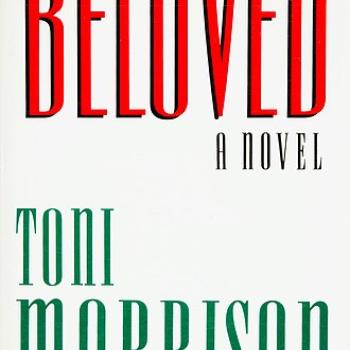
Narrative Structure and Perspectives in Toni Morrison's Beloved
Using Beloved as a model of a work with multiple narrative perspectives, students use a visualizing activity and close reading to consider ways in which subjective values shape contradictory representations.
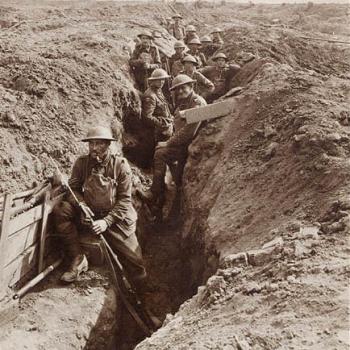
Exploring Irony in the Conclusion of All Quiet on the Western Front
After reading All Quiet on the Western Front, students discuss the novel's ironic ending, then compose alternate titles and endings for the book, and design new book covers.
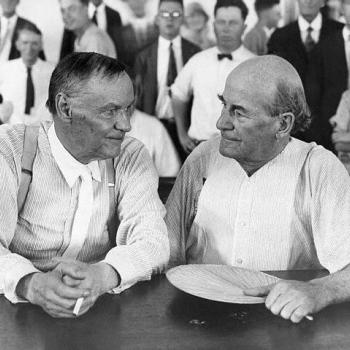
Exploring Audience and Purpose with a Single Issue
Students explore the concepts of audience and purpose by focusing on an issue that divided Americans in 1925, the debate of evolution versus creationism raised by the Scopes Monkey Trial.

Decoding the Dystopian Characteristics of Macintosh's "1984" Commercial
This lesson uses the "1984" Macintosh Commercial to introduce students to dystopian characteristics. Students analyze techniques used in the commercial and identify the comments that it makes about contemporary society.

Analyzing the Stylistic Choices of Political Cartoonists
Students explore and analyze the techniques that political (or editorial) cartoonists use and draw conclusions about why the cartoonists choose those techniques to communicate their messages.
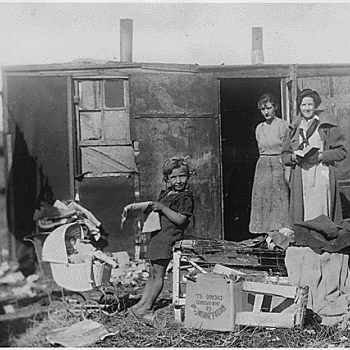
Designing Museum Exhibits for The Grapes of Wrath: A Multigenre Project
Using The Grapes of Wrath as a backdrop, students conduct research on issues that the novel addresses, publishing their findings in a multigenre museum exhibit.

Using Student-Centered Comprehension Strategies with Elie Wiesel's Night
Working in small groups, students read and discuss Elie Wiesel's memoir Night and then take turns assuming the "teacher" role, as the class works with four different comprehension strategies.

Freedom of Speech and Automatic Language: Examining the Pledge of Allegiance
This lesson has students explore freedom of speech by examining the Pledge of Allegiance from a historical and personal perspective and in relationship to fictional situations in novels.
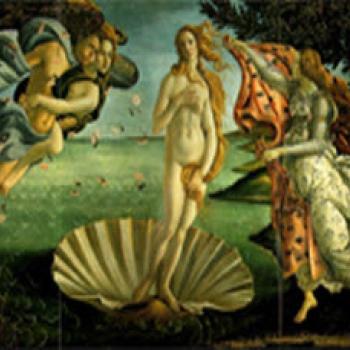
Renaissance Humanism in Hamlet and The Birth of Venus
After reading Shakespeare's Hamlet, students identify, analyze, and explain how elements in Botticelli's painting Birth of Venus and examples from the play illustrate the philosophy of Renaissance Humanism.

Life is Beautiful: Teaching the Holocaust through Film with Complementary Texts
After students have read a book about the Holocaust, such as The Diary of Anne Frank or Night by Elie Wiesel, students will view Life is Beautiful and complete discussion questions to challenge their ability to analyze literature using film.
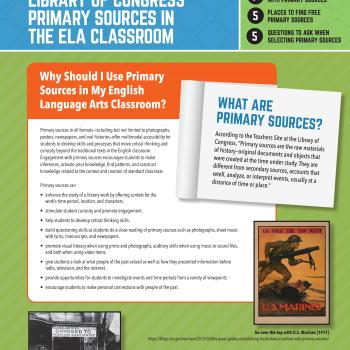
Engaging Students with Library of Congress Primary Sources in the ELA Classroom Quick-Reference Guide (QRG)
Quick-Reference Guide (QRG) focused on "Engaging Students with Library of Congress Primary Sources in the ELA Classroom."

Rosa Parks was born on this day in 1913.
Rosa Parks was committed to the struggle for social justice and human rights until her death, inspiring millions of people around the world. Today, we celebrate her!

Tim O'Brien in the Classroom: "This too is true: Stories can save us"
As part of the NCTE High School Literature Series, Tim O'Brien in the Classroom focuses on opportunities for classroom discussion and writing assignments, including lessons, open-ended prompts, and student writing samples.

Nonfiction Roundup
With each annual crop of new nonfiction, teens have the opportunity to discover and explore new disciplinary worlds. Tune in to hear about an array of recently-published nonfiction titles that will engage teens in learning about history, science, economics, and medicine. You'll hear about junk food and advertising, the atomic bomb and civil rights, bird watching and volcanoes – books written in a variety of formats for a variety of teen readers.

Exploring History
Hear about an amazing range of books that explore history, including works of fiction as well as non-fiction, biographies, graphic novels, verse novels, and investigative journalism.

Being a YA Lit Advocate
Tune in to hear about what it means to be a YA lit advocate and what YA advocacy work can look like. You'll learn strategies you can use to challenge misconceptions about YA lit. You'll also hear about a variety of fiction and nonfiction titles you can recommend to teen readers.

A Conversation with Candace Fleming
In the world of young adult literature, some of today's best and most powerful stories are being told by authors of nonfiction. Tune in to hear Candace Fleming discuss the origins of The Family Romanov, research as a process of questioning, and how authors of nonfiction are pushing the envelope in books for today's teens.