Classroom Resources > Resource Type
Children's Book Week encourages children to enjoy new authors and books, and is celebrated in schools, libraries, homes, and bookstores during a selected week in May and November. During this event, celebrate children's literature with storytelling, parties, author and illustrator appearances, and other literacy events in your school and community. As part of the celebration, children are invited to help select the top children's book of the year by voting online or at their school or library.
The winners of the Children's Choice book awards will be announced during National Book Week. Before the winners are announced, children across the nation will be able to vote for their favorites. Invite your students to show why their favorite finalist should win by designing a promotional book cover.
- First, have students read Children's Choice finalist books in their grade range. Younger students can read all five finalists, while older students may read fewer.
- Then, ask each student to select his or her favorite finalist and brainstorm reasons why it is so good. Encourage students to consider specific elements, such as characters or plot.
- Next, have students look at their brainstormed lists and select the ideas that could be depicted on the book cover. Challenge each student to design a book cover that will convince others that his or her favorite should win.
- Finally, have students use the Book Cover Creator to create their book covers. They can then display their book covers with the book in a classroom or school display or on a bulletin board.
Access information about this annual event on this site from the Children's Book Council. Included are dates for this event for the next five years, book week materials and information, and more.
Help children find the perfect book with these children's, teachers', and young adults' choices booklists from the International Literacy Association.
This resource from Scholastic provides a collection of suggestions for holding a successful Book Week event in your school.
In 1990, NCTE established an annual award for promoting and recognizing excellence in the writing of nonfiction for children in grades K-8. The name Orbis Pictus commemorates the work of Johannes Amos Comenius, whose Orbis Pictus-The World in Pictures (1657) is considered to be the first children's picture book. One title is selected for the award each November at the Annual NCTE Convention, and as many as five Honor Books are also recognized.
Have your students conduct research and write original works of nonfiction on topics of their choice. Students may wish to work collaboratively on this project as coauthors or author-illustrator teams.
- First, have students brainstorm possible topics individually or in small groups.
- After each student or team has selected a topic, have them conduct research using appropriate Orbis Pictus Award-winners, Internet resources, and other reference sources.
- Have students plan and write informational picture books, biographies, or other works of nonfiction. You may wish to have students create a Flip Book to help them organize their information.
The National Council of Teachers of English provides information on the annual Orbis Pictus Award, including its history, selection criteria, and nomination procedures.
This sample chapter from the NCTE text The Best in Children's Nonfiction explores the elements that come into play as the committee chooses the winner.
This page, from the State Library of South Australia, offers information about Johannes Amos Comenius and his illustrated Latin primer for which the Orbis Pictus award is named. Additional links and an image from the book are also included.
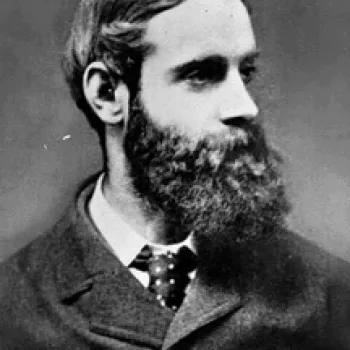
Randolph Caldecott was a British artist whose illustrations delighted young Victorian readers. In addition to his children's books, Caldecott also illustrated novels, created humorous drawings and cartoons, and sketched Parliament. His sculptures and paintings were exhibited in the Royal Academy and art galleries. The Caldecott Medal, named in his honor, has recognized the best illustrators in children's literature since 1938.
Create a classroom literary award modeled after the Caldecott Medal. Begin by having your students explore the history of the Caldecott and review the criteria used for selection of Caldecott winners and honor books. Then have students work in small groups or as a whole group to create a class award:
- Select a name for the award. This may be based on the school name or mascot, or students may want to honor a student, staff member, or even their favorite author/illustrator.
- Decide on selection criteria and create a written document.
- Design the award, in the form of a ribbon, medal, or certificate.
- Select a book from those read during the school year or a previous year. Have students nominate their favorites, and then write essays justifying their selections. After essays have been read aloud, have the class vote on their choice.
Share your selection with your school with a display outside your classroom or in the school library. You may wish to have students "present" the award by locating author websites to contact the authors of the selected books.
The American Library Association provides information on the Caldecott Medal and Randolph Caldecott. Link to related resources, including a list of winners from 1938 to the present.
The Randolph Caldecott Society of America offers this page, detailing the life and work of Randolph Caldecott.
Kidsreads offers information about the ALA awards, including the Caldecott Medal, honoring the best books published in the previous year.
This site offers biographies of Caldecott Medal winners, as well as links to reviews of their books, primarily at Amazon.com.
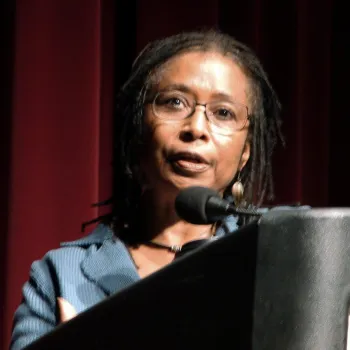
Alice Walker, best known for her novel The Color Purple, writes about racism and related themes, as well as feminist issues. In 1983, she became the first African American woman to win a Pulitzer Prize for her portrayal of a poor black woman's struggles in The Color Purple. Walker is also the author of dozens of books of poetry, novels, short stories, and memoirs.
Have your students explore Walker's use of dialect in The Color Purple and then extend their understanding through experimentation in their own writing. First, have your students read the novel. To start the discussion on dialect, select a passage from the novel and rewrite it using standard or formal English. Share your revision with students and have them compare it with the original. Have students find and discuss additional examples of African American dialect in the novel, and then explore the following questions:
- How does Walker's use of dialect affect the story?
- Would the story have the same impact if passages were rewritten in formal English? How would the impact be different?
- Does the use of dialect challenge the reader? Why or why not?
Invite students to write a short piece of fiction or poetry using the dialect of their peer group. Have them rewrite the piece in formal English, and then ask them to compare the two and select their favorite.
Read a sample chapter called "Where Life and Art Intersect" from the book Alice Walker in the Classroom: "Living by the Word", published by the National Council of Teachers of English.
The BBC offers this collection of audio interviews with Alice Walker. In them, she discusses her life, the Civil Rights movement, her work as an author, and more. Biographical information is also included.
The Academy of American Poets offers this biography on Walker. Information about her major literary works and links to related information are included.
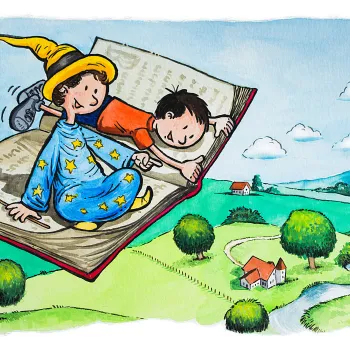
Children's Authors and Illustrators Week (the first week in February) features a variety of activities that are intended to promote literacy in an engaging and interactive way. Encourage a lifelong love of reading with your students by participating in events such as author and illustrator visits to your school, storytelling, literary presentations, writing workshops, and more.
Invite your students to "step into the shoes" of their favorite author or illustrator. Have students first read several of the author's books and then conduct research on his or her background and career. Next, have students become their favorite authors and prepare presentations for the class. Presentations can include displays representing the authors' work, question and answer sessions, interviews, press releases on the authors' latest books, and so on. Students' presentations can also include creative costumes or props representing their authors' and illustrators' backgrounds and works (e.g., a Winn-Dixie shopping bag for Kate DiCamillo, or a teddy bear for Don Freeman).
Hold an "Authors Open House" and invite other classes in to meet the authors!
This website includes a description of this literacy event, in addition to contact information for the Children's Authors Network! Also featured are tips for parents, caregivers, teachers, and librarians.
This indispensible guide from the Children's Authors Network! can help you plan for Children's Authors and Illustrators Week. The reproducible resource includes planning and follow-up checklists, helpful hints, suggested questions, and funding ideas.
This site offers an alphabetical list of links to sites of children's authors and illustrators.
ReadWriteThink podcast host Emily Manning chats with kids, parents, and teachers about the best in children's literature for ages 4 through 11. Discussions include reading tips and fun activities to do with children before, during, and after reading.
Teachers and students come to school bringing a wide range of backgrounds, languages, abilities, and temperaments. Get things off to the best start by asking them to respect their differences and make the most of their similarities. By sharing information on their lives and dreams, students and teachers can build community in the classroom that will support literacy instruction throughout the school year.
The first weeks of school can set the tone for the rest of the year, so community-building is a priority. Ask students to share details about their lives with one another using the interactive Graphic Map.
- Ask students to identify key moments in their lives. Younger students can brainstorm a list of events from the summer, while older students might focus more specifically on significant events from previous years at school.
- Have students assign a positive or negative value to each event based on their feelings about it. Happy events like "meeting a new friend" would have a high number, and sad events like "having to leave a sibling at home" would have a lower number.
- Once students have gathered their ideas, ask them to publish the entries using the interactive Graphic Map. Have students record a brief description and include an image for each memory. If computers are not available, have students draw graphics and add captions for their memories on construction paper.
- When everyone has completed their graphic maps, invite students to share their memories in small groups or with the whole class. Encourage students to look for feelings that they have all experienced and to identify details that they want to know more about.
See the Graphic Map page for more information and activities for this interactive tool.
This booklist, compiled by ReadWriteThink, names texts that can be shared with Grades K–2 and Grades 3–5 students during the first few days of school.
This NCTE resource provides additional lesson plans, teaching strategies, journal articles, and more to help the first weeks in the classroom flow more smoothly.
This article from KidsHealth includes tips for dealing with first-day jitters, the first day at middle school, and getting a good start.
Older students can find resources on this KidsHealth site to help make the first days of school more successful. The site includes topics such as choosing extracurricular activities and dealing with bullying.
Compiled by ReadWriteThink, this booklist suggests titles that can be shared with students in Grades 6-9 during the beginning weeks of school.

Lane Smith has collaborated with Jon Scieszka on titles including the Caldecott Honor book The Stinky Cheese Man and Other Fairly Stupid Stories and the best-selling The True Story of the Three Little Pigs. In addition to his collaboration with Scieszka and other authors, he has written and illustrated several of his own children's stories. His illustrations have appeared in several publications other than books, including The Atlantic Monthly and Newsweek.
Discuss with your students some of the ways in which illustrations can enhance a story. Begin by reading just the text of a picture book. Then share the actual book, pointing out the illustrations. Ask students how the pictures help them understand the story better. Then, have your students become illustrators, using a variety of media. Offer choices including paint, pencil or colored pencil, pen and ink, felt-tipped markers, or collage. Offer students a variety of choices such as:
- Illustrate a favorite story they have written.
- Collaborate with a partner and become an author—illustrator team. Alternatively, each student writes a story and then illustrates each other's works.
- Select a favorite children's book and mimic the illustrator's style, or create illustrations for the story in their own style.
When students have completed their illustrations and stories, be sure to display them in the classroom or school library!
This site offers information on the adventures of the Time Warp Trio, as well as links for games and the TV show. There is also a section of links for teachers and parents.
Penguin Publishers offers this biography of Smith. Also included are links to an author interview and a booklist.
This resource from Scholastic provides suggested activities for teaching Squids Will Be Squids by Jon Scieszka and Lane Smith. There is a link on the page to similar resources for The True Story of the Three Little Pigs.
Lane Smith's website offers a brief biography and bibliography, as well as sketches, videos, and games related to his work.
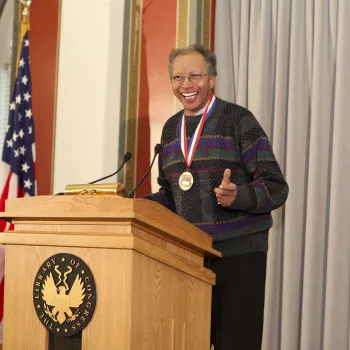
Walter Dean Myers authored dozens of young adult novels, short stories, and other works. He began writing at an early age, after discovering that he could easily read his own words, despite a speech disability. Myers' novels about adolescents in real-life situations have earned a number of awards, including the Coretta Scott King Award for several titles, such as Fallen Angels, and a Newbery Honor Award for Scorpions.
Monster is presented in the form of a film script, written by the main character. Discuss how this format affects the story and why the author may have selected this writing style. Have students write a story using a similar format. Some options include:
- Have students rewrite a story as a screenplay from a character's point of view. Younger students could select a favorite children's story or picture book for this activity, while older students may choose their favorite novel.
- Ask students to write an autobiographical story. Have students first list interesting events from their lives, and then write a true or fictional account based on the facts.
Have students share their stories by creating a class book or reading them aloud.
This Houghton Mifflin page offers a biography of Myers and a booklist of his works.
HarperChildren's provides this reading group guide for Monster. There are discussion questions and information related to Myers and the book.
This page from Reading Rockets features an interview with Myers. Also included on the page are links to an annotated booklist and a brief biography of Meyers.
Scholastic offers this brief autobiography of Myers with links to additional information about his poem Harlem and a page focusing on the work of Myers and his son, illustrator Christopher Myers.
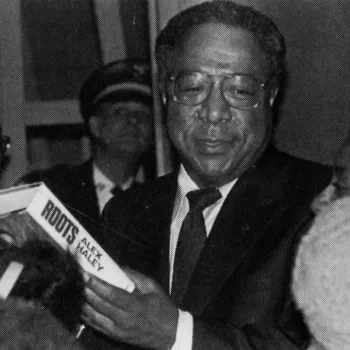
Alex Haley's first notable work was as editor of The Autobiography of Malcolm X. He is most remembered for Roots: The Saga of an American Family, which earned a Pulitzer prize in 1976, and then became a very successful television mini-series in 1977. The story, about African slaves brought to America, was based on Haley's search into his own ancestry. Queen, a sequel to Roots, followed in 1993.
Have students explore their own roots by interviewing family members. Students then use their family history as a basis for their writing.
- First, ask students to identify family members who could share a detailed and interesting family story. Then, have the class brainstorm a list of appropriate questions to "jumpstart" the interview. (Help students think about using both open-ended questions such as "What do you remember about...?" or more specific questions, such as "Where were your parents born?")
- Have students select and interview (by e-mail, regular mail, telephone, or in person) one or two people.
- Ask students to use their interviews as a basis for writing a fictional account of their roots, in the way Haley's Roots was based on his own family history.
The foundation provides a variety of community and educator resources. Teachers can find information on genealogy, biographies of Haley and Kunta Kinte, timelines of African-American history, and more.
This teacher's guide is provided by Random House publishers. The page includes discussion questions, as well as a variety of activity suggestions for the classroom.
This website offers tips to get you started researching your own family history. Included is information about organizing the information you already have, using military records, census data, libraries, and other resources in your research, and sharing your family history.
The Genographic Project traces human ancestry through DNA. Individuals can learn about their own history by buying and using a kit prepared for the project.
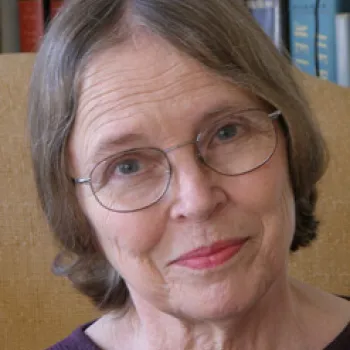
Natalie Babbitt was born and raised in Ohio. As a child, she spent a great deal of time reading and drawing. She always wanted to become an illustrator, and eventually studied art in college. In 1966 Babbitt illustrated a children's book written by her husband, called The Forty-ninth Magician. With the encouragement of her editor, Babbitt went on to write and illustrate over a dozen children's novels, picture books, and collections on her own.
Many of Natalie Babbitt's books address the concept of immortality, an issue that has intrigued humanity for centuries. From the ancient Egyptians' determination to reach the afterlife, to the more recent quests to locate the mythical "Fountain of Youth," history offers numerous examples of humankind's attempts to achieve immortality.
- Have students research these and additional beliefs from around the world, and then compare them to Babbitt's vision in Tuck Everlasting.
-
Have students consider questions such as:
- What are some similarities and differences among these different views?
- Why do people find the prospect of eternal life so intriguing?
- What would be the positive and negative aspects of immortality?
- After considering the issues, have students compose a short story, myth, or poem that addresses immortality.
- Finally, have students illustrate their works in a style similar to Babbitt's black-and-white line drawings.
This Scholastic biography for the author includes a link to an interview transcript and a list of her works.
Glencoe offers this reproducible teaching guide. It includes an author biography, vocabulary list, graphic organizers, and additional resources.
The site provides information about the book Tuck Everlasting and its author, Natalie Babbitt. In addition, there are links to activity ideas, online quizzes, discussion questions, and lesson plans. There is even a comparison to the Disney movie of this book.