Students learn about blues music and brainstorm subjects that might give them "the blues." Finally, they write their own blues lyrics and have the option to perform.

Celebrate blues legend Robert Johnson's birthday.
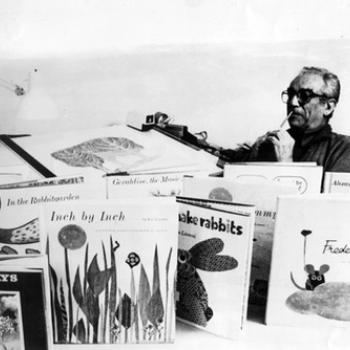
Today is Leo Lionni's birthday.
As a child growing up in Holland, Leo Lionni taught himself how to draw and later became an author and illustrator of children's books. Leo Lionni is the winner of four Caldecott awards.

The Spanish town of Guernica was bombed on this date in 1937.
After showing students Picasso's Guernica, they are provided with background information, share their impressions, and write about Picasso's purpose in creating the painting.
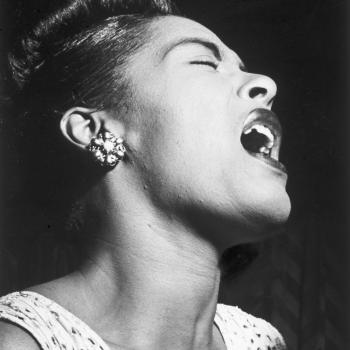
Jazz and blues singer Billie Holiday was born in 1915.
Students listen to Holiday's song "Strange Fruit" and identify powerful and descriptive images for a mini-lesson on tone and about the lynchings in the South during this time.
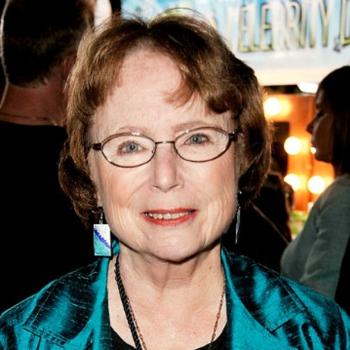
Author Lois Duncan was born on this date in 1934.
Mysteries are shared with students for them to solve and brainstorm the attributes of a good mystery. Small groups then compose short mysteries using the Mystery Cube.

Annie Moore becomes the first immigrant to enter Ellis Island in 1892.
Students explore online resources about Ellis Island, interview an immigrant in the area, and publish their stories.

James Naismith, inventor of the game of basketball, was born in 1861.
Students look at Naismith's original 13 rules for basketball and write about the rules and how they have changed in small groups.
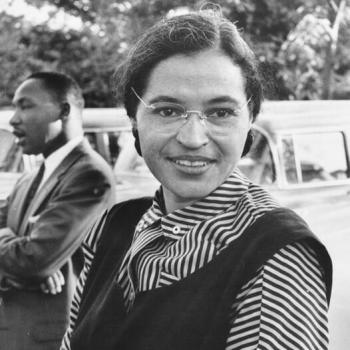
Rosa Parks was arrested for refusing to give up her seat on a bus.
Students make believe that the year is 1955 and they just heard about Parks' arrest. Students write newspaper editorials with their points of view on segregation.

Author Eve Bunting was born in Ireland in 1928.
Students listen to a news article about the LA race riots and then read Smoky Night to discuss how a younger observer might be affected by these events and their perceptions.
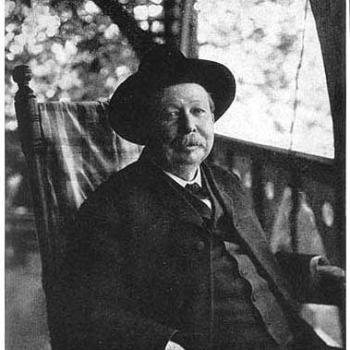
Author Joel Chandler Harris was born in 1848.
Students study how regional dialect is written phonetically by reading a segment of Harris' story, as well as two others, and compare them using the Interactive Venn Diagram.
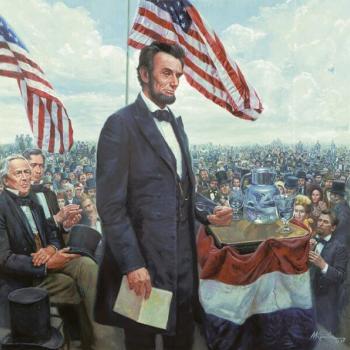
Abraham Lincoln delivered the Gettysburg Address in 1863.
Students practice the Pre-AP strategy called SOAPSTone, identifying important parts of the Gettysburg Address and comparing it with John F. Kennedy's inaugural speech.

On this day in 1918, the United States passed the U.S. Standard Time Act.
A video conference with a class from a different country or time zone is planned. Students brainstorm questions to ask and figure out how many time zones they would have to travel through to have the conference.

Kristallnacht occurred in 1938.
To help understand the thinking of German leaders during the Holocaust, students write about a time when they failed to come to the assistance of someone who needed help.

Dr. Jonas Salk, who developed the polio vaccine, was born in 1914.
After learning about Dr. Salk, students interview a family member or someone they know who remembers the polio epidemic.
Black Poetry Day is celebrated.
Books and webpages are gathered that focus on the work of African American poets and students explore the resources and find a poem to contribute to a poetry reading.
The Post 9/11 Landscape
Hear how graphic novels place the events of 9/11 in historical context, how war stories put a human face on the costs of military conflict, and how YA novels imagine roles that teens can play in working for a better world.
A Conversation with John Green
Tune in to hear John discuss why he writes for teens, what he believes readers can gain from their English classes, and some of the thinking behind his newest book, Paper Towns.
A Conversation with Laurie Halse Anderson
In this episode, Laurie Halse Anderson talks about her newest book, Wintergirls.
A Conversation with Matt de la Peña
Tune in to hear Matt discuss some of the thinking behind his newest novel, We Were Here.

Celebrate National Library Week!
Students learn more about libraries as part of National Library Week.