Classroom Resources > Resource Type
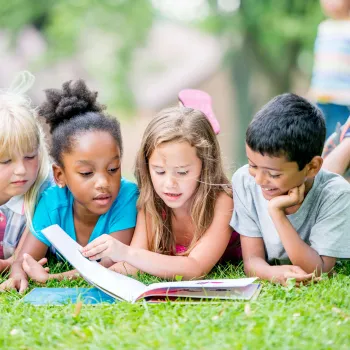
Summer reading is an important component of an overall reading program. Research shows that summer vacation often has a significant negative effect on student learning. Providing opportunities for students to read regularly during the summer can prevent documented reading achievement losses. The bottom line is that students who read during the summer do better in the fall.
A June literacy fair for students and their families is the perfect way to end the school year and get students off on the right track for the summer. In addition to standard carnival fare (face painting, games of chance, etc.), offer a variety of fun literacy-based activities.
- The cost of entrance? Ask students to bring a lightly used book as an entrance pass, to be collected on a table or display. As students leave, each person can select a book to keep from the donations.
- Hold a literary trivia contest, with new, donated books for prizes.
- Invite an author to your school for a book reading/signing event.
- Don't forget to invite families to your event and to include informational material.
This collection of NCTE blog posts is the perfect place to begin looking for summer reading resources. They are full of text suggestions!
Reading Rockets provides ideas to keep kids reading during vacation. There are activities and tips on encouraging children to love reading.
Whether for summer reading or during the school year, these selections will reinvigorate the curriculum and inspire students to forge rich connections to literature and media.
Get Caught Reading is a nationwide public service campaign launched by the Association of American Publishers to remind people of all ages how much fun it is to read. May is officially Get Caught Reading month, but the celebration lasts throughout the year. Get Caught Reading is supported by hundreds of celebrities, including LL Cool J, Dylan and Cole Sprouse, and the newest addition, Olivia the Pig.
Celebrate Get Caught Reading Month with a reading-related service project. Try one of these activities with your students:
- Plan an intergenerational reading day. Invite seniors to visit your school, or arrange a trip for your students to a local senior center. Have students select books to read to adults, and invite adults to share a favorite story with students. Extend an ongoing invitation to guest readers, perhaps on a monthly basis.
- Organize a book drive to collect new or nearly new books to supplement your classroom or school library, or to donate to families or a local children's hospital.
Be sure to have a camera on hand to "catch your students reading" on film throughout the month. You can also have students organize a community "Get Caught Reading" campaign by taking photos of members of their families and community figures (firefighters, grocers, local police officers, etc.) caught reading, and creating a school display.
The Get Caught Reading website offers resources for teachers, librarians, and kids. Look for literacy fact sheets, artwork, and information on getting involved.
The Northwest Territories Literacy Council offers this reproducible guide to Get Caught Reading. Included are ideas for promoting this and other literacy programs, as well as reproducible bookmarks and posters.
Reading Connects offers this page, filled with suggestions for promoting reading at school.
KidsReads.com helps kids select books that appeal to them by offering kid-friendly reviews and information about children's books and authors. The information is searchable by author, series, and special features. The companion site Teenreads.com focuses on young adult literature.
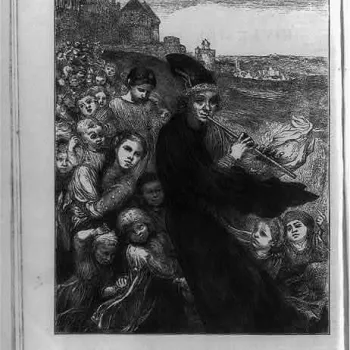
The legend of the Pied Piper of Hamelin has been recounted in a number of literary works by authors including the Brothers Grimm and poet Robert Browning. Though legend says that the Pied Piper led the children out of Hamelin on June 26, 1284, Browning used the date July 22, 1376, for rhyming purposes.
Have you ever wondered what things would look like in Hamelin from the rats' point of view? Read aloud The Amazing Maurice and His Educated Rodents by Terry Pratchett, winner of the 2001 Carnegie Medal. The synopsis of the book included in this resource guide shows why librarians in the United Kingdom named this book the "outstanding book for children and young people" published in 2001.
After sharing this book with students, have them compare Pratchett's version with Browning's version. After discussing how perspective changes the story, you can have students look at other fairy tale retellings such as Jon Scieszka's The True Story of the Three Little Pigs.
The Indiana University Libraries site includes an electronic version of the 1888 edition of Browning's poem with scanned images of the illustrations by Kate Greenaway.
For background information on Browning, visit the Academy of American Poets site. This site also features some of his poems, including "The Pied Piper of Hamelin."
This page from the University of Pittsburgh offers several versions of the Pied Piper tale, including the Brothers Grimm version and Browning's version.
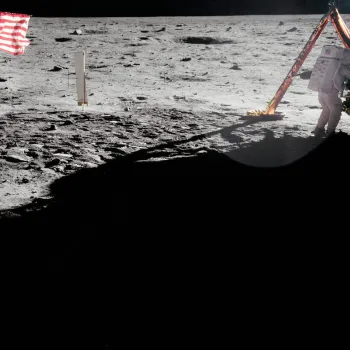
"That's one small step for man, one giant leap for mankind." With those words, Neil Armstrong was the first person to step on the moon. Armstrong's historic first step on July 20, 1969, was a hallmark mission in the U.S. space program and marked the first time humans stood physically on a celestial object other than Earth. See Armstrong's biography for a movie showing the historic moment.
The words Armstrong spoke (audio from NASA) as he stepped onto the moon were carefully chosen. Even so, Armstrong is reported to have made a mistake. NASA planned for Armstrong to say, "That's one small step for a man, one giant leap for mankind" (emphasis mine); however, he left out the word "a" when he stepped onto the moon's surface. Begin your exploration of Armstrong's famous words by discussing the all-important difference that one word can make. Take the opportunity to discuss the gendered language that Armstrong uses as well.
After exploring Armstrong's words in detail, turn to a discussion of why those words were chosen. In a speech at Rice University on September 12, 1962, President John F. Kennedy said, "We choose to go to the moon! We choose to go to the moon in this decade and do the other things-not because they are easy, but because they are hard. Because that goal will serve to organize and measure the best of our abilities and skills, because that challenge is one that we are willing to accept, one we are unwilling to postpone, and one which we intend to win."
How do Armstrong's words connect to Kennedy's, how do they connect to the mission at large, and how do they represent the space program?
This webpage developed by NASA Kids celebrates the 45-year anniversary of Armstrong landing on the moon. The site is intended for elementary readers, and includes photos and a tool to calculate your weight on other planets.
This site from Smithsonian includes basic historical facts about Apollo 11, along with photos and actual audio files of Armstrong's first words on the moon.
The Smithsonian National Air and Space Museum is host to this collection of pages featuring details on the Apollo missions, including quotations from the people involved, photos with the ability to zoom, and a list of artifacts in the gallery.
Nine contestants participated in the first National Spelling Bee, sponsored by the Louisville, Kentucky, Courier-Journal in 1925. Now, over 250 student champions, ranging from 9- to 15-years-old, travel to Washington, D.C., to compete in the National Spelling Bee. The competition takes place during May each year. The National Champion receives $28,000 in cash and savings bonds as well as reference resources for his or her home library.
The National Spelling Bee competition has been broadcast nationally on ESPN and during primetime on ABC. In his article "All I Need to Know about Teaching I Learned from TV and Movies," Kenneth Lindbloom compares the competition to shows like Jeopardy. Lindbloom explains, "One might speculate that these events garner interest because they are contests with one winner and many losers. But more difficult contests-Westinghouse science winners, for example, or creative-writing contest winners-don't get the kind of publicity memorizers of trivia get." Ask your students to consider this with the following questions:
- Why do some contests get more publicity than others? What makes the National Spelling Bee interesting to the general public?
- Is the National Spelling Bee a sports event? Why has it been broadcast on ESPN?
- What counts as knowledge on television? What knowledge is seen, and what kinds of knowledge are not seen?
The official homepage for the competition includes details on the student spellers, their sponsors, the rules for the competition, and statistics. During the competition, photos of the events will be added to the site.
By Margaret Y. Phinney, this page from the Natural Child website explains invented spelling and emergent writing and includes suggestions designed to encourage children's writing and use of invented spellings.
This Scholastic website features essays that contain strategies aimed at integrating spelling into the reading and writing curriculum and helping students to improve their spelling skills.
ReadWriteThink's Word Wizard interactive allows students to spell words based on four favorite children's books. Students can read and listen to clues and click the hint button if they're stuck.
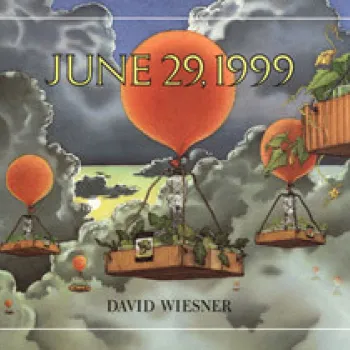
In June 29, 1999, main character Holly Evans undertakes a scientific project that appears to have gigantic results when huge vegetables begin landing on the planet. Yet she's still not sure where the vegetables all came from.
David Wiesner, author of June 29, 1999 (Houghton Mifflin, 1992) and two-time Caldecott Award winner, composes humorous books with delightful illustrations that surprise the reader. In fact, in June 29, 1999, Wiesner's illustrations are indicative of the emotions of the various story characters: people are delighted, surprised, and, in some cases, curious. Such illustrations provide an excellent opportunity for discussion of feelings and how they are expressed wordlessly through the talent of the illustrator. Explore the pictures in Wiesner's book carefully and identify elements that make the emotions in the story obvious to someone reading the book. Your students might then create lists of words and their own illustrations to express the feelings portrayed.
If you're looking for information on Wiesner's books, his biography, and related resources, this Houghton Mifflin site is for you. It even includes illustrations and notes on Wiesner's creative process.
Focusing on Wiesner's Caldecott Medal–winning book, this series of classroom activities includes comparing Wiesner's book to other versions of the three pigs story as well as links to a Kidspiration story map and additional resources.
This site provides recommended wordless picture books for children.
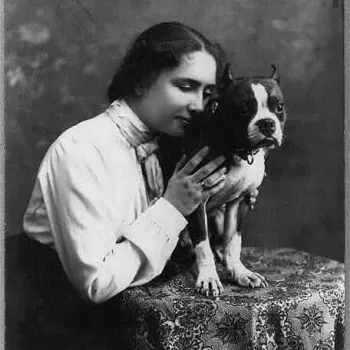
When she was born in Alabama on this day in 1880, Helen Keller was a normal baby; but when she was nineteen months old, she lost both her hearing and sight after an illness. As an adult, Keller was a writer, an educator, and a social activist.
In 1887, Keller learned to talk using a finger alphabet after her well-known breakthrough with Annie Sullivan at the family's well pump. The finger alphabet that Keller learned to communicate with Sullivan, her family, and eventually, many others was a basic version of the system that is now known as American Sign Language. Have your students explore the American Sign Language browser from Michigan State University and try using a few signs. Discuss how ASL differs from spoken English and how the two are similar. During the discussion, introduce the misconceptions about ASL addressed in the article Common Myths about Sign Language.
Ivy Green, Helen Keller's birthplace, sponsors this website on Keller's life and accomplishments as well as pictures and details on the birthplace, its grounds, and events that take place at Ivy Green.
The focus of this blog will be to synthesize research regarding the use of technology in the literacy development of deaf and hard of hearing students.
The Helen Keller Archival Collection at the American Foundation for the Blind (AFB) is the world’s largest repository of letters, speeches, press clippings, scrapbooks, photographs, architectural drawings, artifacts and audio-video materials relating to Helen Keller.
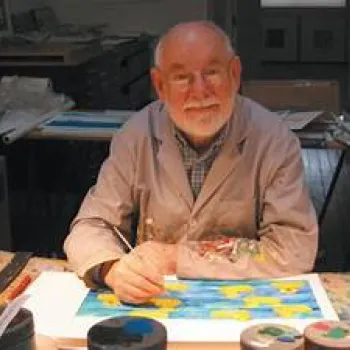
Eric Carle, born in Syracuse, New York, in 1929, has illustrated more than 60 books. One of his most beloved books, The Very Hungry Caterpillar, has been translated into more than 25 languages and has sold more than 12 million copies.
Eric Carle's illustrations feature paper collages, so after reading some of Carle's books you might create your own torn paper collages. Or if you're ready for more of a challenge, try creating Word Collages. Have students choose a scene, an emotion, an animal, or a person. Then students search out or create words, phrases, and sentences that illustrate what they've chosen. Words can be cut out of newspapers or magazines, created on a computer using a drawing program or the art tool in a word processing program, or drawn with markers or crayons. Assembled on a sheet of paper using glue or tape, the words should remind the reader of the scene, emotion, animal, or person that the student has chosen.
Eric Carle's own website includes information on all of Carle's books, upcoming events, forthcoming publications, and the Eric Carle Museum of Picture Book Art.
Devoted to national and international picture book art, this museum emphasizes ways of combining visual and virtual literacy. The virtual tour provides great visuals, which could be a springboard for language or visual arts projects.
Scholastic's Eric Carle Author Study includes information from an interview with Carle, background information, a bibliography, and a variety of classroom activities using several Carle books for art, science, math, social studies, and writing connections.
The National Gallery of Art offers this interactive tool for creating collages. Letters, numbers, signs, and shapes comprise the images available for use in the collage.
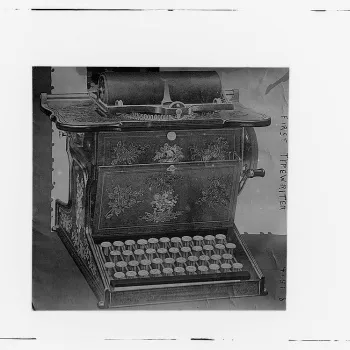
If someone placed an original 1868 typewriter in front of you, you might not be able to figure out what it was. With keys that look more like they belong on a piano keyboard, the original typewriters looked very little like even the manual typewriters you're likely to happen upon today.
The invention of the typewriter led to the keyboards on the computers of today. Show your class a computer and a typewriter or two if you can find significantly different typewriters, such as a manual one and an electric one. Begin an inquiry-based study that compares typewriters to computers. Students can talk about everything from the appearance of the two tools to the way that one gets the final, finished product (a piece of paper with alphanumeric figures on it) to the different ways that they might use the two machines if they were composing a paper. As a conclusion to the project, ask students to hypothesize about how the shift from typewriters to computers changes the way that work is done.
Note: If you do not have access to typewriters and computers for the class to explore first-hand, pictures of the objects could be a reasonable substitute.
This site includes games, puzzles, links, contest information, and a calendar of trivia related to patents and trademarks. Divided into materials for grades K–6 and 7–12, the site also features information for parents and coaches.
Many inventions come about as a result of people playing with the things in the environment around them. Explore the pages of this Smithsonian National Museum of American History site to see play turn into invention-and then perhaps you can invent something as you play in the classroom.
This Smithsonian Institution resource explores the similarities between the office of today and the past. Related lesson plans, a timeline, and information about office equipment-including the typewriter-are included.
This site focuses on the history and evolution of typewriters.
Juneteenth is a celebration of the day in 1865 that word of Lincoln's signing of the Emancipation Proclamation, freeing all slaves, made its way to the state of Texas. The celebration name is a combination of "June" and "Nineteenth"—the day that the celebration takes place.
Juneteenth has grown into a heritage-centered event that focuses on family, community, education, and achievement—but its origins are still very important. How does the historical background of the day, as a celebration of freedom for the slaves of Texas, compare to other important celebrations of freedom in the United States?
Invite your students to compare Juneteenth celebrations to Fourth of July celebrations, using the Venn Diagram. What events take place on the two days? What do people do? How are the events described in the media? When students notice differences between the celebrations, ask them to hypothesize about the reasons. Conclude the discussion by asking students what conclusions they can draw about the ways that people celebrate and define freedom in the U.S.
Want to see what the original Emancipation Proclamation looked like? Visit the National Archives and Records Administration site, which includes historical background and photographs of the document.
This site explores the origins and history of the holiday, along with how to celebrate it in the workplace, community, and home.
This Library of Congress "America's Story" site explains the background and local celebrations of the emancipation in Texas.
Here is a list of books to introduce the holiday's stories and traditions to the youngest readers.