
World Read Aloud Day motivates children, teens, and adults to celebrate the power of words. This global literacy movement is about taking action to show the world that the right to read and write belongs to all people. World Read Aloud Day asks everyone to celebrate the day by grabbing a book, finding an audience, and reading out loud.
Celebrate World Read Aloud Day by grabbing a favorite text and reading out loud. Have students bring in their favorite book, magazine, script, newspaper, etc. Ask each student to choose an excerpt to read to the class. Additionally, hold a classroom discussion about the power of literacy. Spread the power of reading by doing one of the following activities in the classroom:
- EDUCATE – Have several read alouds in the classroom throughout the day and talk together about the importance of global literacy, marking this as a special day of reading!
- ADVOCATE - Spread the word about World Read Aloud Day and the Global Literacy Movement within the school by hosting a school-wide read aloud event. Make posters in the classroom advertising and informing the school and community about the event. Construct bookmarks with information about the day and tips for reading aloud to their peers.
- INNOVATE - Share World Read Aloud Day by creating Public Service Announcements and share their projects using video chat, blogs, Glogster, and websites.
This website is for an organization that works to cultivate literacy leaders worldwide with teachers, parents, community members, and children to support the development of sustainable literacy practices across the world. This website provides information about World Read Aloud Day and an opportunity to share any activities using a blog or website.
This website is for a network of individuals and institutions committed to worldwide literacy. This site can be used for more information about literacy instruction and Global Literacy.
This website contains resources, information, and strategies for improving family literacy.
Meet your favorite authors, play games, enjoy read alouds, hear from educational experts and more!

Laurie Halse Anderson, the New York Times-bestselling author who is known for tackling tough subjects with humor and sensitivity, was born on this day in 1961. Her work has earned numerous national and state awards, as well as international recognition. Two of her books, Speak and Chains, were National Book Award finalists. Laurie was honored with the 2009 Margaret A. Edwards Award given by YALSA division of the American Library Association for her “significant and lasting contribution to young adult literature…”.
In the novel Speak by Laurie Halse Anderson, the main character lists "the first ten lies they tell you in high school":
1. We are here to help you.
2. You will have time to get to your class before the bell rings.
3. The dress code will be enforced.
4. No smoking is allowed on school grounds.
5. Our football team will win the championship this year.
6. We expect more of you here.
7. Guidance counselors are always available to listen.
8. Your schedule was created with you in mind.
9. Your locker combination is private.
10. These will be the years you look back on fondly.
Discuss with the students if some of these "lies" were similar to the ones they have heard, as well as how they are different. Then, ask students to brainstorm their own personal list of "ten lies they tell you in high school," complete with the truth, or their views on the truth.
Have students share, as a class, the "lies" they have been told in high school and how they've learned differently. Consider publishing a handmade classroom book with the lists of ten lies created by each student, and using it as a "guide to high school" for future students.
Laurie Halse Anderson's site has information on her life, books, and censorship, among other resources.
This site contains biographical information and an interview with the author.
Anderson's playful side emerges when she looks at real history and women who played a role in it.

After spending many years writing for The New Yorker, E.B. White turned his hand to fiction when his first children's book, Stuart Little, was published in 1945. White's most famous children's book, Charlotte's Web, followed in 1952. Both went on to receive high acclaim and in 1970 jointly won the Laura Ingalls Wilder Medal, a major prize in the field of children's literature. That same year, White published his third children's novel, The Trumpet of the Swan. In 1973, that book received the William Allen White Award from Kansas and the Sequoyah Award from Oklahoma, both of which were awarded by students voting for their favorite book of the year.
In honor of White’s love for children’s books about animals, have a class discussion about the ways that animals are portrayed in different fictional novels (both those by White and others). Have students do one or more of the following activities to further examine farms and farm animals, such as those in Charlotte’s Web:
- Take a class field trip to a local farm. Have students take pictures and write down the sights and sounds of the farm. After returning to the classroom, have students compile a class scrapbook that highlights the different animals at the farms and the most important things learned on the field trip.
- Students can create Acrostic Poems about a farm animal of their choice, share their poems with the class, and then create a classroom bulletin board showcasing all of the students’ favorite farm animals and information about each one.
- Have students create a Venn Diagram comparing and contrasting the farm with the city, farm life with city life, or two different farm animals. This activity can also be followed up by writing a Compare and Contrast Essay as a part of a longer activity.
- Compare the book version of Charlotte’s Web to the movie version. Then, use the Compare and Contrast Map or Venn Diagram to discuss the similarities and differences between the two.
This site includes stories about E.B. White's life and Charlotte's Web, Stuart Little, The Elements of Style, and Trumpet of the Swan.
Read about E.B. White, author of the cherished children's classic Charlotte's Web, Stuart Little, and The Trumpet of the Swan.
Find out information about E.B. White, Charlotte’s Web, and take part in some “fun and games” related to the book and movie.
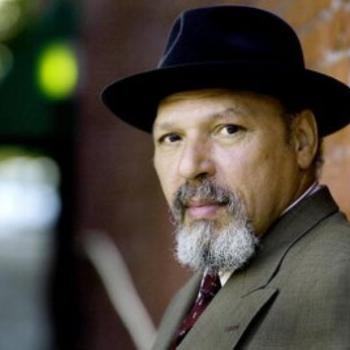
Born in the Hill District of Pittsburgh, Pennsylvania, August Wilson went on to become one the most significant American playwrights of the 20th Century. The only African American at his high school, Wilson was eventually driven out by threats; his family suffered the same fate when they moved out of the Hill District to a white working-class neighborhood in Pittsburgh.
Wilson was the cofounder of the Black Horizon Theater Company in Pittsburgh. He is most famous for his collection of ten plays-the Pittsburgh Cycle-that, decade by decade, chronicle a portrait of African American experience in the 1900s. Two of those plays, Fences and The Piano Lesson, earned him Pulitzer Prizes in Drama. Wilson died in 2005 and is currently the only African American to have a Broadway theater named after him.
Taking inspiration from August Wilson's epic cycle of ten plays, each set in a different era and together representing a broad portrait of life in a particular community, work with a school or local librarian to gather a number of print and digital resources about the history of your community. Challenge students to find an event or theme that can serve as the focal point for a story set in each decade. Have the class work together to use the Timeline Tool to create a decade-by-decade record of the community's history. Then, have small groups choose one of the events/decades to develop into a play using the Drama Map as a guide.
This site is the online home for this not-for-profit organization that presents performing, visual, and education programs that celebrate the contributions of African Americans and the impact of cultural expression from Africa to the African Diaspora.
The work of Kutztown (Pennsylvania) University assistant professor Mike Downing, this site is an archive of information relating to the life and works of August Wilson.
This site offers a biography of August Wilson, plus links to all of his works currently in print.

Tim O'Brien, author of the memoir If I Die in a Combat Zone, Box Me Up and Send Me Home and short story collections and novels such as Going After Cacciato (for which he won the National Book Award) and The Things They Carried, is known as America's preeminent writer of the Vietnam War era. A veteran of the conflict, O'Brien writes about the experience of the Vietnam War and Vietnam Era with both specific realism and artful imagination. After his tour of duty in Vietnam, he enrolled at Harvard for graduate work but left to pursue an internship at The Washington Post.
Students who read Tim O’Brien’s stories, particularly The Things They Carried, are intrigued by his flexible literary concept of “truth.” He suggests that the truth of fiction, as revealed by a story, can be more true than what actually happened. After reading O’Brien’s story “A True War Story” from The Things They Carried, have students choose a powerful event from their own lives. Using the Timeline Tool, have them map out the events from real life. Then, with the emotional impact of the full story in mind, encourage them to create a fictional version that remains true to the facts of real life but moves toward O’Brien’s notion of the “story truth.”
This site offers a collection of research links about Tim O’Brien for students and a list of his works and related resources.
In this 2010 interview, Tim O’Brien discusses a number of topics related to his work and their relevance today.
Here you’ll find an audio archive and transcript of O’Brien’s talk on the challenges of writing.

Observed on the last Monday of May, Memorial Day honors the men and women who died while serving in the United States military. In addition to having celebrations with family and friends, many people visit cemeteries and memorials and place flags on the grave sites of fallen servicemen and women.
Have students visit the Stories from the Veterans History Project site. Once there, ask students to choose one of the featured interviews to listen to, peruse the previous releases, or look at a list of collections to find more interviews that may be of interest to them. Students select an interview that interests them and take notes while listening to remember important facts and details about the veteran’s life. After listening to the interview, students complete one of the projects below to honor the veteran they researched:
- Create a timeline of the veteran’s life or time in the military.
- Using the story of the veteran’s life, create a picture book for younger children that tells the story of the veteran’s life or of the war in which he/she fought.
- Record the important facts and information from the veteran’s life using the Hero’s Journey interactive.
- Record a podcast that tells the veteran’s story.
This site includes a collection of personal accounts of American war veterans so that future generations may hear directly from veterans and better understand the realities of war.
Information on the history and traditions of observing Memorial Day in the United States is provided here.
This site includes a history of Memorial Day and tributes to soldiers; includes audio, video, and photos.
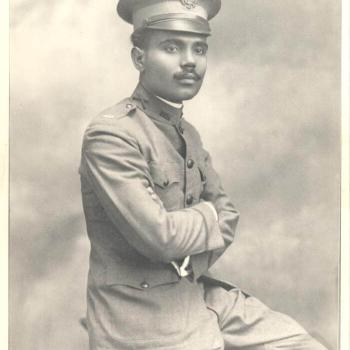
Prominent political and social activist was born in Ponce, Puerto Rico on June 29, 1893 or September 12, 1891. After being educated at the University of Vermont and Harvard University and serving in the US military in World War 1, Albizu Campos became interested in the Puerto Rican independence movement, serving as the president of the Nationalist Party from 1930 until his death in 1965.
Among his accomplishments are improved labor conditions in Puerto Rico (Albizu Campos led strikes against the Puerto Rico Railway and Light and Power Company and the US sugar industry) and bringing attention to the problematic colonial relationship between the US and Puerto Rico. His theory of non-collaboration with colonial structures (such as boycotting elections and military service) made him a controversial figure in the US. He was jailed twice and was under FBI surveillance for much of his life.
Called “El Maestro” or “The Teacher” for his powerful speaking ability, Albizu Campos is the namesake of several schools in Puerto Rico, Harlem, and Chicago.
Using background information on Pedro Albizu Campos as an example, invite students to investigate the complicated histories of figures from throughout the world associated with nationalist movement. These movements, often related to histories of colonization, assert the interests of one's own nation as separate from the interests of other nations or the larger interests of all nations. Prominent nationalist figures include
Pedro Albizu Campos (Puerto Rico)
Simón Bolívar (South America)
Miguel Hidalgo (Mexico)
Ho Chi Minh (Vietnam)
Nelson Mandela (South Africa)
Mohandas Karamchand Gandhi (India)
Michael Collins (Ireland)
Let students or groups of students choose a figure from this list, or another nationalist figure of their choice. Students can conduct research through print and Internet sources and share their findings with their peers using the Bio-Cube student interactive.
This biography provides additional information about the life and accomplishments of Pedro Albizu Campos.
This entry from Stanford University provides background information on nationalism, including links to other resources.

The first recipient of the Rosa L. Parks Woman of Courage Award and a Langston Hughes Medal winner for her poetry, Nikki Giovanni prides herself on being "a Black American, a daughter, a mother, and a professor of English." She was born in Knoxville, Tennessee, in 1943, and is the author of over 30 books for both adults and children, as well as a University Distinguished Professor at Virginia Tech.
Using Nikki Giovanni's poem "My First Memory (of Librarians)" as a model, encourage students to connect memory, their senses, and the language of poetry.
Write on the board or display on an overhead projector the prompt "My First Memory (of ... )" and ask students to think of a person, place, thing, or experience for which they can recall specific early memories. Ask them to brainstorm any sensory images: sights, sounds, smells, tastes, and tactile images.
Then share "My First Memory (of Librarians)," encouraging students to take inspiration from Giovanni's structure and use of language as she reveals her feelings and attitudes toward her subject.
Featuring a wealth of resources, Nikki Giovanni's official site offers biographical information, links to essays and conversations, and multimedia content.
Nikki Giovanni's page on the Academy of American poets features biographical information and the text of some of her poems.
The Poetry Foundation page for Nikki Giovanni provides information on her life, career, and bibliography, as well as the text of several of her well-known poems.
This talk was given by Nikki Giovanni at a TEDx event.

Best known for poems such as "The Mother," "The Bean Eaters," and "We Real Cool," Gwendolyn Brooks published Bronzeville Boys and Girls in 1956. Brooks dedicated the collection of 34 poems to her two children, Henry and Nora, who grew up in the same neighborhood on Chicago's South Side as the children in the book. A new edition of Bronzeville Boys and Girls features illustrations by Faith Ringgold.
Bronzeville Boys and Girls is a collection of poems that celebrates the joy and imagination of a community of children. Obtain a copy of the book and share several poems and illustrations with your students. Point out that some of the poems focus on a single child ("Narcissa," "DeKoven"); some on pairs of children ("Timmy and Tawanda"); and still others on children in specific situations ("Rudolph is Tired of the City," "Mirthine at the Party").
After students have read and discussed several poems from the collection, ask them to create a poetry anthology for their own family, neighborhood, or classroom. Students can use the Stapleless Book to create a collection themselves, or they can each contribute one poem to a class collection. Be sure to have students include illustrations to accompany the poems they compose.
This Academy of American Poets biography of Brooks includes links to five of her poems and an audio file of Brooks reading her famous "We Real Cool."
This site is a collection of web resources related to Brooks, who was the 29th Consultant in Poetry to the Library of Congress. Resources include links to interviews, audio files, criticism, and lesson plans.
On her official site you can find more work by and information about Faith Ringgold, the illustrator of the new edition of Bronzeville Boys and Girls.
To draw attention to the remarkable variety of writing Americans engage in and to help make writers from all walks of life aware of their craft, the National Council of Teachers of English has established October 20 as the National Day on Writing®. It's important for everyone to share their knowledge about writing, organize participating groups in our schools and/or communities, and transform the public's understanding of writing and the role it plays in society today.
Encourage your students to uncover all of the different kinds of writing they do on a daily basis by asking them to keep a list of everything they write, from text messages to school assignments, e-mails to diary entries, in a single day.
After students make a list of everything they wrote in a day, help them see the variety in their writing, both individually and as a class. Post colorful chart paper with age-appropriate questions about purpose, audience, genre or type, and technology around the room. Ask students to brainstorm different categories for each poster based on the writing they did. Write these categories on the posters and then have students contribute examples from their personal lists. Facilitate a gallery walk of the posters once students have contributed to all of them.
Encourage students to view and reflect on all kinds of writing - no matter the purpose, audience, type, or technology.
Here you will find information about the National Day on Writing® initiative, as well as links to a variety of NCTE writing resources and tips for writing.
Keep these tips from NCTE in mind as you think about your writing.
This collection of position statements includes the "NCTE Beliefs about the Teaching of Writing" and "Writing Now: A Policy Research Brief."
This is the online home of the NWP, a professional development network with the mission of improving student achievement by improving the teaching of writing and improving learning in the nation's schools.
The Learning Network provides teaching and learning materials and ideas based on New York Times content.