Classroom Resources > Resource Type
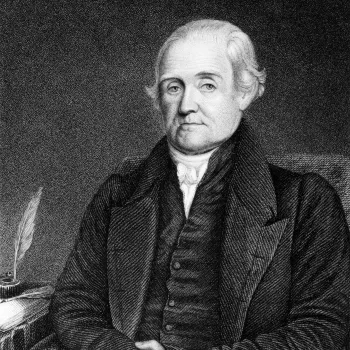
Noah Webster is considered by many to be the "father of the American dictionary." He began his work on the project at the age of 43. It took him more than 25 years to complete the first edition. Today Merriam-Webster offers online, CD, and print versions of its Collegiate® Dictionary, currently in its 11th edition with more than 225,000 definitions!
Celebrate the publication of Webster's Dictionary using a variation of the board game Balderdash. Divide students into groups of five or six, and provide each group with a dictionary and some blank paper cut into strips:
- One student scans the dictionary to find a word that he or she believes no one has ever heard before, reads it aloud, and spells it. The other students write down either a real or made-up definition of the word.
- The student with the dictionary writes the real definition and then collects the other definitions. The leader reads all of the definitions and the students in the group then individually choose which of the definitions they believe is real.
- Two points are awarded for selecting the correct definition and one point to each student whose definition is selected. Points are totalled and the next person in the circle selects a new word.
This site is the online version of the Merriam-Webster Dictionary. Students can access the site to look up words and definitions. There is also a Word of the Day to help students build their vocabulary.
This ReadWriteThink interactive allows students to print an alphabet chart or pages for an alphabet book.
At this site, students can search dozens of dictionaries. The resource also provides links to French, German, Italian, and Spanish translation tools.
Word Central, published by Merriam-Webster, offers a kid-friendly student dictionary. Students can also build their own dictionary and take the Daily Buzzword vocabulary challenge.
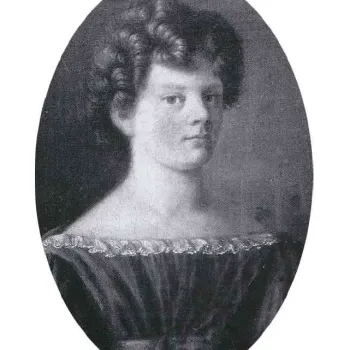
Anna Sewell's novel about a horse named Black Beauty touched a responsive chord in readers of many ages when it was first published in 1877. It remains a classic novel, one that speaks to contemporary readers as well.
In Black Beauty, Anna Sewell tackled one of the contemporary issues of her time, the cruel treatment of horses, many of them abused by their owners. Her work made readers aware of the need for laws to protect animals from harsh and abusive treatment.
After exploring the cruelty to animals in Sewell's novel, extend the discussion to current events. Divide students into pairs or small groups and ask them to conduct some research into the use of animals in testing drugs, cosmetics, and other products. Be sure to have online as well as traditional print resources available. Student groups should compile and present the information for and against using animals to test various substances.
Penguin Group publishing offers this biography of Sewell. Students can read about her childhood, her love of horses, and her gift for writing.
This site provides a biography of both Anna Sewell and her mother. They were both writers of juvenile fiction.
Project Gutenberg makes available downloadable versions of Sewell's classic text.
The ASPSCA offers this informational website for children. Students can access information about adopted pets, alternatives to dissection, animal-safe science projects, and more.
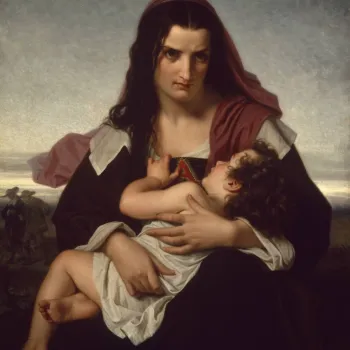
Nathaniel Hawthorne's The Scarlet Letter tells the tale of Hester Prynne, her daughter Pearl, and the city that condemns them because Hester will not name her child's father. The novel remains one of the classics of early American literature more than 150 years since its first publication in 1850.
Before beginning a reading of this novel, brainstorm with the class the possible meaning of the title. What does the word scarlet connote? What is the letter? Can letter have more than one meaning? Are there synonyms for scarlet that could convey the same significance and meaning? Be sure to record the responses of the class and return to them once the reading has begun, to explore how students' definitions have changed.
An alternative activity might be to show students the opening minutes of the movie adaptations of the novel first, and then ask them to read the opening chapter of the novel. Students could then write a short comparison of the book and the movie. An adaptation of the lesson Cover to Cover: Comparing Books to Movies (see Lesson Plans below) can also provide a foundation for this activity.
This comprehensive Washington State University site contains links to various resources on the author. Included are some online works, biographical information, activities, and reviews.
Biographical information on Hawthorne along with details about imagery and symbolism in the novel are found at this University of Wisconsin site.
This page, from The Life and Works of Herman Melville site, describes the friendship between these two authors, who were contemporaries though fifteen years apart in age.
This interactive exhibit features the family newspaper, The Spectator, conceived by Hawthorne as a youth. Included are historical images, portraits, and artifacts related to Hawthorne's life and writing career.
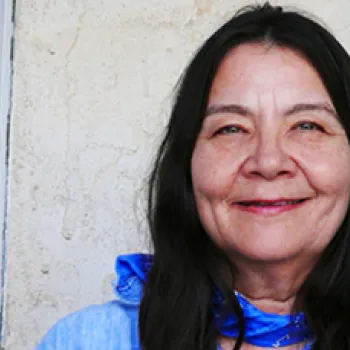
Leslie Marmon Silko, born in 1948 and raised in the Laguna Pueblo in New Mexico, proudly proclaims her mixed Native American, Mexican, and White heritage. As a writer, Silko draws on the stories she heard from her great-grandmother at Laguna. The oral tradition of storytelling, she insists, is alive and well for anyone who takes the time to listen to others. Silko's most widely taught novel, Ceremony, deals with a young World War II veteran's return to his Indian reservation.
To celebrate Silko's birthday, your students can revive elements of the oral tradition.
Have students write a brief anecdote about something funny that happened to them recently. Have students limit their writing to no more than a paragraph. Then ask students to read what they have written several times to themselves. Next, in pairs, have students tell each other their stories without looking at what they wrote. Each pair should then join with another pair and tell each other their stories, again without looking at what they wrote. Stop the class at this point and ask students to look back at what they have written to see if their stories have changed in the telling. Why do these changes happen? Finally, have students move into a larger group and retell someone else's story as well as they can. Before wrapping up, students should discuss some of the elements of oral storytelling: what makes a good story? What changes in the retelling and why?
Have students interview older family members to learn about family stories that may have been passed down through generations. Students may wish to share these stories in class or write them down and illustrate them.
This resource from American Passages offers a brief biography of Silko, as well as teaching tips and questions for her novel Ceremony.
This is a collection of notes by a Georgetown professor on the major themes and complex style of Silko's work.
The Smithsonian Institution offers this collection of Native American-related resources. There are links to Smithsonian resources, online exhibitions, and recommended reading lists.
This PBS site provides a collection of resources on Native American storytelling.

One of the most popular Latin American authors, García Márquez was raised by his grandparents in a house in Colombia which was always overflowing with relatives and stories. His grandfather, a retired colonel, told him stories of the brutality of war, while his grandmother told him folk tales filled with ghosts and superstition. This mix may have contributed to the development of his style often called "magical realism," popularized in his novel, One Hundred Years of Solitude. Márquez passed away on April 17, 2014.
Before beginning a work by García Márquez, introduce your students to some of the hallmarks of the literary style known as magical realism by exploring what it is not, through comparisons with familiar genres that also use unrealistic elements: fantasy, science fiction, and fairy tales.
- Ask students to form groups to participate in a collaborative creative writing activity. Each group will narrate the same event, but they will do so in different genres: fantasy, science fiction, and fairy tale.
- Read the events/prompt aloud: "A man is killed. His mother finds the body and begins preparations for his burial."
- Encourage students to be creative in their responses, but to follow the conventions of their genre. Then ask students to share their responses. Discuss the genre elements their creative depictions display and talk about what these genres have in common and what they do not.
- Read from One Hundred Years of Solitude the scene in which José Arcadio is shot and his body discovered by Úrsula (Chapter 7, beginning at "One September afternoon" through "with a shell of concrete"). Have students compare the depiction from the novel to the ones they created. How is magical realism similar and different from the genres with which they are already familiar?
This article from NPR talks about Márquez after his death and how he gave "A Voice To Latin America".
The Nobel Museum creates excellent websites for all of the laureates, and this one contains García Márquez's acceptance speech and links to other resources.
24 Books That Shaped One of Humanity’s Greatest Writers
The digital archive of Colombian-born writer Gabriel García Márquez includes manuscript drafts of published and unpublished works, research material, photographs, scrapbooks, correspondence, clippings, notebooks, screenplays, printed material, ephemera, and an audio recording of García Márquez's acceptance speech for the Nobel Prize in Literature in 1982.

When Barbie was released in 1959, she immediately stepped into controversy. The idea of a doll with an adult woman's features was brand-new. The market, though, was eager for a doll with lots of clothes, including bridal gowns and swimsuits. But by the 1970s, people began wondering why she did not have a business suit or a doctor's scrubs, and in more recent years, whether the body image she presents is healthy to young girls' self-esteem. Sales continue to grow, and so does the debate.
While Barbie's collection of accessories has changed over the years, her figure has remained relatively unchanged-despite questions about its effect on the self-esteem of the children who play with the doll. Take this opportunity to explore body image and advertising:
- Have students bring in pictures from the magazines that they typically read. Students should bring pictures of both male and female subjects.
- Post these pictures around the room and have students walk around with a two-columned chart with headings Male and Female which they will use to record words and phrases that describe what they see in the pictures. Students should then share their lists with the class.
- Ask students to write about how gender is represented in the advertisements they see. Is this typical of how men or women appear in movies, on TV, etc.? Which celebrities most exemplify these characteristics?
- After sharing responses in a think-pair-share arrangement, have students explain whether these gender representations are accurate in real life. Ask students to consider the effect that these representations can have on people's self-esteem.
- Conclude by discussing why advertisers portray males and females in this way. What is the goal and purpose of advertising?
This History Channel article provides information about the origin and evolution of this famous doll.
PBS offers information about the inventor of Barbie.
BBC News shares Barbie's measurements and shows how a woman would look with Barbie's proportions.
Poets.org offers this poem by Denise Duhamel that compares Barbie to Buddha. Students will enjoy the sarcastic tone of this piece.

Our solar year is 365.24219 days. Since our calendar does not deal in partial days, every four years, we add an additional day to February. Therefore, our calendar year is either 365 days in nonleap years or 366 days in leap years. A leap year every four years gives us 365.25 days, sending our seasons off course and eventually in the wrong months. To change .25 days to .24219, we skip a few Leap Days every one hundred years or so.
Many years ago, people did not have the scientific information that we have available today to explain the change of seasons, the need for a Leap Day every four years, and the cycle of moon phases. Early civilizations relied on other means of explanation such as myths and folk tales.
Divide the class into groups and provide each group with an explanatory myth (e.g., the children's book Max and Ruby's First Greek Myth by Rosemary Wells or the works of Gerald McDermott or Tomie dePaola). Have students write summaries of the stories to share with the class. Then have the students in each group compose an original myth that explains either the same phenomenon from the book they summarized or another one of their choosing. Stories can be illustrated and collected into a book to share with other classes in the school.
This site explains things about Leap Year that are not common knowledge to most, has resources for party planning, and also includes a list of Leap Day books.
Wonder of the Day based on the student question “Why is there leap year?”
Intended for grade-school-level students, this NASA website recommended by SchoolZone has information about astronomy as well as projects, lesson ideas, and resources for the classroom.
This site from NASA, focusing on an image of a coin minted with Julius Caesar's likeness, provides a brief explanation of the origins of Leap Day. The site also references Sosigenes, the astronomer who consulted with Caesar on the calendar and invention of Leap Day.

Sidney Poitier was one of the first African Americans to win critical acclaim and awards for his acting performances, most notably in films such as In the Heat of the Night, Lilies of the Field, and Guess Who's Coming to Dinner. In addition to acting, Poitier has also worked in the film industry as a producer, writer, and director.
In her acceptance speech for the Academy Award for Best Actress in 2003, Halle Berry acknowledged the work of other African American actors and actresses, including Sidney Poitier. Discuss with students the importance of Poitier's role in bringing equality to African American actors, especially in the 1950s,1960s, and 1970s.
Through the years, many barriers have been broken-barriers of age, race, and gender, to name a few. Ask students to write in their journals about any barriers that might impede them in the future (e.g., language, class, disability), and about how they can break through those barriers now. Should students desire it, these journal pieces could be made public in the form of letters to the school or local newspaper or some other format.
This PBS website offers biographical information, an interview, film clips, and other information about Poitier's life and career.
In 1995, Poitier was honored by The John F. Kennedy Center for the Performing Arts for his contributions to film. This page offers information about Poitier's life and career.
The BBC offers the text of a 1964 report on Poitier's historic Oscar win, along with contextual information. Also included is an audio clip of Poitier discussing acting.
This resource from National Public Radio includes an April 2000 audio interview with Sidney Poitier from the Fresh Air radio program. In the interview Poitier discusses his role in In the Heat of the Night, as well as personal life experiences.
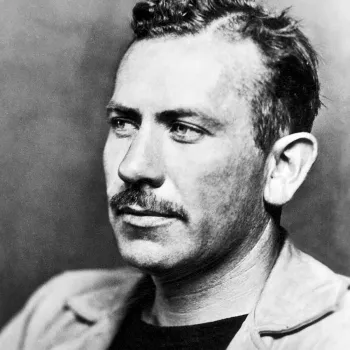
John Steinbeck, one of America's most noted authors and a Nobel laureate in 1962, gave voice to the plight of many different characters in his novels. The Grapes of Wrath, his Pulitzer Prize-winning novel, told of the terrible obstacles faced by the migrant workers who left the Dust Bowl and traveled west searching for work in California.
Steinbeck's works reflect the issues and ills of the time period in which he lived. The Grapes of Wrath, for example, deals with a group of migrant farm workers who moved from field to field. Often, these workers lived in squalid conditions and were paid poor wages. They were forced to purchase their supplies from a company store and then work to pay off their debt, many times without ever seeing a penny of their wages. Present students with information about the Dust Bowl and the flight of many farm workers west to California.
Ask students, "If Steinbeck were to write today about the ills of society, what topics or subjects might he find to address?" Brainstorm with the class a list of possible topics. Have groups of students each research a topic of their choosing and prepare an annotated bibliography of fiction and nonfiction texts that address the topic. The bibliographies can later be used as a school library resource.
The National Steinbeck Center is a museum in Salinas, California where Steinbeck was born. This site has information about his life and changing exhibits relating to his work and the time period during which he lived.
Nobelprize.org presents a brief biography of Steinbeck, along with the Nobel presentation speech and a short film of the event.
NPR provides this resource, which includes an audio report on the story behind the creation of The Grapes of Wrath.
This PBS website offers information about the American Experience film Surviving the Dust Bowl. There are also links to a teacher's guide, a timeline of events, a map, and related resources.
This article discusses Steinbeck's Grapes of Wrath within its historical context of the Dust Bowl.

Erma Bombeck was born in Dayton, Ohio, in 1927. Soon after the birth of her first daughter, she began writing a newspaper column called "At Wit's End," which was quickly picked up by newspapers across the country. Bombeck's largely autobiographical accounts of the "battles" between men and women and between children and parents, told with gentle yet sarcastic humor, became part of America's reading throughout the 1960s and 1970s. Bombeck died in 1996.
Many students have difficulty identifying or appreciating allusive or satirical humor. Using the following lines from Bombeck's newspaper column, ask students to identify not what they think is funny, but what someone else might find funny.
- Shopping is a woman thing. It's a contact sport like football. Women enjoy the scrimmage, the noisy crowds, the danger of being trampled to death, and the ecstasy of the purchase.
- There are two kinds of women who will spring big bucks for a make-up mirror that magnifies their faces. The first are young models who need to cover every eyelash, shadow their cheekbones, define their lips, and sculpt their faces. The second group are women who, without their glasses, cannot find their faces.
- I just clipped two articles from a current magazine. One is a diet guaranteed to drop five pounds off my body in a weekend. The other is a recipe for a 6-minute pecan pie.
- Most children's first words are "Mama" or "Daddy." My kid's first words were, "Do I have to use my own money?"
High school students can rewrite the passages to make them funny for a different audience.
This University of Dayton website is dedicated to Bombeck's life and work. The site includes several of her columns, as well as video clips from the short-lived sitcom called Maggie, which Bombeck developed.
This page features a biography and an interview with Bombeck from 1991. In the interview, she discusses her writing process, as well as influences on her life.
Just as Bombeck did in her syndicated newspaper column, Mark Twain used irony and sarcasm to tell his humorous stories. This PBS resource explores Twain's use of humor.