
Maya Angelou, born Marguerite Johnson, was born in St. Louis, Missouri. Angelou is considered one of the finest poets of her generation. In addition, she authored several books chronicling her youth and adolescence, including I Know Why the Caged Bird Sings.
Read aloud Maya Angelou's poem On the Pulse of Morning, which she read at President Bill Clinton's inauguration in 1993. Ask students what they can infer about the speaker of the poem and her feelings about America.
After the class has had a chance to brainstorm, share with students some biographical information about Angelou. Which events or aspects of her life are reflected in the poem? What pieces of information surprised them and why? Ask students to discuss how one's life and experiences can influence one's writing. Is there evidence of this in students' own writing?
From the National Women's Hall of Fame, this site honors Maya Angelou's achievements. There is a brief biographical sketch and related bibliography.
Biographical and bibliographical information can be found at this website, along with a few of Angelou's poems.
The Academy of Achievement offers a transcript and video clips of an extensive interview with Maya Angelou. The site also offers a biography of Angelou.
On this page from the My Hero Project, three contributors write about why Maya Angelou is important to them.

Hans Christian Andersen is often referred to as the "father of modern fantasy." More than 200 years after his birth, Andersen's tales are still enjoyed by both young and old alike.
Many of Hans Christian Andersen's stories have been adapted and abridged into animated movies. Begin the activity by asking students to write a brief summary of The Little Mermaid, The Nightingale, The Emperor's New Clothes, or another of Andersen's stories. Then read students the original story and ask them to create a Venn diagram that indicates the similarities and differences between the two versions of the tale. Have them use their diagrams to write essays that compare the two versions. Students could also be encouraged to explain which version they prefer and why. Students can also use the Fractured Fairy Tales interactive to write their own alternative versions of several well-known fairy tales.
From the Hans Christian Andersen Center at the University of Southern Denmark, students can link to texts, research material, and information about Andersen's life and works.
On this website, students can access and read 127 different stories by Andersen.
This website celebrates Andersen through the stamps that have been inspired by his work. Included are over 30 of Andersen's stories, accompanied by images of related stamps.
Scholastic invites students to explore fractured fairy tales with author Jon Scieszka. Classroom activities are provided, along with a place for students to publish their own tales and read those of other students.

The RMS Titanic, a British luxury passenger liner, sank en route to New York City, and some 1,500 of its passengers perished. The ship had been designed and built by William Pirrie's firm of Harland & Wolff in Belfast, Ireland. A credulous public had believed that design innovations such as its 15 "watertight" bulkheads would make it "unsinkable."
Your students probably had some background knowledge about the Titanic even before the release of James Cameron's movie starring Leonardo DiCaprio and Kate Winslett. A nice way to begin your study is with the Internet Workshop model. You might use the recommended Websites from this calendar entry as part of the Internet Workshop.
Some questions you might ask students to explore are:
- Could this disaster happen today?
- What could have been done to prevent the disaster at that time?
- What really sank the Titanic?
- Did anything good happen as a result of this disaster?
Visitors to this website learn about Halifax, Nova Scotia's role during the tragedy's aftermath. Included is a transcript of Robert Hunston's wireless document The Titanic Disaster as Viewed from Cape Race.
This exhibit includes hyperlinks to facts about the Titanic and a large collection of historical photographs.
The Anderson Kill & Olick law firm offers this interactive mock trial of the Titanic's operators, the White Star Line.
The BBC's site contains 13 audio recordings of survivors relaying their experiences. The collection also includes six primary source documents.
This site has a collection of fifteen short videos about the Titanic. Included in that collection is an interactive infographic from History.com called "Titanic by the Numbers". The timeline starts with the construction of the Titanic and ends in 1913 with stories from survivors.

Elvis is known throughout the world as the "King of Rock 'n' Roll." Over one billion of his records have been sold. Elvis starred in 31 feature films as an actor, gave over 1,100 concert performances, and received numerous awards. Graceland, Elvis Presley's home, is the most famous home in America after the White House, attracting over 600,000 visitors every year. In 1970, Elvis went to the White House to offer his assistance to then-President Nixon in the nation's war on drugs.
Invite your students to tour the National Archives exhibit When Elvis Met Nixon, where they can read the five-page letter that Presley personally delivered to the White House, the story of the famous meeting (with accompanying photos), the agenda for the meeting, and the thank-you letter Elvis wrote to the President after the visit.
After reading these primary documents, younger students can discuss the reasons Elvis wanted to meet the President; then, they can explore what would happen if a contemporary recording artist were to meet with the President today. Referring to the agenda for Elvis's meeting, have students work collaboratively to create an agenda for a contemporary artist. Have them use the interactive ReadWriteThink Letter Generator to write a letter to the artist suggesting a meeting with the President to discuss the problem of drugs, racism, violence, or another contemporary issue. More tips are available for use with the Letter Generator.
Older students might explore the various ironies of the meeting in a discussion of Nixon's political motivations for agreeing to the meeting and Elvis's interest in being made a "Federal Agent at Large" who would fight drug abuse and the Communist threat.
Thanks to the Freedom of Information Act, you and your students can browse over 600 pages of information that the federal government collected in relation to Elvis Presley. Pair this site with exploration of the Fensch book in the Texts section to introduce students to the process by which primary documents become fodder for research!
The Rock and Roll Hall of Fame's online Elvis exhibit describes his career and the artifacts included in the original exhibit. Be sure to see the biographical page on this 1986 inductee.
This PBS Culture Shock resource offers information about the controversy over Elvis's early television appearances on the Milton Berle Show, the Ed Sullivan Show, and the Tonight Show.

Annie Moore, a 15-year-old girl from Ireland, became the first person to enter Ellis Island on New Year's Day, 1892. In the 62 years that Ellis Island served as the entry point to the United States, over 12 million people were processed through the immigration station. Ellis Island was closed on November 12, 1954. Part of the Statue of Liberty National Monument since 1965, the buildings were restored after decades of disuse and reopened as a museum in 1990.
Take your students on an interactive tour of Ellis Island. Scholastic provides a tour, including audio, video, and photographic resources.
Allow students plenty of time to explore the tour and the resources provided there, supplementing the information with additional resources from the Web Links section below. Be sure to listen to the audio stories of immigrants included in most stages of the tour. Invite students to interview an immigrant in your town to collect his or her story. Students can publish the stories they collect online and read stories published by other students.
To show how children who did come through Ellis Island felt, you might share books such as The Memory Coat (Scholastic, 1999) and Dreaming of America: An Ellis Island Story (Troll Communications, 2001). Based on what they've learned through their exploration of Ellis Island online, their interview with a local immigrant, and in the available texts, have students assume the persona of someone who has just landed on Ellis Island and write a diary entry about his or her experiences. Collect the entries into a class anthology that shows students' understanding of the feelings of people coming to the U.S. for the first time.
This Library of Congress site from the America's Story collection explores the arrival of 15-year-old Annie Moore, the first person to enter the U.S. through the gates of Ellis Island.
This site includes historical information on the role that Ellis Island played in the lives of the more than 12 million people who immigrated to the United States over the course of the 62 years.
Ellis Island comes to life in this interactive tour featuring audio, photographic, and video files. This site is part of a Scholastic collection titled Immigration: Stories of Yesterday and Today.
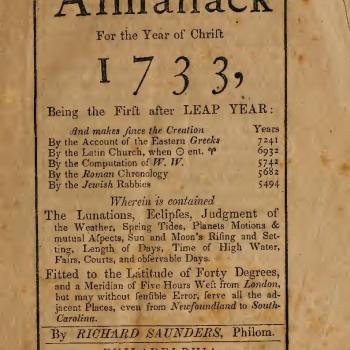
In 1733, Benjamin Franklin, using the pseudonym Richard Saunders, began publishing Poor Richard's Almanack, which included agricultural predictions, charts of the moon's phases, and a series of proverbs, such as "haste makes waste." Franklin, acknowledged as one of America's Founding Fathers, especially for his role as a statesman, continued to publish his Almanack until 1758.
Share some of the following proverbs taken from Poor Richard's Almanack with your students:
- There are no gains without pains.
- At the working man's house, hunger looks in but dares not enter.
- Industry pays debts while despair increases them.
- Plough deep while sluggards sleep and you shall have corn to sell and to keep.
- One today is worth two tomorrows.
- Have you something to do tomorrow? Do it today.
- Trouble springs from idleness and grievous toil from needless ease.
- The noblest question in the world is: What good may I do in it?
- Hear no ill of a friend, nor speak any of an enemy.
- Many a man thinks he is buying pleasure when he is really selling himself a slave to it.
Ask students to give their impressions of the person who would write these statements. Then, have students choose one saying, paraphrase it, and explain why they agree or disagree with its message. As a final activity, ask students to write their own mottos for life. These mottos can be illustrated and displayed in the classroom or made into bumper stickers or t-shirts.
This site pairs Franklin's quotes with a "translation" into verse. The quotes are arranged by topic and can also be searched through an index.
Gettysburg College offers electronic access to pages from the original Almanack. Additional pages are also available.
This webpage developed by PBS is part of their Benjamin Franklin resource. It offers information about Franklin's satirical writing style and the humor found in Poor Richard's Almanack.
While devoted to science and technology rather than reading per se, this institution promotes discovery and ongoing inquiry-the cornerstones of an inquiry-based classroom. Included is a list of resources for studying Franklin.

The onset of winter weather varies from year to year and from place to place, but December 21, the winter solstice, is considered the first official day of winter. The winter solstice marks the shortest day of the year. The days get longer as winter progresses. In the Northern Hemisphere, it also marks the day when the sun is furthest to the south.
Winter has long been immortalized in art, poetry, and song. For many of us, winter makes us think of frolicking on snowy days and reading by the fire on cold nights-even if we live in a warm place where it never snows! Brainstorm with your students about the words and images that come to mind when they think of winter. How do these words and images compare to their own experiences with winter weather? Have students select and read a picture book about winter. How do the words and images in the book compare to the list they brainstormed and to their own experiences? Students can use the interactive Venn Diagram to make the comparison.
As students read, ask them to look for examples of winter activities that the characters do with their families or friends. Were there any winter traditions on the list students brainstormed? Challenge your students to celebrate what winter means to them by starting their own tradition on the first day of winter. Students can use the interactive Postcard Creator to write to family and friends, inviting them to participate in the new tradition.
This page from American Memory at the Library of Congress celebrates the winter solstice through images and anecdotes of winters past, drawn from American literature and folk history.
This National Geographic News article discusses the winter solstice and ancient celebrations associated with it.
Reading Rockets provides this annotated list of books about winter for children.
While snowy weather can be fun, severe winter storms can be dangerous. Scholastic offers this resource featuring information about winter storms, eyewitness accounts of winter storms, and associated vocabulary.

Dr. James Naismith, athletic director of the YMCA in Springfield, MA, had a problem- the cold winters kept everyone indoors. So in 1891, he invented the game of basketball. Players had to throw a soccer ball into a peach basket resting on top of a ten-foot pole. The sport quickly grew in popularity, though amazingly, it took more than ten years for someone to come up with the brilliant idea of cutting a hole in the bottom of the peach baskets!
Looking at the rules of a game allows for a perfect opportunity for students to practice their expository reading and writing skills.
Print out copies of Naismith's original 13 rules for basketball. Put students into groups (since some students know a lot about basketball and some very little) and ask them to read the original rules and to identify-with different colored highlighters-the rules that are still in effect today and the rules that have been changed or eliminated. Then, ask students to write one rule that has been added to the original list and another rule that has been changed dramatically from the original source. Have students present these new and modified rules to the class.
Working individually, students should brainstorm a list of sports and games that they know well. Have students select one from their list and write ten rules for playing that sport or game. Remind students that their audience is people who have never played or heard of that sport or game before. In addition to the ten rules, students should also identify the equipment and time needed to play. Afterward, students should read each other's lists to be sure that all necessary rules are included.
This website includes a biography of Naismith and a section on how the game of basketball has developed over time.
The official name of the Basketball Hall of Fame honors Naismith for his invention of the sport. This website has everything you ever wanted to know about the history and current game of basketball.
This blog post, from the Library of Congress, provides an account about the first college basketball game ever played, as well as Naismith's invention of the game.
This excerpt from a January 31, 1939, broadcast of the radio program "We the People" hosted in New York by Gabriel Heatter is believed to be the only known audio recording of Naismith. In the roughly three-minute clip, Naismith discusses setting up the first basketball game with two peach baskets in a gymnasium at the International YMCA Training School (now Springfield College) in Springfield, Massachusetts in December 1891.
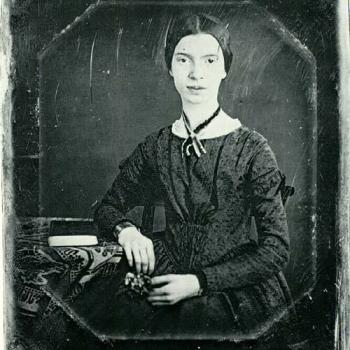
Emily Dickinson wrote nearly 1700 poems, though fewer than 10 were published in her lifetime. Her style, consisting of unorthodox phrasing, imagery, syntax, and capitalization, was considered too radical at the time she wrote. Today, Dickinson's work is considered among the greatest in American literature.
Use one of Dickinson's most famous poems, "This Is My Letter To The World", for a classroom activity on how audience affects voice.
Discuss the poem with your students, focusing on the idea that the speaker was writing to a "world" that did not care about him or her and that he or she wanted to be treated gently. Ask students to imagine themselves stranded on a desert island for 10 years. Have them use the ReadWriteThink Letter Generator to write two letters to send off the island in two separate bottles. One letter should be addressed and written to someone they know and care about. The second letter should be addressed and written to the world at large (i.e., no one person in particular). See the Letter Generator page for more information about this tool.
After this exercise, students should consider how much of their writing depended on the audience. Have them examine word choice, subject, and tone in each letter.
This website offers a remarkable collection of poetry, scholarly articles, and classroom activities dedicated to Dickinson's work. The site also links to similar resources for the poetry of Walt Whitman.
Included on the Poets.org website, this page includes a student-friendly biographical entry about Dickinson, a few of her poems, and links to other related websites.
The University of Virgina offers the text of numerous Dickinson poems. Brief biographical information about Dickinson is also included.
The Emily Dickinson Museum offers a brief look at Dickinson's biography.
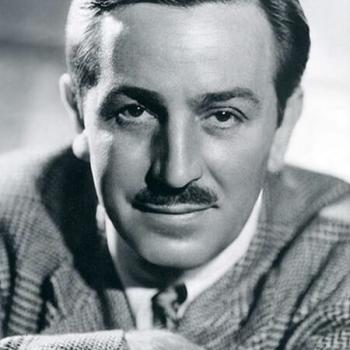
Some of Walt Disney's best-known work is in the adaptation of popular fairy tales like Cinderella, Snow White, and The Little Mermaid. Over time, people have criticized these works for their treatment of the female gender, saying the "Disney Princesses" in particular are stereotyped as weak and dependent upon their male protectors. Still, Disney movies have become classics in the world of movies and home video.
Disney movies provide an easy exercise for examining gender representations and cultural stereotypes in film and media.
Begin by asking your class to list all the Disney films that they have seen. Then, have students make lists of the female characters from these films. Divide the class into small groups, and assign two or three of these characters to each group. Then, ask them to describe their assigned characters. For this description, they should consider:
- What are their physical attributes?
- How do they relate to the male characters in the movie?
- What do they seem to want out of life?
- Do they seem realistic?
After the groups discuss their characters, generate a class list of characteristics. Using this list, have students write a thesis statement that begins, "The female characters in Disney films are generally ...." You may want your students to continue writing this piece as a paragraph or as a full essay.
This comprehensive resource includes annotated fairy tales, including their histories, similar tales across cultures, and over 1,200 illustrations.
This article discusses a study of gender in Grimm fairy tales by Purdue professors, with extensive quotes from their research.
This resource examines racial and cultural stereotyping in some of Disney's most popular movies. The site is part of a tutorial for undergraduate students, but can easily be adapted for use by middle and secondary students as well.
This website provides information about Walt Disney, Disney art and artists, Disney's friends and family, and more. A link to an interactive timeline walks you through the important moments of Walt Disney's life and other historical events that took place during his lifetime.