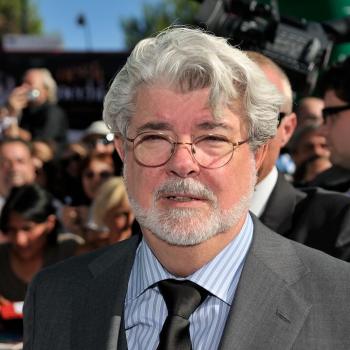
As he was writing the script for the original Star Wars films in the 1970s, George Lucas spent a great deal of time reading and interviewing mythologist Joseph Campbell, whose ideas included a concept called "The Hero's Journey," the archetypal hero story that is found in cultures around the world. Lucas based much of his plot for the films on the stages of this journey, which, along with a relentlessly successful advertising campaign, might help explain the films' amazing popularity.
Use The Hero's Journey Interactive tool to describe how Luke Skywalker meets each stage of the journey:
- Call to Adventure
- Refusal of the Call
- Mentor Figure(s)/Supernatural Aid
- First Threshold
- Belly of the Whale
- Road of Trials
- Meeting with the Goddess/Temptress
- Atonement/Death of Mentor
- Apotheosis/Underworld
- Ultimate Boon
- Rescue from Without
- Crossing Back/Return
Then, brainstorm other works that use the formula, such as The Lord of the Rings.
This National Air and Space Museum exhibit highlights elements of myth and the Hero's Journey in the Star Wars films. Also included are image galleries and audio clips.
This post connects Star Wars and Campbell's Hero's Journey. References to the original films are included.
This page provides resources related to the series of books based on the Star Wars films.
Students can use this online tool to learn about the elements of the hero's journey, analyze a text that follows the hero's journey pattern, or start creating a hero story of their own.

Known as the "King of the Delta Blues," Robert Johnson was born May 8, 1911, in Hazelhurst, Mississippi. His legendary recordings of such blues standards as "Cross Road Blues" and "Sweet Home Chicago" have had an astounding influence on blues singers and rock musicians for generations. His amazing talent and mysterious death in 1938 sparked an old blues folk tale that he sold his soul to the Devil in exchange for his ability to play the guitar.
Having students write their own blues lyrics is a great way to teach rhythm, rhyme, and word choice. The most common form of the blues is referred to as the "12-bar blues" because of the twelve measures that are typical of the style. Share a blues song with your students before they begin to write, and distribute copies of the lyrics to a song with this structure. You may want to play a clip from Robert Johnson's "Cross Road Blues."
After looking at the lyrics, ask students to identify the structure used. They should be able to see that the lyrics of a 12-bar blues song often follow an AAB pattern. "A" refers to the first and second four-bar verses, and "B" is the third four-bar verse. In a 12-bar blues song, the first and second lines are repeated, and the third line is a response to them-often with a twist.
Next, brainstorm a list of subjects with your students about things that might give them "the blues." Then, have students choose a topic and try to write a blues song that follows the pattern they identified. Invite adventurous students to perform their songs!
This thorough University of Virginia resource features a biography, song lyrics, and critical analyses of Johnson's work.
This site anchors a multi-media celebration that raises awareness of the blues and its contribution to American culture and music worldwide.
The Robert Johnson Blues Foundation is dedicated to preserving the music and memory of Robert Johnson through the provision of art education, competitions and scholarships.
This National Park Service site includes an overview of two styles of blues and extensive biographies of thirty bluesmen and blueswomen who created a rich legacy of American music that forms the foundation of today's popular music.

Since 1984, the National PTA has designated time each May for communities nationwide to honor teachers for their work with children. Parents, students, and schools across America celebrate Teacher Appreciation Week to show appreciation for the work and dedication of teachers and reaffirm the commitment to parent-teacher partnerships.
In celebration of Teacher Appreciation Week, read a book about a teacher such as Thank You, Mr. Falker, Miss Nelson is Missing, or a Magic School Bus story with Ms. Frizzle. Why are the teachers in these stories special? Have a class discussion about some of your students' favorite teachers. Then have students try these follow-up activities:
- Compare a favorite teacher to a teacher from a book with the Interactive Venn Diagram.
- Write a letter to a favorite teacher using the Letter Generator.
- Create a character map of either Miss Nelson or another storybook teacher with the Story Mapping tool.
- Use the Essay Map to plan and write an essay on why they would or would not like to be a student in one of the storybook teachers' classrooms.
- Read and present another book about a special teacher. Older students may choose books like The Miracle Worker by William Gibson, Tuesdays with Morrie by Mitch Albom, or A Lesson Before Dying by Ernest Gaines.
This National PTA resource offers ideas to help parents, students, and schools honor teachers during Teacher Appreciation Week.
The National Education Association offers these activities, appropriate for a Teacher Appreciation Week celebration.
This page from Reading Rockets celebrates teachers through notes of appreciation from parents, videos of authors and illustrators talking about their favorite teachers, and a link for users to send their own e-cards to teachers they appreciate.
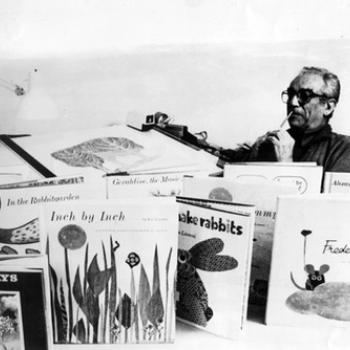
As a child growing up in Holland, Leo Lionni taught himself how to draw. He earned a doctorate in economics from the University of Genoa, but began his career as an author and illustrator of children's books in 1959. His first book Little Blue and Little Yellow came from a story written for his grandchildren during a boring train ride. He is the winner of four Caldecott awards.
After reading several of Lionni's stories, play the game Guess the Story. Invite a student to pull a sentence strip that describes one of Lionni's messages from a box. (Older students can create the sentence strips in collaborative groups.) Students should explain what the message means and the book it is from. Some suggested messages include the following:
- Let's work together.
- Take time to smell the roses.
- You are never alone when you have a friend.
- Don't take your family for granted.
- Everybody is special.
- Be happy with who you are.
As a follow-up, have your students write and illustrate their messages with the ReadWriteThink Stapleless Book.
This site gives an excellent introduction to children in grades K through 5 about Leo Lionni’s life, his art work, and his children’s books. The site includes excellent printable activities and videos of Lionni’s art making process.
This packet contains a variety of useful activities made by teachers, for teachers to accompany the Leo Lionni books, as well as original artwork on display at the Castellani Art Museum.
This page provides information about Leo Lionni's life and learns how experiences and events in his life influenced on his work.

When the Brooklyn Bridge was opened, its span across the East River in New York was the longest in the world, and its two stone landings were the tallest structures in North America. Designed by John Roebling and completed by his son and daughter-in-law Washington and Emily Roebling, the bridge stirred controversy over its cost, size, safety, and even its very necessity.
Celebrate the Roebling family's achievement and explore the literary concept of point of view by sharing with students a pair picture books that highlight the controversies over the construction and opening of the Brooklyn Bridge. The two books, Twenty-One Elephants by Phil Bildner and Twenty-One Elephants and Still Standing by April Jones Prince use the same historical event as their centerpiece: the crossing of the bridge from Manhattan to Brooklyn by the elephants from P. T. Barnum's circus.
- Begin by showing students the first pictures of the two books and asking them to predict how the stories might be similar and different. Students will note that both stories will likely discuss the construction of the bridge, but will have different points of view.
- Ask students to confirm or clarify their predictions as you read the two stories.
- After reading, have students discuss the similarities and differences between the books based on the two points of view. Which book had a more personal perspective? Which was more informative? How were similar events portrayed differently? Which book did they prefer?
- Have pairs of students apply their observations by writing two complementary pieces about a recent classroom event (e.g., a school performance, a field trip, or a classroom party). Have one student write an account from a general observer's perspective, while the other writes from the perspective of a student in the classroom.
- Ask students to share their writing and discuss how they chose different details, used different forms of expression, and conveyed different stories about the same event.
This resource focuses on construction of the Brooklyn Bridge within the historical and political context of the late 19th century. It also treats the bridge as a geographic symbol and work of art which inspires writers, artists, and ordinary Americans who cross the bridge or view it from afar.
This site provides history, video, pictures, and speeches associated with the bridge.
This page features the American Memory entry for John A. Roebling's birthday. Included is a collection of primary documents on the Brooklyn Bridge and bridges throughout the United States.
The bridges section of PBS's Building Big website offers information about the science behind bridges, bridge architects, and some famous bridges.

Yusef Komunyakaa was born in Bogalusa, Louisiana on this day in 1947. His upbringing in the racially charged South and his tour in Vietnam in the 1970s prove to be the focal point of much of his poetry. Pieces from his war collection Dien Cai Dau, a Vietnamese term for American soldiers, meaning "crazy," are widely taught and include examples of vivid and devastating imagery. Winner of a Pulitzer Prize, Komunyakaa currently teaches creative writing at Princeton University.
Yusef Komunyakaa's poetry can be used in many ways in the classroom. One essential poetic element that can be closely examined in his work is imagery.
- As you read aloud (or listen to, if you have the technology) the poem "Camouflaging the Chimera," ask students to underline words and phrases that create vivid pictures in their minds.
- Have students rewrite one or two lines of the poem so that they are free from details. For example, the line, "We hugged bamboo & leaned against a breeze off the river" could be rewritten, as "We sat next to the river. There was a breeze." Then, in pairs, ask students to reread the poem with their changes. What has changed? What is lost?
- Next, have students write down another line of the poem that is particularly effective. Collect their papers and redistribute one to each student. Have each student attempt to draw the image on a large piece of paper and explain its effect. Ask, "Why did the author include that line? What was he hoping to get the reader to feel?"
- Display pictures and explanations in the classroom.
This website contains several of Komunyakaa's poems with audio recordings, a brief biography, and links to articles on his work.
Biographical material and online poems, including one audio file, are available on this Poetry Exhibit from the Academy of American Poets.
This extensive list of Web resources includes historical data, documentary coverage, references in popular culture, and more.

It is a sad irony that the most horrific acts of war often lead to the greatest artistic expression. In 1937, during the Spanish Civil War, the peaceful Basque town of Guernica was used for Nazi bombing practice with the approval of General Francesco Franco. Over 100,000 pounds of munitions were dropped, killing more than 2,000 people and destroying 70% of the city. In response, Pablo Picasso painted his masterpiece Guernica, called modern art's most powerful antiwar statement.
Many students have had little exposure to artwork; and yet paintings, photographs, sculpture, and other art forms can and should be studied as legitimate texts. Since most states now require "visual literacy" as part of their standards, incorporating more artwork into the English classroom certainly is beneficial.
Begin by asking your students what they know about art, art history, or famous artists, such as Picasso. Show students Picasso's Guernica. Ideally, you will want to have a transparency, poster, or projection from the website.
Ask students for their initial impressions of the piece. Provide them with background information, and ask how their impressions change when context is provided. Since the painting is quite large, assign students to look at one quarter of the painting at a time, writing down all the visual details they see and sharing their findings in small groups.
Finally, ask students to write about Picasso's purpose in creating this painting. What did he hope to accomplish and how did he try to do so? The answers to these questions get at the theme of the work. The same questions can be applied to any text-print or visual-students are studying.
This website describes a peace project in which kids from war-torn countries create their own Guernica-styled murals. Pictures of different murals are included.
This website complements a PBS program on Picasso's painting. Included is information about Guernica bombing, the meaning of abstract images in the painting, and Picasso's artistic process.
This site contains a huge collection of resources on Picasso. There are biographies, critiques, and catalogs of his work.
This interactive tool combines the process of drawing with analytical thinking about text. Adapt this tool to your students' exploration of the visual arts.
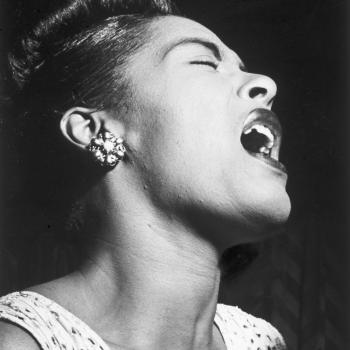
One of jazz's most influential singers, Billie Holiday was born in 1915 in Philadelphia. "Lady Day," as she was later to be known, sang with such intensity and emotion that she made every song her own, whether she wrote it or not. Unfortunately, the blues she sang of were also her reality–she was a terribly unhappy and insecure person and died prematurely in 1959 due to a life of drug and alcohol abuse.
Holiday's most popular and influential song is probably her 1939 recording of Strange Fruit, a haunting depiction of the lynchings of African Americans that were occurring throughout the Jim Crow American South. The link allows you to read the lyrics and also listen to part of Holiday's rendition of the song. Because of the subject matter and the vividness of the song's images, this activity should be reserved for high school or mature middle school students.
The song is a perfect text to use to teach tone. Before explaining the context of the song, have students read the lyrics or listen to the song and identify the most powerful or descriptive images.
Next, share some facts about the lynchings in the South during this period, such as, "Between 1882 and 1968, 3,446 lynchings of African Americans occurred in the U.S." Ask students to try to determine Holiday's attitude toward this issue, which you can then define as the tone of the song. Have students compare the tone of Holiday's song to that of Langston Hughes' poem on the same topic, Song for a Dark Girl. Then apply the concept of tone to another piece you are currently reading.
This comprehensive site on Billie Holiday includes a biography, photos, quotes, and more.
This page provides links to a variety of artist showcases. Audio and video files are provided along with biographical and historical information.
These pages from the Library of Congress' America's Story site offer information and images. See also the Library's additional Billie Holiday information, on its American Memory pages.
As part of its Independent Lens series, PBS presents the role that protest music has played in American history. The site contains protest music from the days of slavery to the present protests against the war in Iraq.
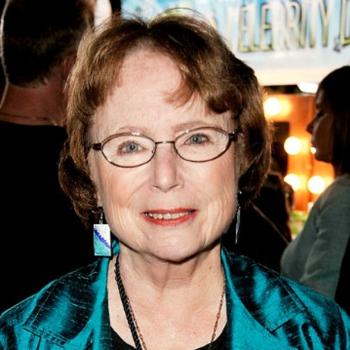
Lois Duncan is a popular author of young adult mysteries. Duncan received the prestigious Margaret A. Edwards Award, jointly sponsored by the School Library Journal and the Young Adult Library Services Association, for her lifetime contributions to the field of young adult literature.
Share with students some of the mysteries from Ken Weber's Five Minute Mysteries series and test their sleuthing abilities. After students have had a chance to solve a handful of mysteries (the solutions are in the back of the books), ask them to brainstorm the critical attributes of a good mystery. What elements do mysteries share? What do authors need to do to write a compelling mystery for readers?
Once the class has completed this part of the activity, place them in small groups and ask them to compose some short mysteries themselves. They can plan their stories using the interactive Mystery Cube. Groups can then exchange and attempt to solve one another's mysteries. The mysteries from each group can also be compiled and shared with other classes as well.
Duncan's homepage is periodically updated with information about her life, her family, and her books. Teacher Guides, designed by Duncan, are also included for each of her books.
In this interview, Duncan discusses her fiction and nonfiction and her influences.
MysteryNet's Kids Mysteries features mysteries to solve, scary stories, and magic tricks for kids.
This online workshop helps students learn to write original mysteries. Included are writing tips, challenges designed to help students develop skills, and detailed revision guidelines.
Each year the month of April is set aside as National Poetry Month, a time to celebrate poets and their craft. Various events are held throughout the month by the Academy of American Poets and other poetry organizations.
In honor of National Poetry Month, introduce your students to a variety of poetic forms. Assign one or two students each day as "poet of the day" for the month of April. Then provide students with several models for creating different forms of poetry. You might use Theme Poems, Acrostic Poems, Diamante Poems, or other Poetry Types to do this.
Have each student select one form of poetry and write an original poem, which he or she can also illustrate. On their assigned days, have students read their poetry out loud to the class.
This website from the Academy of American Poets includes information on the history of National Poetry Month. Find out what happens during National Poetry Month on the frequently asked questions page.
The Poetry Learning Lab is a great source of knowledge, including a glossary of poetry terms, links to public domain poems, and inspiring essays on poetry from writers and educators.
Scholastic offers this poetry resource for grades 1–8. There are tips from authors of children's poetry, a teacher's guide, step-by-step workshops, and more.
The Favorite Poem Project, cosponsored by Boston College and the Library of Congress, is dedicated to celebrating, documenting, and encouraging poetry's role in Americans' lives. Watch or listen to citizens read poems they love.