
On June 12, 1942, Anne Frank received a small red and white diary as a present for her 13th birthday. The diary, which she named Kitty, was her companion for just over two years. Frank's last entry in the diary was dated August 1, 1944. Her family's secret hiding place was raided three days later, on August 4. She died of typhus in the Bergen-Belsen concentration camp in February or March of 1945.
Explore the ways that eyewitness reports shape our understanding of events we can't see first-hand. Introduce students to this topic using a lesson (adapted to your grade level), such as Through the Eyes of a Refugee, which examines the first-hand reports of an Afghan refugee, or Evaluating Eyewitness Reports, which examines first-hand accounts of the Great Chicago Fire.
Then have students break into small groups for an end-of-the-year research project. First, provide an outline or list of the main topics you've studied during the year. Or, have students use their textbook as a reference. Have each group select an event to research, taking care that topics are not too broad, such as "World War II." Using primary source documents, have students research the event using eyewitness accounts. A good source of primary documents can be found at the American Slave Narratives website. Finally, have each group present their research to the class, for an end-of-the-year review session.
Visit this site for biographical information about Anne Frank as well as resources for students and teachers. The site includes photographs and excerpts from Frank's diary.
This collection of links offers a wealth of Holocaust information. There are maps, a glossary, and information on concentration camps, Nazi Germany, and more.
This United States Holocaust Memorial Museum website uses text, images, and audio to provide an overview of the Holocaust.
Scholastic provides this collection of Anne Frank resources. There is a teacher's guide, an interview with a childhood friend, and several online activities.
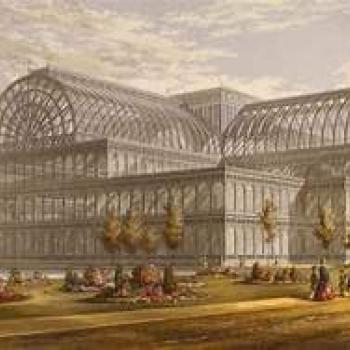
On a series of three artificial islands and in the surrounding ponds, visitors to the 1854 World's Fair at the Crystal Palace in London saw the first life-size replicas of dinosaurs such as the Iguanodon, the Megalosaurus, and Pterodactyls, all created by sculptor Benjamin Waterhouse Hawkins.
Waterhouse Hawkins' dinosaur replicas offer a great opportunity for an inquiry-based project. Some of Hawkins' models are known for their minor errors or incomplete detail. Consider the horn on the Iguanodon or the submerged Mosasaur (with body obscured since only fossils of the head had been discovered). The replicas are in fact more of a historical artifact than an accurate scientific model.
After learning about Hawkins' replicas, do a study of what we know about these same dinosaurs today-what did Hawkins get right and where did he draw the wrong conclusions? Students could work individually or in small groups to investigate a dinosaur of their choice, comparing Hawkins' versions to current knowledge about the prehistoric animals. The ReadWriteThink Venn Diagram is a nice tool to help students organize and present their findings.
This page from Smithsonian.com lists some dinosaur books appropriate for kids, along with brief descriptions.
Nyder's site includes photos of all the remaining dinosaurs in their original location on artificial islands outside the site of the original Crystal Palace building at Sydenham.
This Brooklyn College page details not only Hawkins' work on the Crystal Palace dinosaur replicas but also the ill-fated plans to build similar replicas in New York City.
Scientists out on a dig have found parts from six different dinosaurs. Put the parts together to create a dinosaur that really existed, OR create an imaginary dinosaur of your own!

On May 26, 1951, Sally Kristen Ride was born in Encino, California. In 1983, Ride became the first American woman in space as member of the space shuttle Challenger crew STS-7. She was a member of the panels investigating the Challenger explosion and the space shuttle Columbia disaster.
The StarKids Who's Who collection includes background information about Sally Ride's career.
After exploring the information about Dr. Ride on the site, write a letter to her foundation, Sally Ride Science. Have students brainstorm, as a class, things that they would like to ask about Dr. Ride's life and legacy. Narrow the list down to the questions that they're most curious about, and then have students compose a class letter, asking one or two of these questions, using the Letter Generator.
Send the students' letter to:
Sally Ride Science
9191 Towne Centre Drive
Suite L101
San Diego, CA 92122
Include a self-addressed, stamped envelope, and have students ask for a reply. More tips are available for the Letter Generator.
NASA offers this biography with details on Ride's educational background and career. It follows her progression from astronaut school to the first American woman in space to her career as a professor at the University of California, San Diego.
Sally Ride was inducted into the Hall in 1988. This page provides information about Ride and her work.
The website for Sally Ride's company includes information on space and science-related topics, resource links with an emphasis on girls in science, and information about Ride's science programs and products.
This page from the NASA site for students offers information about the space shuttle appropriate for elementary students. Older students can also explore the main Space Shuttle site.

On May 20, 1927, Charles Lindbergh began the first non-stop flight from New York to Paris and the first solo flight across the Atlantic, taking off from Roosevelt Field in New York in his plane The Spirit of St. Louis. Thirty-three and a half hours later, "Lucky Lindy" landed safely in Paris, France, becoming the first person to fly solo across the Atlantic.
Charles A. Lindbergh: A Human Hero, a biography for younger readers, has a subtitle that might appear to be an oxymoron by contemporary standards. Often, society portrays heroes as superhuman, forgetting that heroes are ordinary people who manage to face extraordinary challenges successfully.
Write the words HUMAN HERO on the board and ask students to consider what might be meant by this phrase. Next, ask groups of students to think of people, alive or dead (or fictional), who fit the category "human hero." Then place all names students have mentioned on the board. Ask students to brainstorm a list of attributes or qualities these people share. Can this list of attributes and/or qualities lead to a definition of heroism? Students can finish by reading a biography of a selected hero and summarizing it using the Bio-Cube interactive.
The Lindbergh homepage includes links to a great collection of resources. Included are flight plans, biographical information, a timeline, video clips, and more.
Part of the PBS American Experience series, this website features information about the film Lindbergh. Also included are a timeline of aviation milestones, maps of Lindbergh's transatlantic flight, and a teacher's guide.
View an exact replica of The Spirit of St. Louis in flight!
This Smithsonian online exhibit includes technical specifications and pictures of Lindbergh's famous plane. The page features a timeline of the milestones of flight.

Named Malcolm Little by his parents in 1925, Malcolm X became one of the most prominent militant black nationalist leaders in the United States. He was a spokesperson for the Nation of Islam and founder of both the Muslim Mosque, Inc., and the Organization of Afro-American Unity. Malcolm X was assassinated in 1965.
What do names tell us about people? Ask students to write about the origin of their own names in their journals. How did they come to be named? Who made the decision about their official names? What nicknames do they have? What names do they like or dislike and why? If they could pick out their own names, what would they select?
After students have had time to reflect and write on this topic, explore the names Malcolm X used during his lifetime: Malcolm Little, Detroit Red, Malcolm X, el-Hajj Malik el-Shabazz, and Omowale. Students may have an easier time understanding Malcolm X's switches if they consider Esperanza's desire to change her name in Sandra Cisneros's House on Mango Street. Share this excerpt with students, and then hold a class discussion about the different names Malcolm X used during his life. Next to each name, ask the class to brainstorm adjectives that might be used to describe Malcolm X during that period in his life.
Links at this site provide resources about Malcolm X and his life. Included are an audio archive of his speeches, photographs, a timeline, links to related Internet resources, and more.
This site from Columbia University includes new research and multimedia materials about Malcolm X. Research for an upcoming biography about Malcolm X is included in the site, as well as numerous digital interviews with people who knew him.
This Encyclopaedia Britannica entry on Malcolm X includes biographical information, as well as suggestions for further reading and links to other people and places related to black history.
This historical article, from the New York Times Learning Network, discusses an interview with Malcolm X, given the week before he was killed by assassins identified as Black Muslims.

In 1971, National Public Radio (NPR) began the first commercial-free, live radio broadcasts. Financed by the Corporation for Public Broadcasting and listener contributions, NPR offers news, music, and other programs free to the public through more than 860 public radio stations. More than 26 million listeners tune in to over 130 hours of original NPR programming each week, including programs produced by local stations and other radio networks.
National Public Radio's commercial-free programming is largely financed by listener contributions. By not relying on advertising revenues, NPR and other public radio stations are able to produce programs that differ from those of commercial radio stations.
List some of the programs offered by a local NPR station (e.g., Fresh Air, All Things Considered, Morning Edition, or Living on Earth). Ask students to make some predictions about the content of each program based upon the program's title. Divide students into groups and instruct each group to listen to one of these programs once or more during the course of a week and report on its contents to the class. Discussions that might follow such reporting could include questions such as:
- What did you learn as a result of listening to this show?
- Is this a program that might be of interest to someone your age? Why or why not?
- How might this program be different if it aired on a commercial radio station?
On the NPR website, students can listen to archived broadcasts of NPR programs. There are links to NPR programming such as Car Talk and Latino USA, as well as an audio search feature that enables listeners to search for a story that they have heard on the radio.
This collaboration between NPR and the National Geographic Society produces and broadcasts stories on the natural world and threatened environments, diverse cultures, adventure, and exploration and discovery.
This companion website to NPR's Radio Diaries includes archived audio files and transcripts. The site features information on how students can create their own radio diaries.
This page from the NPR site offers stories about education topics from a variety of NPR shows.

Ice cream has been around since long before 1786. Emperor Nero of Rome had his slaves get snow from mountains then had it mixed with nectar, fruit pulp, and honey. Marco Polo brought recipes for water ices to Europe from the Far East. Ice cream first appeared in Italy when it was discovered that ice and salt could cause freezing.
During the warm month of June in the northern hemisphere, the topic of ice cream can be quite refreshing. The weather was probably hot in 1786 when Mr. Hall of 76 Chatham Street advertised the first commercially made ice cream. How has advertising changed over the years? Find some advertisements in newspapers, magazines, or on the Internet, or share these vintage ice cream advertisements. Evaluate the ads you have chosen with the ReadWriteThink Advertisement Dissection and Analysis printable activity sheet.
Invite students to think of a new flavor of ice cream and create an advertisement for their product. They can create an advertisement for television, radio, magazine, newspaper or the Internet. Students can add music to their ads or create a short video. After all the advertisements are completed, students can present them to a neighboring class who will vote on the most convincing ad. The winner can choose the flavor for a class ice cream party.
Extend students' learning by sharing this activity with their families or afterschool providers. The activity reinforces procedural writing by having students write a recipe for an ice cream sundae.
This site from PBS Kids Go! encourages young people to think critically about media and become smart consumers. Activities on the site are designed to provide users with some of the skills and knowledge needed to question, analyze, interpret, and evaluate media messages.
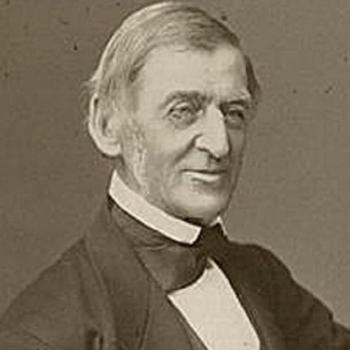
Ralph Waldo Emerson- essayist, poet, and lecturer-was born in Boston in 1803. A founding figure of transcendentalism, Emerson believed that we need to trust ourselves and to live in harmony with nature. His influence on the major figures in American literature, such as Thoreau, Whitman, and Hawthorne, cannot be overstated. At Emerson's funeral in 1882, Whitman called him "a just man, poised on himself, all-loving, all-inclosing, and sane and clear as the sun."
Before sharing the quotation below, ask students to suggest definitions of success. Next, share this quotation which is often attributed to Emerson: "To laugh often and much, to win the respect of intelligent people and the affection of children, to earn the appreciation of honest critics and endure the betrayal of false friends, to appreciate beauty, to find the best in others, to leave the world a bit better, whether by a healthy child or a garden patch, or a redeemed social condition, to know that even one life has breathed easier because you have lived. This is to have succeeded."
Then, identify and list the definitions of success that the author puts forward. Next, ask students to name people they know (not celebrities or politicians) who seem to fit these definitions of a successful person. Last, using the Postcard Creator, have students write a note to a person on the list, explaining why they believe he or she is a success.
Note: There is some question as to whether the above quote in fact can be attributed to Emerson. This might make an interesting research question for students to explore and debate.
American Transcendentalism Web from Virginia Commonwealth University offers this page on Emerson. The Web contains hundreds of articles on Emerson and other transcendentalists.
Poets.org offers this page on Ralph Waldo Emerson. It includes biographical information, a selected bibliography, and links to selected writings and related Internet resources.
This resources from PBS includes a biography of Emerson, information about his role in the transcendentalist movement, and excerpts of his work.

Fred Rogers, better known as "Mister Rogers," began developing his ideas for children's programming in the 1950s. Mister Rogers' Neighborhood began in 1967; a year later, PBS began broadcasting the show. The last original Mister Rogers' Neighborhood aired in 2001, making it the longest-running PBS program at the time.
Ask students to think of movies, TV shows, and books they remember from their childhood. Encourage them to identify those from when they were very young. Ask students to choose an item from the list that they have not seen or read in a long time and to describe everything they remember-the plot, characters, and other elements as well as their associated feelings.
Next, ask students to revisit the item or to ask an adult about it. Students can respond by writing what they think about the text now that they are older: Do they still like it? What details did they remember? What did they NOT remember about it? Finally, ask students to explain whether they would share it with a child of their own or a younger sibling.
This is the official PBS website for Mister Rogers' Neighborhood. It includes many activities designed to stimulate the imagination.
NPR maintains this collection of articles about and interviews with Fred Rogers. It includes a special broadcast of his 30th anniversary show.
The Fred Rogers Company provides this page devoted to Rogers. Featured on the site are a biography, images, and a timeline of Rogers' life.
This site features lyrics and samples of the songs from the Grammy-winning Songs from the Neighborhood, a compilation of songs written by Fred Rogers and performed by 12 popular vocalists.
The beloved TV host on love, peace, and why you're special.

Since 1929, the Academy of Motion Picture Arts and Sciences, with over 6,000 members, has given awards for the best in film. The first ceremony, with 250 people in attendance, took place during a banquet held in the Hollywood Roosevelt Hotel. Tickets cost $10 and the entire ceremony is said to have taken less than an hour-a far cry from the four-hour, star-studded extravaganzas of today.
Students love to watch and talk about movies. With persuasion, they can even be convinced to write about movies. For younger and middle-grade students, you can ask them to make lists of their favorite and their least favorite movies. Looking over these lists, students can then brainstorm qualities that make a film good or bad. Examples might include acting, special effects, and humor. Ask them to rank these qualities from the most to least important and then to explain why the top three are the most important elements to look at in a film.
Next, have students apply these criteria to a film they have seen by writing a movie review that makes their critical stance clear. Older students can take this activity one step further by comparing their review to that of another critic. After reading through one or more reviews, students should write an answer to one of the critics, defending their own reviews and critical stance.
The official website of the Academy of Motion Picture Arts and Sciences, this site includes lists of the current year's nominees and winners. There is also information on previous years' ceremonies.
In 1998, the American Film Institute announced their list of the 100 greatest American movies of all time, and this updated version was created ten years later. This list can be compared to a list of past Oscar winners.
The British equivalent to the Oscar.com website, the BAFTA website includes information on categories, nominees, and winners.
This page from Lincoln City Libraries features a list of past winners of the Best Picture Oscar which are based upon novels, plays, and short stories.