Students examine the painting that inspired Sondheim's Pulitzer-prize winning musical and then create a story of their own based on image they choose.

Composer and lyricist Stephen Sondheim was born today.
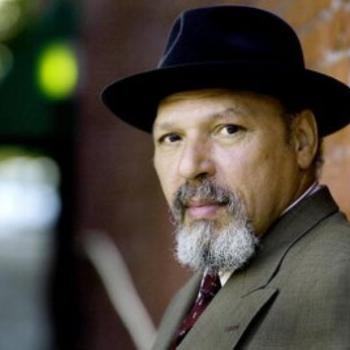
Playwright August Wilson was born in 1945.
Students use the Timeline Tool and Drama Map to create a decade-by-decade record and play of their community's history.

Jonathan Swift was born on this day in 1667.
Students explore satire and parody in television and film, advertising, and journalism and create a display that highlights their findings.
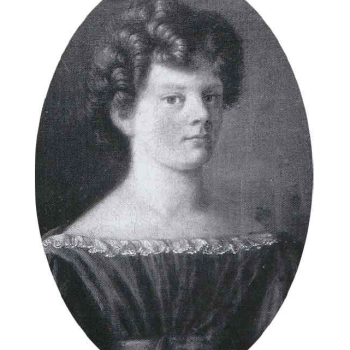
Black Beauty author Anna Sewell was born in 1820.
Through Sewell's novel, students explore the cruelty to animals and extend the discussion to current events, eventually presenting the information.

In 1564, William Shakespeare was born on this day.
Based on grade level, students learn about rhyming structure, experiment with the Shakespearean Insult Kit, or study scenes from Othello and watch an adaptation of that scene from the movie O.
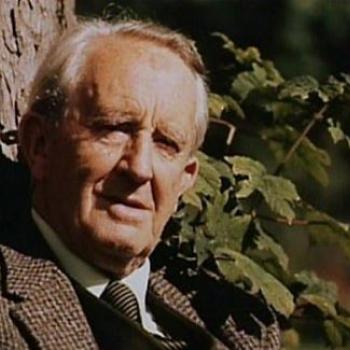
John Ronald Reuel Tolkien was born on this day.
Students compare the film versions of The Lord of the Rings and Tolkien's novels. Students then imagine how a scene in a current novel that they are reading would be filmed.

Coretta Scott King was born on this day in 1927.
Students do a book report assignment based on a current or past winner of the Coretta Scott King Book Award.

Faith Ringgold was born on October 8, 1930.
Students use Ringgold's books as a springboard for a discussion of race, gender, and civil rights, and then write and illustrate original picture books on these topics.

Caldecott-winning illustrator Lane Smith was born in 1959.
Students discuss some of the ways in which illustrations can enhance a story and then become illustrators, using a variety of media.

African American journalist Ida B. Wells was born in 1862.
Students brainstorm a list of human rights issues, research their group's issue in depth, examine the way journalists cover a story, and create articles for a classroom newspaper.
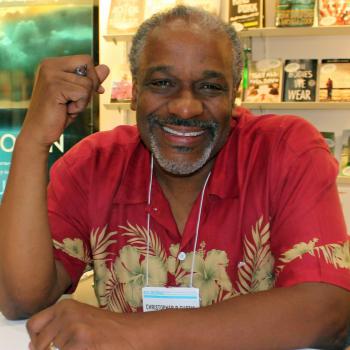
Newbery Medal winner Christopher Paul Curtis was born in 1953.
Students brainstorm a list of civil rights-related issues and use the Acrostic Poems interactive to create poems.

David Wiesner's book June 29, 1999 showcases this day.
Students explore the delightful illustrations in Wiesner's book and identify elements that make the emotions in the story obvious to someone reading the book.
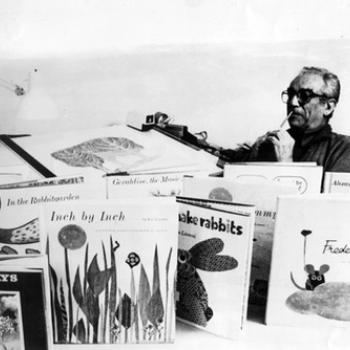
Today is Leo Lionni's birthday.
As a child growing up in Holland, Leo Lionni taught himself how to draw and later became an author and illustrator of children's books. Leo Lionni is the winner of four Caldecott awards.
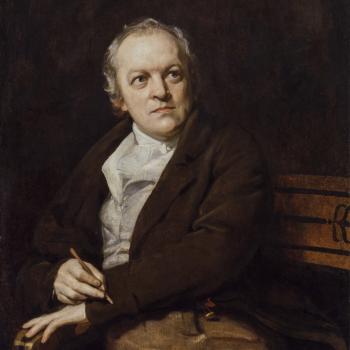
Poet William Blake was born in 1757.
As a class, students brainstorm abstract concepts and personify that concept through a drawing or story told about the character who personifies that concept.

James Baldwin was born today in 1924.
Students read and respond to an essay by Baldwin, commenting on the contemporary resonance of his ideas.

Snowflake Bentley illustrator Mary Azarian was born in 1940.
Students catch snowflakes outdoors and sketch some of the structures, or grow their own snow crystals and examine them using magnifying glasses or microscopes.

Where the Sidewalk Ends by Shel Silverstein was published in 1974.
Students are introduced to a Silverstein verse and asked for their impressions. They then draw that they imagine when they read one of his lines and then write a line or two to continue the passage.