Classroom Resources > Resource Type
The NCTE Charlotte Huck Award® for Outstanding Fiction for Children honors the work of educator Charlotte Huck, who championed the classroom use of storybooks to teach reading and language arts. The award was established in 2014 to promote and recognize excellence in the writing of fiction for children that invites compassion, imagination, and wonder.
After sharing one or more of the winning, honored, or recommended titles as a classroom read-aloud, invite students write and illustrate their own story in which someone learned how to be more compassionate or to feel empathy for those who are different from themselves.
Allow students to decide to tell a story from their own lives or to create characters and imagined situations that would inspire others to be more compassionate. Share tools such as the Story Map and Cube Creator to help students plan and generate ideas. Arrange for a time for students to share their stories with classmates or with younger students.
This festival, hosted by the University of Redlands, brings together authors and illustrators of children’s literature with teachers, librarians, and families.
Charlotte Huck’s HarperCollins biography page includes a link to her book Princess Furball, illustrated by Anita Lobel.
NCTE’s page for its children’s book awards, also including the NCTE Orbis Pictus Award® for Outstanding Nonfiction for Children.
Sponsored by the Alliance for Excellent Education, Digital Learning Day has since 2012 encouraged teachers to share and celebrate effective teaching and learning that showcases innovation in the use of digital instructional technology. Though Digital Learning Day does promote the effective use of contemporary tools and technologies, it is truly a day to reflect on the enhanced or transformed learning those tools support.
Ask students to reflect on something they recently learned how to do. After a few minutes to write or talk with a partner, have students share what they learned as you record their topics for everyone to see. Then lead a discussion around the role digital tools played in the different learning students shared.
-
How many of the examples were about learning to use a new digital tool?
-
How many examples featured students using a digital technology to facilitate or support their learning?
-
Which examples can students imagine doing differently with the support of a digital tool?
Then have students reflect on the varied ways digital learning plays a part in their everyday lives.
This page houses a collection of resources from past Digital Learning Days.
Find inspiration from a lesson plan from the Alliance for Excellent Education, arranged into themes such as language arts, STEM, and digital citizenship.
This collection of ReadWriteThink resources offer additional inspiration for considering the role digital technology can play in student learning.
Need help defining 21st Century literacies or the implications for classroom practice? This collection of NCTE documents can help.

Matt de la Peña is known for his young adult novels such as Ball Don't Lie and We Were Here that depict teens whose lives are shaped by the stresses of poverty and neglect. He also collaborated on A Nation's Hope: The Story of Boxing Legend Joe Louis, a book for younger readers illustrated by Kadir Nelson. "Last Stop on Market Street," written by Matt de la Peña, is the 2016 Newbery Medal winner.
Share with students de la Peña’s essay Sometimes The 'Tough Teen' Is Quietly Writing Stories. Have students read and discuss the essay in groups, focusing on questions such as
- What attitudes toward literacy (reading and writing) does de la Peña convey?
- What stories does he tell to get these points across?
- How does he craft or structure the stories to make them both interesting and effective in communicating the points?
Then invite students to write a literacy narrative of their own, selecting a few key stories to shape into an essay that conveys a point they wish to make about reading and/or writing in their own lives.
Matt de la Peña’s official site offers biographical information and news about his books and upcoming projects.
In this video interview hosted by the Library of Congress, de la Peña discusses his efforts to represent aspects of the Mexican-American experience to readers.
This article from The New York Times reports on the removal of de la Peña’s books from classrooms in Tucson schools.
Covering some of the same material as the essay in the classroom activity, this interview also addresses his then-newest title, The Living.
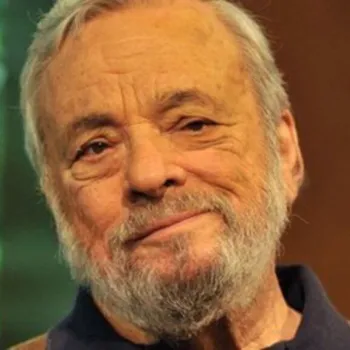
Along with his collaborators, composer/lyricist Stephen Sondheim has written musicals inspired by fairy tales (Into the Woods), historical figures (Assassins), folk legends (Sweeney Todd: The Demon Barber of Fleet Street), and even works of art (Sunday in the Park with George). His work has won him many Tony Awards for achievement in the theater, and in 2014 he was honored with a Presidential Medal of Freedom. His collected lyrics have been published in a two-volume edition. Stephen Sondheim died on November 26, 2021.
Sondheim’s 1984 musical Sunday in the Park with George features the character Georges Seurat and brings to life the figures in Seurat’s 1884 painting A Sunday Afternoon on the Island of La Grande Jatte.
After explaining the relationship between the painting and Sondheim’s work, have students examine the painting and imagine who the figures in the painting might be and what they are doing in the image. Then have them research work by artists such as Romare Bearden or Pierre-August Renoir and create backstories and dialogues for the figures in a painting of their choice.
The webpage of the Stephen Sondheim Society, a charitable group established to promote the public knowledge and appreciation of the works of Stephen Sondheim. Here students can find information about his life and works, as well as the Sondheim magazine.
On this site, students can find well-organized lists and links about Sondheim’s shows, songs, recordings, and more.
This ArtsEdge resource asks students to use skills to identify the Cinderella story Sondheim used for Into the Woods and develop a performance piece based on it
This site contains links to resources on Sondheim and his work hosted at the Library of Congress.
World Read Aloud Day motivates children, teens, and adults to celebrate the power of words. This global literacy movement is about taking action to show the world that the right to read and write belongs to all people. World Read Aloud Day asks everyone to celebrate the day by grabbing a book, finding an audience, and reading out loud.
Celebrate World Read Aloud Day by grabbing a favorite text and reading out loud. Have students bring in their favorite book, magazine, script, newspaper, etc. Ask each student to choose an excerpt to read to the class. Additionally, hold a classroom discussion about the power of literacy. Spread the power of reading by doing one of the following activities in the classroom:
- EDUCATE – Have several read alouds in the classroom throughout the day and talk together about the importance of global literacy, marking this as a special day of reading!
- ADVOCATE - Spread the word about World Read Aloud Day and the Global Literacy Movement within the school by hosting a school-wide read aloud event. Make posters in the classroom advertising and informing the school and community about the event. Construct bookmarks with information about the day and tips for reading aloud to their peers.
- INNOVATE - Share World Read Aloud Day by creating Public Service Announcements and share their projects using video chat, blogs, Glogster, and websites.
This website is for an organization that works to cultivate literacy leaders worldwide with teachers, parents, community members, and children to support the development of sustainable literacy practices across the world. This website provides information about World Read Aloud Day and an opportunity to share any activities using a blog or website.
This website is for a network of individuals and institutions committed to worldwide literacy. This site can be used for more information about literacy instruction and Global Literacy.
This website contains resources, information, and strategies for improving family literacy.
Meet your favorite authors, play games, enjoy read alouds, hear from educational experts and more!
Observed on the last Monday of May, Memorial Day honors the men and women who died while serving in the United States military. In addition to having celebrations with family and friends, many people visit cemeteries and memorials and place flags on the grave sites of fallen servicemen and women.
Have students visit the Stories from the Veterans History Project site. Once there, ask students to choose one of the featured interviews to listen to, peruse the previous releases, or look at a list of collections to find more interviews that may be of interest to them. Students select an interview that interests them and take notes while listening to remember important facts and details about the veteran’s life. After listening to the interview, students complete one of the projects below to honor the veteran they researched:
- Create a timeline of the veteran’s life or time in the military.
- Using the story of the veteran’s life, create a picture book for younger children that tells the story of the veteran’s life or of the war in which he/she fought.
- Record the important facts and information from the veteran’s life using the Hero’s Journey interactive.
- Record a podcast that tells the veteran’s story.
This site includes a collection of personal accounts of American war veterans so that future generations may hear directly from veterans and better understand the realities of war.
Information on the history and traditions of observing Memorial Day in the United States is provided here.
This site includes a history of Memorial Day and tributes to soldiers; includes audio, video, and photos.
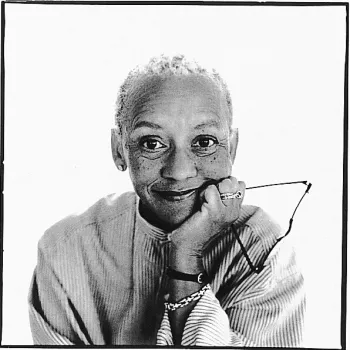
The first recipient of the Rosa L. Parks Woman of Courage Award and a Langston Hughes Medal winner for her poetry, Nikki Giovanni prides herself on being "a Black American, a daughter, a mother, and a professor of English." She was born in Knoxville, Tennessee, in 1943, and is the author of over 30 books for both adults and children, as well as a University Distinguished Professor at Virginia Tech.
Using Nikki Giovanni's poem "My First Memory (of Librarians)" as a model, encourage students to connect memory, their senses, and the language of poetry.
Write on the board or display on an overhead projector the prompt "My First Memory (of ... )" and ask students to think of a person, place, thing, or experience for which they can recall specific early memories. Ask them to brainstorm any sensory images: sights, sounds, smells, tastes, and tactile images.
Then share "My First Memory (of Librarians)," encouraging students to take inspiration from Giovanni's structure and use of language as she reveals her feelings and attitudes toward her subject.
Featuring a wealth of resources, Nikki Giovanni's official site offers biographical information, links to essays and conversations, and multimedia content.
Nikki Giovanni's page on the Academy of American poets features biographical information and the text of some of her poems.
The Poetry Foundation page for Nikki Giovanni provides information on her life, career, and bibliography, as well as the text of several of her well-known poems.
This talk was given by Nikki Giovanni at a TEDx event.
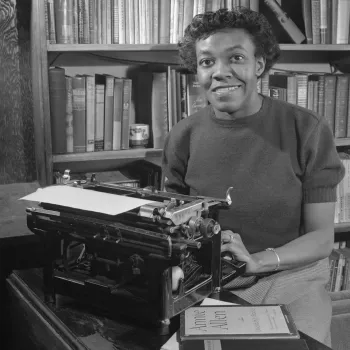
Best known for poems such as "The Mother," "The Bean Eaters," and "We Real Cool," Gwendolyn Brooks published Bronzeville Boys and Girls in 1956. Brooks dedicated the collection of 34 poems to her two children, Henry and Nora, who grew up in the same neighborhood on Chicago's South Side as the children in the book. A new edition of Bronzeville Boys and Girls features illustrations by Faith Ringgold.
Bronzeville Boys and Girls is a collection of poems that celebrates the joy and imagination of a community of children. Obtain a copy of the book and share several poems and illustrations with your students. Point out that some of the poems focus on a single child ("Narcissa," "DeKoven"); some on pairs of children ("Timmy and Tawanda"); and still others on children in specific situations ("Rudolph is Tired of the City," "Mirthine at the Party").
After students have read and discussed several poems from the collection, ask them to create a poetry anthology for their own family, neighborhood, or classroom. Students can use the Stapleless Book to create a collection themselves, or they can each contribute one poem to a class collection. Be sure to have students include illustrations to accompany the poems they compose.
This Academy of American Poets biography of Brooks includes links to five of her poems and an audio file of Brooks reading her famous "We Real Cool."
This site is a collection of web resources related to Brooks, who was the 29th Consultant in Poetry to the Library of Congress. Resources include links to interviews, audio files, criticism, and lesson plans.
On her official site you can find more work by and information about Faith Ringgold, the illustrator of the new edition of Bronzeville Boys and Girls.
To draw attention to the remarkable variety of writing Americans engage in and to help make writers from all walks of life aware of their craft, the National Council of Teachers of English has established October 20 as the National Day on Writing®. It's important for everyone to share their knowledge about writing, organize participating groups in our schools and/or communities, and transform the public's understanding of writing and the role it plays in society today.
Encourage your students to uncover all of the different kinds of writing they do on a daily basis by asking them to keep a list of everything they write, from text messages to school assignments, e-mails to diary entries, in a single day.
After students make a list of everything they wrote in a day, help them see the variety in their writing, both individually and as a class. Post colorful chart paper with age-appropriate questions about purpose, audience, genre or type, and technology around the room. Ask students to brainstorm different categories for each poster based on the writing they did. Write these categories on the posters and then have students contribute examples from their personal lists. Facilitate a gallery walk of the posters once students have contributed to all of them.
Encourage students to view and reflect on all kinds of writing - no matter the purpose, audience, type, or technology.
Here you will find information about the National Day on Writing® initiative, as well as links to a variety of NCTE writing resources and tips for writing.
Keep these tips from NCTE in mind as you think about your writing.
This collection of position statements includes the "NCTE Beliefs about the Teaching of Writing" and "Writing Now: A Policy Research Brief."
This is the online home of the NWP, a professional development network with the mission of improving student achievement by improving the teaching of writing and improving learning in the nation's schools.
The Learning Network provides teaching and learning materials and ideas based on New York Times content.
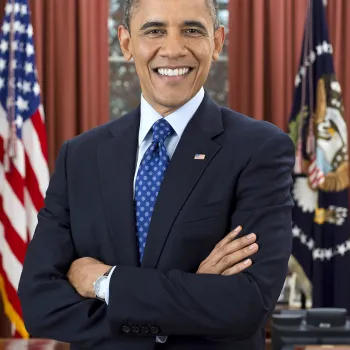
Americans made history in 2008 by electing Barack Obama as the nation's first African-American President. In addition to his work as a community organizer and Senator, Obama also wrote two books, Dreams from My Father and The Audacity of Hope, before being elected President of the United States.
In his memoir Dreams from My Father, Obama describes an incident in which he, as a young boy, "came across the picture in Life magazine of the black man who had tried to peel off his skin" (51). Seeing the devastating effect negative messages about being African-American had on this man, Obama "began to notice that [Bill] Cosby never got the girl on I Spy, that the black man on Mission Impossible spent all his time underground. [He] noticed that there was nobody like [him] in the Sears, Roebuck Christmas catalog ... and that Santa was a white man" (52).
Share this passage expressing Obama's experiences with media messages and his understanding of his identity. Then encourage students to engage in an examination of the ways they are portrayed in the media. Point them toward print, online, and television portrayals of people who share their age bracket, race, gender, and any other relevant aspects of their identity.
Adapt activities from the lesson plans below to supplement their research and organize their findings.
Information and resources from the National Association for Media Literacy Education.
These resources promote media literacy education as a framework for accessing, analyzing, evaluating, creating, and participating with media content. Visitors will find readings, lesson plans, and samples of student-produced media.
This online article presents a summary of recommendations from a study that links young people's understanding of their identity to ways they are portrayed in the media. Included is a link to the full research report.
Nationally recognized as a leader in media literacy education, the Media Literacy Project provides resources that promote critical thinking and activism to build healthy and just communities. In addition to teaching and learning resources, visitors will also find information about media-based contests for students.