
National Library Week is a time to celebrate the contributions of our nation's libraries and librarians and to promote library use and support. All types of libraries - school, public, academic and special - participate.
National Library Week will be observed April 7-13, 2024 with the theme, "Ready, Set, Library!"
Most students think of the library as a place to check out books or use technology, but do you know what else your library has to offer? To find out:
Check out your library:
- Head to your school and public library during National Library Week to see what's new and participate in all they have to offer.
Visit your library online:
- If you can’t make it to your libraries, visit their website or social media pages to learn about programs and services offered.
Invite in your librarian:
- Librarians are a wealth of knowledge, about the library itself and all they have to offer. Talk with your librarians to learn more!
Ilovelibraries.org is an initiative of the American Library Association (ALA), designed to keep America informed about what’s happening in today’s libraries.
Learn more about the National Library Week 2023 celebration.
Learn more about the many decades of National Library Week.
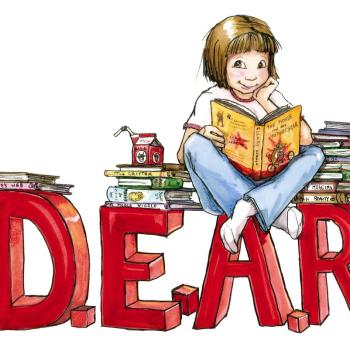
April 12 is known as D.E.A.R Day! D.E.A.R. stands for "Drop Everything and Read," a national month-long celebration of reading designed to remind folks of all ages to make reading a priority activity in their lives. It is also Beverly Cleary’s birthday! D.E.A.R. programs have been held nationwide on April 12th in honor of Beverly Cleary’s birthday, since she first wrote about D.E.A.R. in Ramona Quimby, Age 8.
Today is the birthday of author Beverly Cleary, who brought to life the characters of Ramona and older sister Beezus. On this day, D.E.A.R Day, families are encouraged to take at least 30 minutes to put aside all distractions and enjoy books together. Get together with other readers, find someone to read to, or even just read alone. Here are some additional ideas:
Family Read Aloud
With this tip, learn a few simple read-aloud strategies that can sharpen a child's emerging reading skills and help you have fun together with a good book.
Journaling
This lesson encourages children to explore authentic reasons for writing by writing messages to their family in a family message journal.
Retell Stories
Tell me about it in your own words! If students can paraphrase the information they have read, then you—and they—can be confident that they understand it.
Drop Everything!
Don’t think that means that the celebration is only allowed during this month, though. It’s encouraged all year long!
This website has reading lists, activity ideas, digital assets, and other resources on D.E.A.R.
Reading Rockets shares resources about Beverly Cleary and D.E.A.R.
Drop Everything and Read suggestions from the International Literacy Association
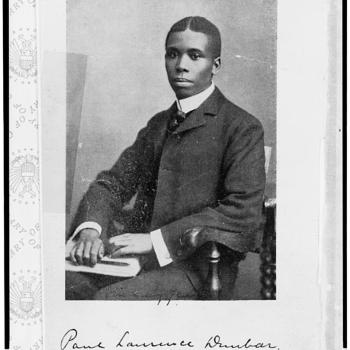
Best known for his poems “We Wear the Mask” and “Sympathy” (the poem from which Maya Angelou took the title of her memoir, I Know Why the Caged Bird Sings), Paul Laurence Dunbar wrote dialect poems, other poems, novels, short stories, and essays. Dunbar had served as class poet at his high school in Dayton, Ohio; he later worked as an elevator operator while he wrote in his spare time.
Project or share copies of Dunbar’s poem Sympathy. Read it aloud and ask students to discuss words, lines, and images that stand out to them as particularly meaningful.
Then share with students the critical excerpts on the poem from Modern American Poetry (including earlier and later versions of part of the poem). Ask small groups to read the excerpts and then discuss how the ideas from the three critics change or deepen their understanding of the poem.
Dunbar's entry on the Academy of American Poets website contains biographical information, a collection of poems, and personal correspondence between him and his wife, Alice Nelson-Dunbar.
The Poetry Foundation's collection of resources on Paul Laurence Dunbar includes a biography and several poems.
The Modern American Poetry page for Dunbar includes curated criticism and online examples of Dunbar's illustrated poems.

Novelist, essayist, and social critic James Baldwin was born on August 2, 1924, in Harlem. At 14, he was in training to become a Pentecostal preacher, but by 17 he had become disillusioned with Christianity. Troubled by the racism he encountered in America, he moved to France when he was 24 where he wrote his first book, the semi-autobiographical Go Tell It on the Mountain. Later works include Giovanni's Room, known for its frank depiction of homosexuality, and a collection of essays, The Fire Next Time. Eventually known as a key voice in the Civil Rights Movement, Baldwin died in France in 1987.
Preview and share with students all or parts of Baldwin's 1963 essay A Talk to Teachers. Ask students to identify Baldwin's main contentions about race relations in America and think critically about connections they see to other texts (such as poems, books, or films) and to contemporary social issues.
Then invite students to use the Letter Generator to write a letter to Baldwin responding to his ideas and how they see them resonating with the present.
From the PBS American Masters program James Baldwin: The Price of the Ticket, this "about the author" site shares biographical information and links to several video clips of Baldwin in conversation.
This New York Times article reports on the acquisition of Baldwin's personal writing by the Schomburg Center for Black Culture in Harlem. It includes images of several pages of Baldwin's hand- or typewritten manuscripts.
Baldwin's entry at the Poetry Foundation features an extensive biography and links to poems and other works.
Nominated for an Academy Award for Best Documentary Picture. I Am Not Your Negro is Raoul Peck's 2016 adaptation of Baldwin's unfinished manuscript Remember This House. The site offers video excerpts and background information.

Louise Erdrich was born today in 1954. Erdrich is an enrolled member of the Turtle Mountain Band of Chippewa Indians and is the author over a dozen novels as well as poetry, short stories, and books for children. Her work depicts Native American characters and settings and has won a number of awards, including the National Book Award for The Round House and the O. Henry Award for “Fleur.” She is also the owner of an independent bookstore in Minnesota.
Project for students the short video Louise Erdrich, author of LaRose, talks about her love of books. Briefly discuss Erdrich’s attitudes toward and associations with books before inviting students to write their own short memory piece about a pleasurable experience with a book, at a bookstore, or in a library.
Encourage students to include sensory details about the book, such as how it looked, felt, smelled, and so on. Then ask students to share their memories to join in Erdrich’s love of books.
Erdrich's Poetry Foundation page includes biographical information and links to several of her poems, including "Turtle Mountain Reservation" from Jacklight (1984).
This HarperCollins page offers a biographical sketch as well as information about all of her major works.
Louise Erdrich's blog is frequently updated and offers a glimpse into her work as an independent bookseller and reader.
This compendium of NPR resources includes booklists featuring Erdrich's works as well as links to archived audio content.
From the documentary series by Henry Louis Gates, Jr., this page includes videos of Erdrich discussing her genealogy and the importance of ancestral history.

Winner of a 2016 National Medal of Arts, Sandra Cisneros was born in Chicago, Illinois, in 1954. Best known for her collection of vignettes The House on Mango Street and her short story collection Woman Hollering Creek, Cisneros has also been awarded MacArthur and NEA Fellowships for her fiction and poetry depicting life of Latino/as in America.
Read aloud or project this quote from Sandra Cisneros:
The older I get, the more I'm conscious of ways very small things can make a change in the world. Tiny little things, but the world is made up of tiny matters, isn't it?
Invite students to select a "tiny little thing" from their lives—an encounter with a stranger, a small object, a physical feature of a loved one, a fragment of remembered dialogue—and freewrite about its significance to their lives. Then read aloud a vignette such as "Hairs"/"Pelitos" (also available as a standalone picture book) and discuss how Cisneros takes something small and finds significance in it. Give students time to write, share, and revise to take up what they learned from hearing Cisneros' writing. Let students choose a form for their writing: narrative prose, poetry, or essay.
Cisneros' official website offers a personal glimpse into her life, work, and favorites.
Learn more about Cisneros' life at this site from Biography.com.
This press release announces Cisneros as a recipient of the 2016 National Medal of Arts and contains links to media associated with the awards ceremony.
In this NPR interview from 2009, Cisneros discusses the history and impact of The House on Mango Street, then in its 25th year.
In this official video interview from KnopfGrou, Sandra Cisneros talks about the story behind The House on Mango Street and its relationships with her own life.
The first Labor Day was celebrated in New York City on September 5, 1882. It became an official federal holiday in 1894 and is now celebrated on the first Monday of September. Born out of the rise of unions as part of the American labor movement, the day is marked by parades, picnics, and other celebrations—and it marks the unofficial end of summer.
Students tend to know little more about Labor Day than it's a day off of work and school. Encourage them to learn more about the American labor movement by giving them time to research one of the figures from the list below. In paris or small groups, they can locate print and Web based resources about their lives and contributions to labor reform. Groups can use the Biocube Interactive to organize and share what they learn.
- Jane Addams
- Sarah Bagley
- César Chávez
- Samuel Gompers
- Dolores Huerta
- Mary Harris Jones
- John L. Lewis
- Lucy Randolph Mason
- Luisa Moreno
- Leonora O’Reilly
- Albert and Lucy Parsons
- Franics Perkins
- Esther Peterson
- A. Philip Randolph
- Walter Reuther
- Rosina Tucker
This page from the US Department of Labor explores the legislation behind Labor Day and the controversy over the identity of its originator.
The History Channel's section on Labor Day offers articles, videos, and speeches related to the holiday.
This Time Magazine article offers an accessible introduction to the history and significance of Labor Day.
The History Channel's section on the Labor Movement offers an overview of key figures in labor reform.
"Tom Swifties" are a special kind of pun associated with Victor Appleton's Tom Swift book series, in which the author avoided the use of simple "said" as a dialogue tag. The Tom Swifty evolved into a pun in which the dialogue tag relates humorously to what the character said. The figures of speech gained prominence when Time magazine sponsored a contest for the best Tom Swifties in 1963.
- Share some examples of Tom Swifties and ask students to notice what they have in common. Literary examples include Charles Dickens' "'You find it Very Large?' said Mr. Podsnap, spaciously," work well, but everyday examples such as "'I need to milk the cows now,' Tom uddered" or "'I dropped my toothpaste,' Tom said, crest-fallen" might give students more to work with.
- Together, generate a list of principles about what makes Tom Swifties work. Importantly, the way in which a speaker says something comments on or relates to what was said in a humorous way. Often the dialogue tag has multiple meanings; single-word or phrase-length dialogue tags work equally well; and product names (such as Cheer or Clue) offer potential for punning as well.
- Let students meet in small groups to generate some Tom Swifties of their own. After the have had time to develop and polish a few, have a contest of your own to celebrate the best examples.
Mark Israel's thorougly sourced collection offers some background on the Tom Swifty and an alphabetically categorized list.
This site is a catalog of many of the Tom Swift books, focusing on the scientific nature of their plots.
Though this site requires a subscription to view all its content, students can get a sense of the popularity of the Tom Swifty through the link to the contest in the Society: Games section.

Since it became a national observance in 2004, Constitution Day has commemorated the date of the 1787 signing of the U.S. Constitution. Constitution Day offers students a chance to learn about this important document, from the Preamble to the seven articles to the twenty-seven amendments.
Help students deepen their understanding of one aspect of The U.S. Constitution by asking them to explore The Interactive Constitution. From the section on the articles, students can choose from among the Preamble, the branches of government, and more. Alternately, they can explore each of the twenty-seven Amendments (currently the first fifteen amendments are fully developed). Each section provides a common interpretation followed by Constitutional scholars’ discussion of a debatable issue.
Let pairs or small groups choose what they will learn about. After they read and discuss the entry, direct them to the Trading Card Creator, where they will select the Abstract Concept template. After they complete their Card, have groups present informally to share what they have learned.
The online presence of the National Constitution Center in Philadelphia, this site offers background about the Constitution as well as lesson plans, activities, and resources.
More appropriate for older students, this collection of official government documents and journal articles can enhance inquiry into the nature and function of the Constitution.
This site of the National Archives offers activities designed around artifacts from their collection, as well as a link to their document-based workshop on teaching the Constitution.

In 2009, the United Nations declared July 18 Mandela Day, an international day of honor for former South African President Nelson Mandela. Also his birthday, Mandela Day invites everyone, particularly young people, to take action to promote peace and combat social injustice. According to the official Mandela Day website, Mandela Day "was inspired by a call Nelson Mandela made [in 2008], for the next generation to take on the burden of leadership in addressing the world's social injustices when he said that 'it is in your hands now'."
Familiarize students with Mandela's life and legacy by reading aloud Kadir Nelson's Coretta Scott King Honor book, Nelson Mandela. Share the illustrations and stop frequently for questions and discussion of Mandela's early life, determination to change social conditions in apartheid-era South Africa, and eventual presidency. Fill in any gaps with resources from the biographical websites below.
Then explain the purpose and mission of Mandela Day before inspiring students to brainstorm their call to social action by sharing the Take Action page from the Mandela Day website. There, students will see examples of service projecs around the key themes of awareness building, food security, literacy and education, service and volunteerism, and shelter and infrastructure.
Invite students, as a class or in small groups, to determine a project they can undertake, using resources such as the Letter Generator, Printing Press, and Persuasion Map to plan and publicize their contribution to a more just world.
This site provides a gallery of past and current Mandela Day projects as well as resources for teachers to support students' participation in the Day.
From Mandela's official site, this biography contains text, images, video, sound files and primary source documents to tell the story of his life.
This BBC resource features a timeline with key events, photographs, and videos.
Resouces on this Biography.com on this page are categorized into "In the News" and "History & Culture."
This three-minute video from Time.com further develops Mandela's biography.
Slate.com offers this collection of annotated photographs of Mandela's life.