
Dr. Jonas Salk was born in New York City on October 28, 1914. In 1953, Salk announced that he had successfully developed a polio vaccine, reducing the number of deaths from the disease in the U.S. by 95%. During the last 10 years of his life, Salk focused on AIDS research. Salk died in 1995.
After learning about Dr. Jonas Salk, ask your students to interview a family member or somebody they know who remembers when polio was endemic. There are many stories related to the history of the disease in the United States-from the first people to be vaccinated to those who had the disease themselves. Students can share their stories and interviews in class. If students are unable to locate enough people who can share memories of the disease, visit the Share Your Story section of the March of Dimes website. Take advantage of the stories to talk about the difference between fact and opinion, making note of the information from the stories on the board. Compare the facts from the stories to the facts available in reference materials. If desired, students can submit their family stories to the appropriate area of the March of Dimes website.
This page from the Academy of Achievement provides an excellent biography on Salk, including video of his interviews and photographs.
Have your students read the comic-book style story of how Albert Sabin and Jonas Salk developed a vaccine for polio.
This website aims to increase awareness of polio and to raise the funds needed to eradicate the disease. The site offers an excellent history of the disease from 1580 BC to the present.
From the Eisenhower Library, this website provides online access to many of the primary documents related to the polio vaccine, including presidential statements and official government documents.
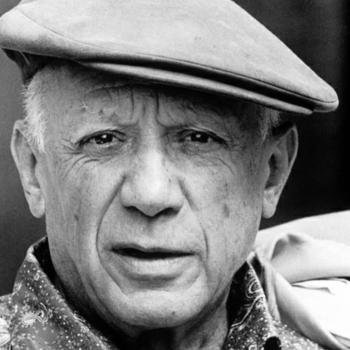
Pablo Picasso, a dominant figure in 20th-century Western art, was born on October 25, 1881, in Malaga, Spain. In painting and sculpting, he was one of the creators and popularizers of the Cubist style. Though Picasso was not typically considered "political," one of his most celebrated works, Guernica, memorializes the destruction of the Basque town of Guernica during the Spanish Civil War. He died on April 8, 1973.
For high school students, select a Picasso Cubist portrait from one of the Websites. If you have a projector, you can project the image from the website onto a screen. If not, you can make a color copy of the portrait or arrange for your class to visit the computer lab.
Give students about one minute to view the piece, then ask them to write their impressions and share them with a partner. Next, show students a Picasso portrait that does not employ the Cubist style (most of his work prior to 1905) and ask them to describe the person's face and body. Then, share with students the main concept of Cubism, which is to capture the essence of a subject by showing its multiple perspectives all at the same time. Show students another Picasso Cubist portrait and ask them to describe the person in the portrait this time. Is this person recognizable? What perspectives are shown? After this discussion, students can have fun creating their own Picasso-style art using the interactive Picassohead.
This website is a virtual one-stop shop for everything related to Picasso. The site not only contains biographical information about Picasso, but also offers thousands of full-color images of his work.
This website, developed by Maryland Public Television, highlights several Picasso paintings and provides analyses of his works. The section called Vantage Point offers materials for using Picasso to enrich mathematics, social studies, and language arts curricula.
This page features the text of the 1973 New York Time article announcing the death of Picasso. Students can compare the 1973 perspective of the painter and his work with the modern perspective.
The Guggenheim Museum provides examples of Cubist art from its collection, including some of Picasso's works. Also included is a definition of Cubism.
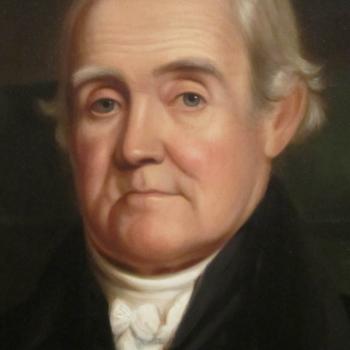
Noah Webster, called the father of the American dictionary, was born on October 16, 1758, in Connecticut. Believing that American students should not have to use British textbooks, he wrote A Grammatical Institute of English Language, which became the main source for spelling and grammar in the United States. He then began work on the first American dictionary, An American Dictionary of the English Language, which contained nearly 70,000 words by the time it was completed in 1828.
To celebrate Webster's birthday, try this variation of the popular board game Balderdash:
- Divide your class into groups of five or six. You will need one dictionary per group and a stack of blank paper cut into strips of about two inches each.
- One student in the group quickly scans through the pages in the dictionary and identifies a word that he or she believes no one has ever heard before. That student reads the word aloud and spells it. The other students in the group write down a definition for the word, either the real definition or a made-up definition that might fool others into thinking it is the real definition.
- The student with the dictionary writes the real definition on a slip of paper and then collects all the slips from the group. The student then reads each of the definitions created by others in the group, as well as the real definition.
- The students in the group then individually choose which of the definitions they believe is real. Points are awarded as follows: two points if you select the correct definition and one point for each time that someone else selects the definition that you wrote.
- Points are totaled and the next person in the circle selects a word from the dictionary. The game can continue for as long as you like.
This website offers a brief biography of Webster and his views on various political and educational topics.
The online version includes audio pronunciations, a thesaurus, Word of the Day, and word games.
This online dictionary includes illustrations and is an excellent resource for K–3 readers.

Ursula K. Le Guin is the noted author of fantasy and science fiction novels for young adult readers. Her Earthsea Cycle, first published in the 1970s, remains a favorite series for fans of fantasy fiction. Le Guin passed away in 2018.
The task of a fantasy writer is, first and foremost, to create some semblance of believability in the world in which the story is set. Since many students will be familiar with some fantasy worlds (e.g., Hogwarts School from the Harry Potter series, Middle Earth from The Hobbit), have them construct a two-column chart. In the first column, ask students to list the realistic elements of a familiar fantasy story of their choice. In the second column, students should indicate the "fantastic" aspects of each realistic element. For example, in Harry Potter, there are rules for appropriate behavior, which is a realistic element. The rules themselves, however, such as not performing magic in front of Muggles, show the addition of the fantastic element.
This site dedicated to Le Guin provides information about her books, her life, and her writing.
Cynthia Leitich Smith, children's author, offers a list of resources and posts about Ursula Le Guin.
This article from The ALAN Review provides an overview of Le Guin's Earthsea novels.
Who was the person behind the massive library of books? How was she able to create worlds that were so incredibly fantastical but also so realistic and believable?
On this day, Jupiter Hammon, the first African American to publish poetry in the United States, was born in Long Island, New York, in 1711. In honor of Hammon's birth, we celebrate the contributions of all African Americans to the world of poetry.
Traditionally, Black Poetry Day is celebrated with a poetry reading that focuses on the works of African American poets.
To celebrate the day in your classroom, gather books and bookmark webpages that focus on the works of African American poets (see the Websites listed below). Introduce the project by explaining the significance of the day. Then invite students to explore the available resources and ask each to choose a poem that he or she will contribute to the poetry reading. Ask students to share their poems and the reasons for their selections. On the day of the official poetry reading, invite students to stand and read their poetry selections aloud. If desired, students can copy the poems and collect them for a class anthology that commemorates the event.
This essay from the Academy of American Poets features poets of the Harlem Renaissance, with links to additional information and samples of their work.
Jupiter Hammon’s first published work, an 88-line broadside, came out in Hartford, Connecticut in 1760—when Phillis was only 7 years old and 10 years before her first broadside publication, entitled "Elegy on the Death of Whitefield."
This site includes biographical information for dozens of African American poets. Also included are links to each poet's work.
This section of the My Hero website offers information about a number of multicultural poets, including several important classical and contemporary African American poets.
Believed to have its origin in the 1930s, World Poetry Day is now celebrated in hundreds of countries around the world. This day provides a perfect opportunity to examine poets and their craft in the classroom. In 1999, UNESCO (the United Nations Educational, Scientific, and Cultural Organization) also designated March 21 as World Poetry Day.
"Introduction to Poetry" by Billy Collins provides a wonderful place to begin a discussion on how readers approach a poem. Ask students to skim quickly through the poem and write their initial responses in their journals or on paper. What words and images stand out for them? What is their emotional reaction to the poem (e.g., surprise, dismay, anger)? Ask students to share their responses with the class. Then have students read the poem a second time, this time more slowly and carefully, taking note of any figurative language (e.g., simile, metaphor, hyperbole) they encounter. What do they think Collins is saying about the study of poetry? According to Collins, what is the real goal of reading poetry?
Ask students to think about a favorite poem and imagine the perfect way to read it. Where would they be when they read it? Would they read it fast or slow? Out loud or to themselves? Have them compose their own poem about reading poetry. Students can use tools provided by ReadWriteThink to create Acrostic Poems, Diamante Poems, Letter Poems, or Theme Poems.
This website includes the work of hundreds of poets and more than 1400 poems. Included are poet biographies, selected works, and a collection of poems in audio format.
From the Library of Congress, this site features a year's worth of poetry for high school students. Beginning with Billy Collins' "Introduction to Poetry," the poems are meant to be read aloud, and enjoyed by the entire school community.
Though not all poems are appropriate for younger readers, you can search the archives to find a full year of poems.
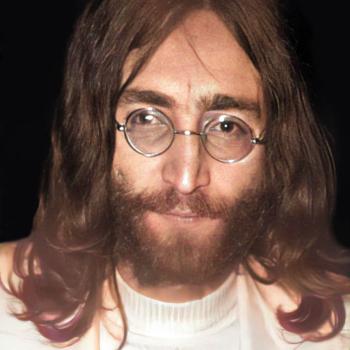
John Lennon, a member of the Beatles, was born on October 9, 1940, in Liverpool, England. With the Beatles and as a solo artist, Lennon was hugely influential musically, culturally, and politically throughout the 1960s and 1970s. Lennon wrote and recorded many songs over the course of his career, including the antiwar song "Give Peace a Chance." He was murdered by a crazed fan on December 8, 1980, in New York City.
John Lennon is well known for many songs; however, his most famous song is probably "Imagine," in which he asks his listeners to consider a world without war and violence. After listening to the song or reading the lyrics, ask students to discuss the following questions, depending upon their grade and skill level:
- The speaker refers to himself as a "dreamer." What other words would you use to describe the speaker?
- Is the world that the speaker imagines possible? What prevents peace from happening? What can be done to try to make it happen? How has September 11 changed your feelings about world peace?
- Write a stanza of your own for the song that begins with the phrase "Imagine..." Draw a picture below your stanza to illustrate the world you have imagined.
This media-rich site offers a history and biography of Lennon, as well as videos, drawings, and a discography. Photographs and videos of Lennon are found throughout the site.
This museum site includes a biography and timeline of Lennon, who was inducted into the Rock and Roll Hall of Fame in 1994.
A site created by Yoko Ono in rembrance and celebration of John Lennon.

Edward Stratemeyer was a series book author who began the Stratemeyer Literary Syndicate in 1905. He advertised for and hired authors who wrote from his outlines and signed an oath of secrecy. The Syndicate remained secret for many years. Using syndicate authors, Stratemeyer created the Hardy Boys and the Nancy Drew mysteries, among other series.
Have students select several books from the Hardy Boys, Nancy Drew, or another series to read. Students can use the Series Books resource from KidsReads.com to find an age-appropriate series that interests them.
Lead a discussion about the shared elements in the books. Have students use the 3-Circle Venn Diagram to compare character, plot, and setting in three books. How do these elements change across the series? In what ways do they remain the same?
Students can also outline their own series, as Stratemeyer did for his syndicate. Have students use the interactive Literary Elements Map to create the characters, settings, and plots for their series. Students can also plan how their characters will change and grow across the series using the Interactive Timeline. Have them select "other" as the unit of measure and type in "book." They can then note ways their characters will change and grow in each book of the series.
Information about Stratemeyer's life and writing can be found on this webpage.
This website contains an overview of the authors and the books in the Nancy Drew series. It also discusses Stratemeyer's syndicate and the roles of Stratemeyer's daughters in making the Nancy Drew series a success.
This site contains information about the characters, history, locations, and more from the Hardy Boys series. It also includes a map recording the Hardy Boys' many travels.
This site allows students to search for book series by name. Included for each series is a general overview of the series, related games and activities, and information about the author, titles, and characters.
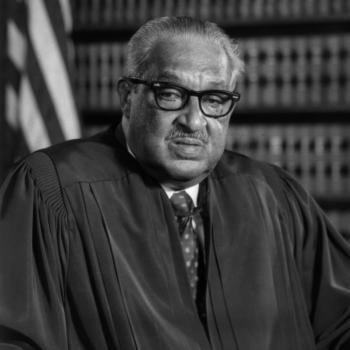
Thurgood Marshall was appointed to the Supreme Court by President Lyndon Johnson in 1967. Marshall was the first African American Supreme Court Justice. Marshall was instrumental in numerous civil rights cases. In 1954, he argued and won the landmark Brown v. Board of Education case, in which the Supreme Court declared segregation of public schools illegal.
Discuss the following statement by Thurgood Marshall with your students: "If the First Amendment means anything, it means that a state has no business telling a man, sitting alone in his house, what books he may read or what films he may watch." Invite students to think about Marshall's statement by considering each piece of the comment. For instance, begin by reading the First Amendment and talking about the civil rights that the amendment guarantees. After exploring the quotation fully, use K-W-L Creator to complete a K-W-L chart with your students and have them use the resources listed below to begin an investigation.
This site includes biographical and background information on Marshall, as well as details on court decisions he was involved in.
From the US Postal Service, this printable resource includes information about Marshall, a few lessons plans, and a word puzzle.
From the Library of Congress, this page includes a biography of Marshall with links to information on important cases he played a role in, such as Brown v. Board of Education.
Ben's Guide to U.S. Government for Kids provides grade-appropriate information about the Supreme Court and how it works.

Did you know that Johnny Appleseed was a nickname given to John Chapman? There are many nice folktales written about him, but we have no proof that these things really happened. One thing that is true about John Chapman is that he planted apple trees!
As you share the details of John Chapman's life and his travels, use the Timeline Tool to organize the details that you find in the books and websites that you check. As you work through the details, ask students to look for details that are fact and those that are exaggeration. If desired, use the Venn Diagram tool or Mobile App to organize the information (especially if you are using the stories of Johnny Appleseed as part of a tall tales unit). As extensions, you might track Chapman's journeys on your classroom map or have students use the Theme Poems Interactive to create poems about apples or about Johnny Appleseed. For additional help, see the more tips about Theme Poems and the more tips on the Timeline Tool.
From the Library of Congress America's Story from America's Library, this site provides a short biography of John Chapman in the context of other historical events.
This University of Illinois Extension site includes links to apple facts, recipes, history and legend, and educational material.
Second graders from Austin, Texas contributed the writings and drawings about Johnny Appleseed found on this webpage.