
Best known for his collaborations with illustrator Lane Smith (The Stinky Cheese Man and Other Fairly Stupid Stories, The True Story of the Three Little Pigs), author Jon Scieszka has also written a memoir, Knucklehead: Tall Tales and Almost True Stories of Growing up Scieszka. Scieszka is a champion of reading opportunities for boys, having founded the web-based literacy program Guys Read and served as the first National Ambassador for Young People's Literature.
- Ask students to brainstorm all the ways that their families, school, and community have supported their love for reading—or have squelched their love for it. Ask them to transform this list into a chart of Do’s and Don’ts advising the adults in their lives on how to nurture a love of reading in young people.
- Then share (in language appropriate for your students’ grade level) and discuss the components of Jon Scieszka’s platform as Ambassador for Young People’s Literature to motivate young readers:
- Expand your definition of reading beyond fiction and novels. Lots of kids love to read non-fiction, humor, comic strips, magazines, illustrated stories, audio recordings, and websites. It’s all reading. It’s all a good way to become a reader.
- Let kids choose reading that interests them. It may not be the reading you like, but making the choice is important to kids.
- Be a good reading role model. Talk to your kids about how you choose what you read. Share your reading likes and dislikes. Let kids see you reading.
- Try not to demonize TV, computer games, and new technologies. These media do compete for kids’ time, but they are not the “bad guy.” Help kids become media literate. Show them how different media tell stories in different ways.
- Think global. Act local. There are all kinds of good people and worthy groups working to help kids read. Teachers, librarians, and booksellers are a wonderful resource. Ask them for book recommendations. Join a local literacy group.
(from National Ambassador for Young People’s Literature, Library of Congress)
- Then ask students to compare their suggestions to Scieszka’s and to return to their list to make additions or changes.
- Finally, invite students to use the Letter Generator to write a letter to families, school staff, librarians, and community members sharing their ideas on how best to support young readers’ interest in books.
This video shares Sciescka's perspectives on how to make reading fun.
Scieszka's whimsical webpage includes a biography and information about his books and series.
The homepage of Scieszka's project supporting reading choices for boys includes book lists, ideas for book clubs, and more.
This page offers a brief feature on each of the Ambassadors, including Scieszka, Katherine Patterson, and Walter Dean Myers.
This resource from Scholastic provides suggested activities for teaching Squids Will Be Squids by Jon Scieszka and Lane Smith. There is a link on the page to similar resources for The True Story of the Three Little Pigs.

From 1938 to 1986, the United States had "Consultant in Poetry to the Library of Congress," and from 1986 forward the position was re-named the now more familiar “Poet Laureate Consultant in Poetry," or Poet Laureate. The honored poet must present one major work of poetry and read poems at national ceremonies.
According to the Library of Congress, the Poet Laureate serves as “nation's official lightning rod for the poetic impulse of Americans. During his or her term, the Poet Laureate seeks to raise the national consciousness to a greater appreciation of the reading and writing of poetry.” Past Consultants in Poetry or Poets Laureate have included Robert Frost, William Carlos Williams, Robert Hayden, Gwendolyn Brooks, Rita Dove, and Billy Collins.
Robert Pinsky, the 39th Poet Laureate of the United States (1997-2000), began the The Favorite Poem Project in which Americans of all ages named their favorite poem. After listening to a few poems nominated and shared as part of that project (scroll down the page to the heading “The First Events” for the media files), invite students to read or re-visit poems and collections of poetry in your classroom library to select a favorite poem they wish to share.
Use or modify the guidelines from the Favorite Poem Community Forum to host a celebration in your own school or classroom.
This site provides descriptions of and links to the projects of past Poet Laureates, including Billy Collins’ Poetry 180.
From the Library of Congress Digital Reference Section, this page offers information on poet laureate's life and work, as well as to external Web sites that feature biographical information, interviews, poems, audio, video, and other materials that highlight the activities of each poet.
Awarded by the Poetry Foundation for a two-year tenure, the children’s poet laureate aims to raise awareness that children have a natural receptivity to poetry and are its most appreciative audience, especially when poems are written specifically for them.
This website provides teachers with a variety of poetry resources, including a searchable database of poets and poems, curriculum units, teacher workshops, and more.
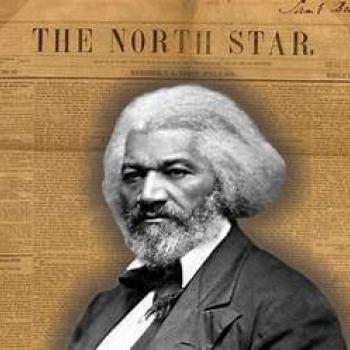
Inspired by William Lloyd Garrison's abolitionist newspaper, The Liberator, Frederick Douglass collaborated to found The North Star in 1847. The paper, named for the star that guided runaway slaves to freedom from the South, was published weekly and included current news from the abolitionist movement, as well as editorials, articles, poetry, and advertisements. The North Star took as its motto “Right is of no Sex—Truth is of no Color—God is the Father of us all, and we are all Brethren” and was published until 1851.
After briefly sharing some background knowledge about Frederick Douglass, project or provide students copies with “Our Paper and Its Prospects,” the opening editorial from The North Star’s first edition. Read the text aloud while students follow along, explaining to students that Douglass is following a publishing convention when he uses “we” to refer to himself. Then lead a discussion around the text using questions such as
- What do you notice about the language and style of this piece? Who is its likely audience?
- What does Douglass explain are his purposes in founding the paper?
- How does Douglass characterize the ways in which African American and white citizens can work toward the abolition of slavery?
- How does Douglass use elements of his life story to explain his motivations?
- How is this piece similar to or different from a modern editorial?
After discussing the editorial, have students brainstorm social issues they feel passionately about. Then invite them to consider the needs of a modern audience and write an opening editorial for an imaginary publication devoted to the betterment of their cause.
This biographical entry on Douglass from the Encyclopedia of Southern Culture offers a brief but excellent overview of his life and impact.
The History Channel’s Douglass page offers biographical information and links to related video resources.
The Library of Congress collection of Douglass’s papers includes categories such as diaries, family papers, general correspondence, legal files, and more.
This collection includes letters from abolitionists, articles and accounts written by Frederick Douglass included in three of his famous newspapers.

Since 1985, March has been filled with sound as music in our schools is celebrated around the nation. Sponsored by the National Association for Music Education, the event focuses the nation's attention on the need for and benefits of quality music education programs. Schools and community groups celebrate with creative activities and events, based on a designated theme. This year's theme is "Music Inspires"
American film and theater have many examples of musical works that have been adapted from a novel or other non-musical version. Explore the effects of music on a story by examining one example with your class.
- First, brainstorm a list of such works, which could include examples such as A Christmas Carol, Les Misérables, and numerous Disney films.
- Next, after reading a story, novel, or play (or viewing a non-musical version on film), have students view the musical version.
- Then, have students discuss the differences they observed between the two versions of the story. Were the characters, setting, and main events the same? In the musical version, what role did song lyrics play in telling the story? Do both versions seem equally dramatic (or funny, or sad, etc.)? Which version do students prefer? Why?
- Finally, have students select a text that you've read in class. They should imagine that they are a songwriter working on a musical adaptation of the story. They can work alone or in groups to write lyrics to one song. They can use the tune to a song they know or compose their own music. Students should be able to explain how this song would help tell the story and which character or characters sing the song. Students can perform their songs for the class or use the interactive CD/DVD Cover Creator to design a cover for the soundtrack. More tips are available for use with this tool.
This site, from NAfME, offers information about the history of Music in Our Schools Month, as well as suggested activities, and advocacy information.
The Kennedy Center's ARTSEDGE provides tools to develop interdisciplinary curricula that integrate the arts with other subjects. Their site offers free standards-based lessons and other student and professional development materials, including Perfect Pitch, an exploration of the orchestra.
This site from the National Arts Centre offers media-rich resources for kids and their teachers and parents related to music and orchestra, including an instrument lab and music library.

LeVar Burton was born in 1957 in West Germany, while his father was in the military. He hosted 155 episodes of Reading Rainbow since its premiere in 1983 until 2006. Burton's first television appearance, though, was as Kunta Kinte, in the miniseries Roots (1977), based on the novel by Alex Haley.
Burton also appeared as a member of the cast of Star Trek: The Next Generation television series; portrayed Martin Luther King, Jr., in the film Ali; and produced and hosted the documentary The Science of Peace.
Choose complementary Reading Rainbow selections to explore a topic using fiction and nonfiction.
For example, Ruth Heller's Chickens Aren't the Only Ones and Patricia Polacco's Rechenka's Eggs both explore the subject of animals that lay eggs. On the topic of dinosaurs, you'll find William Joyce's Dinosaur Bob and His Adventures with the Family Lazardo and Aliki's Digging up Dinosaurs. After reading both books, your students can compare the selections using the interactive Venn Diagram.
Have students work individually or in small groups to write a poem, song, article, journal entry, or comic strip about the same topic. When all the pieces are completed, compile them in a book or create a bulletin board display.
The home of Reading Rainbow, with the mission to instill the love of reading & learning in children.
PBS offers a variety of resources for parents to promote literacy in young children. Resources are offered in both Spanish and English.
LeVar Burton to Educators: ‘I See You’
An interview on literacy with LeVar Burton

The 100th day of school is celebrated in schools around the country, usually in mid-February. Your class will enjoy a break from the normal routine as they practice math skills using games and activities based on the number 100. Some teachers may also include a visit from "My Hero, Zero" on day 100 (or on dates ending in zero, every tenth day, etc.).
Have your class work as a whole and in small groups to create a class "100th Day" book. First, have students break into small groups to brainstorm a list of possible topics for the book. Some possibilities include:
- 100 poems
- 100 ways to improve the Earth (our school, etc.)
- 100 people who changed history
Each group should nominate one idea to be considered by the whole class. Have the class vote on their favorite topic, brainstorm specific ideas, and then create a book based on this topic. Proudly display your book in your classroom or school library!
This page provides links to numerous Scholastic resources for a 100th-day-of-school celebration. Included are short activity ideas, a booklist, student poetry resources, links to other websites, and several lesson and unit plans.
This page includes suggestions for simple activities to celebrate the 100th day of school. Activities were submitted by teachers around the world and include a wide variety of ideas.
One Hundredth Day of School teaching ideas and activities inclusing booklists.
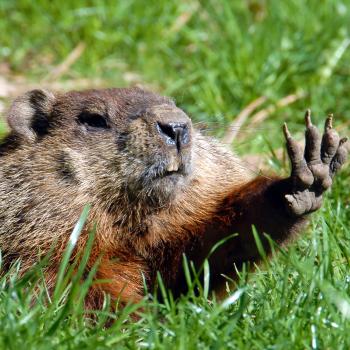
Groundhog Day is observed each year on February 2. The famous groundhog Punxsutawney Phil is pulled from his simulated burrow in Punxsutawney, Pennsylvania to make the most anticipated weather forecast of the year. The legend says that if the groundhog sees his shadow, there will be six more weeks of winter. If Punxsutawney Phil does not see his shadow, spring is just around the corner.
Observe Groundhog Day in your classroom with your own shadow-watching activity.
Begin by bringing in a stuffed animal to stand in as the "groundhog." Have students select a name–something catchy–such as "Fairview Fred" or "Springfield Sal." Then plan a Groundhog Day celebration by choosing a location on school grounds and inviting other classes to attend the event.
Model your celebration after the annual event in Punxsutawney by including a variety of activities such as a scavenger hunt, storytelling, and games. Punxsutawney residents always include music in their celebration. Invite your school's band or chorus to provide live entertainment. At a predetermined time, have your "groundhog" look for his shadow, and then make the official announcement.
Later, have students watch or listen to news reports describing what happens in Punxsutawney on Groundhog Day and compare it with their predictions. Then, watch the calendar to see if your forecast is accurate!
This page from the Stormfax Weather Almanac offers information about the origins of Groundhog Day. There is also a record of past Groundhog Day predictions and information about the Groundhog Day film starring Bill Murray.
Check out the area for Teachers to find activities, lesson plans, and games to share with students during your Groundhog Day festivities. Students can even submit poetry or video for inclusion on the site.
Students can read weather-related folktales and proverbs at this American Folklore website.
Students can meet real groundhogs from Lums Pond State Park in Delaware at this rich multimedia site. The site includes basic information about groundhogs, as well as audio, video, and images.

César Chávez led the efforts to improve working conditions for California's migrant farm workers and formed the United Farm Workers Union. Chávez was committed to non-violent protest. He conducted several fasts and led a number of strikes and grape boycotts to further the cause of field workers.
Chávez was able to accomplish a great deal in his lifetime, promoting the civil rights and improving the working conditions of migrant farm workers. Have your students name other leaders who, like Chávez, have used non-violent means to achieve their ends. Some examples could include Martin Luther King, Jr., Mohandas Gandhi, or Susan B. Anthony.
Then, have students work in small groups to research one of these civil rights leaders. Students should find information about the leader's philosophy, the social cause for which he or she was fighting, and some of the specific methods he or she used for peaceful protest. Next, have students work, in their groups, on a creative writing piece. Have students imagine how history might have been different if this person had never lived, or had held a different philosophy. Then ask them to write a short story (or alternately, a play or poem) about this imagined history.
The Library of Congress offers this brief description of César Chávez' work. The page includes a timeline and links to related information.
This resource, based on the PBS film The Fight in the Fields, provides information on Chávez' struggle. Features include information about the film, a timeline, and links to related resources.
This biography, from the California Department of Education, is intended for intermediate students. The detailed account includes related images.
This Internet activity from SCORE encourages upper grade students to select from 11 American labor leaders, including Chávez, and to create museum exhibits highlighting their accomplishments.

Each year, the American Library Association recognizes a multitude of books and authors for their quality and impact. Ranging from awards for young children's books such as the Caldecott and Newbery Medals, to the Belpré award for books celebrating Latino culture, to the Sibert Medal for distinguished informational books, the ALA recognizes a wide range of outstanding material for children, young adults, and adults.
The American Library Association Book, Print, and Media Awards for Children and Young Adults include:
- John Newbery Medal
- Randolph Caldecott Medal
- Coretta Scott King Author and Illustrator Awards
- Michael L. Printz Award
- Margaret A. Edwards Award
- Andrew Carnegie Medal
- Robert F. Sibert Informational Book Medal
- Pura Belpré Award
- Mildred L. Batchelder Award
- Schneider Family Book Award
Visit the ALA pages for each award. Select from the list above the award most relevant to your students' ages and interests. Have your students select a winning author or illustrator from the award set you have selected, and instruct them to complete one of these activities:
- Write or illustrate a story in your chosen author/illustrator's style.
- Conduct Internet research on your author/illustrator and then stage a mock interview based on your research.
- Present a book review of one of your chosen author/illustrator's "must-read" titles.
This Scholastic webpage includes links to past winners of ALA awards. Many titles offer links to additional resources, including author biographies, discussion guides, and more.
This booklist includes 100 top recommendations from the National Public Radio for children and young adults.
New Hampshire Public Television provides videos and teacher guides for 27 books, which have won either the Caldecott or the Newbery Medal.

Illustrator Mary Azarian won the 1999 Caldecott Medal for Snowflake Bentley, written by Jacqueline Briggs Martin. Azarian is a skilled woodcut artist who is strongly influenced by her love of gardening. You can enjoy additional examples of her work in A Gardener's Alphabet, Farmer's Alphabet, and Barn Cat, written by Carol P. Saul.
There are ways to bring snow to your students regardless of the weather outside your classroom. If you're fortunate enough to have a supply of snow outside your window, take a mini field trip outside with your students. Have them each hold a piece of black paper to "catch snowflakes" for inspection. Be sure to have magnifying glasses available so students can take an up-close look. Ask students to sketch some of the structures they observe and then compare their drawings to identify both similarities and differences among snowflakes.
If you're located in a warm winter climate, you can still offer a snowflake experience to your students. The SnowCrystals.com website offers a tutorial for Growing Your Own Snow Crystals. (Use caution as this experiment uses dry ice.) These homegrown snow crystals can be closely examined by students using magnifying glasses or microscopes.
This website provides snow-related data and resources, including images, data sets, articles, and more. Students can use the information found here for activities such as research projects or creating snow quizzes and snow books.
Students can access stunning microscopic images of snow crystals on this page. Connect a study of geometry and art by having students create their own unique snowflake designs.
This website provides an informative look at the science of snow. It suggests experiments and activities, and also offers a snowflake guide and frequently asked snow questions.
This interactive resource allows users to create original snowflakes.