
After nearly a century of advocacy, National American Indian Heritage Month was first recognized through joint resolution by Congress in 1990. Now recognized annually, November is a time to learn more about the history and heritage of Native American peoples.
Engage your students in an exploration of Native American heritage through a study of Native American pourquoi tales. Pourquoi tales explain why something or someone, usually in nature, is the way it is. Have your students read a variety of Native American pourquoi tales, explore the cultural origins and signficance of these stories, and share similar stories from their own cultures.
This First People website includes a selection of tales, including many pourquoi tales. After reading these tales and identifying pourquoi story elements, brainstorm with the class a list of animals with distinctive features or a list of natural events such as lightning, rain, or snow, and then have students write original pourquoi tales for how they came to be. When students finish, they can publish their tales using the ReadWriteThink Printing Press. The "booklet" option allows students to add additional pages to accommodate longer stories. After printing the finished product, students can add illustrations to their stories.
This website offers an extensive list of resources related to Native American heritage and culture. Teachers and students can find links to Internet resources, selected Smithsonian online exhibits, and recommended reading.
This radio series, available in audio and text, features elders, historians, storytellers, artists, and leaders from thirteen American Indian Nations along the Lewis and Clark trail. These elders share their history, stories, culture, and music in a series of hour-long radio broadcasts.

Election Day is held on the Tuesday after the first Monday in November. The first uniform Election Day was observed on November 4, 1845.
Have your students get involved with Election Day by creating posters to advertise Election Day and encourage registered voters to exercise their right to vote. Have small groups of students brainstorm lists of reasons why people should vote. Then, have them work in their groups to create posters using poster paper and paint or felt-tipped markers. Alternatively, they can use the ReadWriteThink Printing Press to create flyers. Students can also write persuasive essays that underscore the importance of getting out to vote or create a public service announcement or other multimedia persuasive piece. The ReadWriteThink lessons MyTube: Changing the World with Video Public Service Announcements and Students as Creators: Exploring Multimedia can be adapted for use with this activity.
This website, from the National Museum of American History, looks at the history of voting methods in the United States. The resource explores how ballots and voting systems have evolved over the years as a response to political, social, and technological change, transforming the ways in which Americans vote.
This resource, from PBS, introduces elementary-aged children to the importance of voting in a fun, interactive way.
This website, from the Library of Congress, focuses on some of the memorable elections since the first uniform Election Day on November 4, 1845.
This site includes a timeline of media coverage of important presidential races and presidencies.
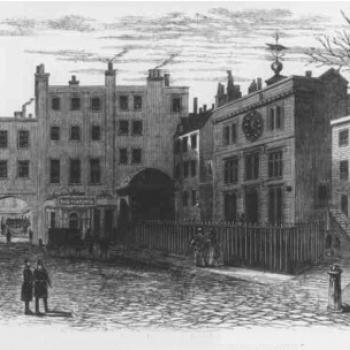
In June 1829, the British Parliament established Greater London's Metropolitan Police, popularly known as "bobbies." Scotland Yard, the site of their first headquarters, opened on September 29, 1829, and eventually became the official name of the force.
Visit Scotland Yard's Crime Prevention Page and check out pages with advice on such topics as driving, mobile phones, and personal safety. Explore the resources on the Scotland Yard site and ask students to compare the advice given to London's citizens to the advice and tips available from your local police department. Ask students to hypothesize the reasons for the differences that they see-are the differences due to the different laws in the different countries, or something else?
After learning about Scotland Yard, encourage students to read fiction, such as the books listed in the text section below, in which Scotland Yard is featured. Students can use the interactive Mystery Cube to analyze the mystery book they read or to plan their own mystery story. More tips are available for the Mystery Cube.
In the history section of the Scotland Yard site, students can read about the establishment of one of the world's most well-known police departments.
This collection of stories from Scotland Yard includes details on famous cases. Be sure to review the collection to find stories that are appropriate for your students.
Part of the Crime, Punishment and Protest through Time collection, this question-and-answer style site provides details on such topics as why citizens originally opposed the founding of Scotland Yard.

F. Scott Fitzgerald began writing at an early age and published his first novel at the age of 23. He is best known for his novel The Great Gatsby, considered one of the great classics of twentieth-century literature, as well as the globe-trotting and ultimately tragic lifestyle he lived with his wife Zelda.
After reading The Great Gatsby, explore the novel's point of view with your students. Ask students to consider how the story, told from the point of view of the narrator Nick Carraway, might be different from another perspective. For instance, how might the novel change if it were retold from Gatsby's point of view? If it were retold from Daisy Buchanan's or Myrtle Wilson's point of view?
Have students work in pairs. Each pair of students should select a chapter from the novel, and then rewrite the chapter from the point of view of a different character. When they've completed their retellings, ask each pair to compare and contrast their papers. How were their chapters different? Similar? How did their chapters compare to the original?
Bring the class together and lead a discussion about the role of perspective in The Great Gatsby, and why Fitzgerald may have chosen the perspective he used in writing the novel.
The page from the University of South Carolina includes complete texts, articles, essays, and images from Fitzgerald's scrapbook.
This PBS resource offers information about both Fitzgerald and his wife, Zelda. Included are images and biographical information.
This University of Adelaide Library e-text features links to each chapter of The Great Gatsby. A link to the complete text is also found on this page.
This Library of Congress literature unit explores primary sources from the 1920s in the context of Fitzgerald’s novel and then has students create a newspaper inspired by both the primary sources and fictional events from the novel.
This video, Part 1 of 2, provides students with some help in understanding the major plot lines of The Great Gatsby.
This video, Part 2 of 2, provides students with some help in understanding the major plot lines of The Great Gatsby. If you watch it on YouTube, take note of the "spoiler alert" for students.

American writer William Carlos Williams was born in Rutherford, New Jersey, in 1883. As a medical student at the University of Pennsylvania, Williams met and became friends with Ezra Pound and Hilda Doolittle (who used the pseudonym H.D.), and these friendships affected his work as a writer. Over the course of his life, Williams wrote poetry, novels, short stories, essays, and plays.
Williams' poems are often used in the classroom as models for poetry writing. In addition to the resources in the lesson plans below, explore the student poems at Plum Good Poetry, from Barry Lane's Discover Writing website.
Celebrate Williams' birthday by asking your students to write imitation poems of their own. Choose a poem and make copies for students or write the poem on the board. With students, take the opportunity to review grammatical structures as you work through the way that the poem is written. Pay attention to sentences, phrases, and parts of speech. With the structure of the poem identified, ask students to write original imitations, using the same sort of sentences, phrases, and parts of speech that Williams did. Publish your finished work with the ReadWriteThink Printing Press or Stapleless Book.
For more on imitation poems, you may wish to use the ReadWriteThink lesson Literary Parodies: Exploring a Writer's Style through Imitation.
The Academy of American Poets page for Williams includes biographical information and the text of many of Williams' poems. The site includes an audio recording of the poet reading his poem "To Elsie."
This collection of resources from the Modern American Poetry website includes biographical information, photos, critical information, and poems.
In this Prairie Home Companion episode, private eye Guy Noir investigates a poetic catastrophe with the help of the Poet Laureate of the United States, Billy Collins, who shares parodies of Williams' "This Is Just to Say." Both transcript and audio versions of the show are available.
The University of Pennsylvania offers this collection of sound recordings of Williams reading his poetry at several events between 1942 and 1962.
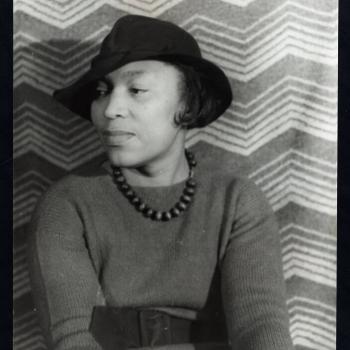
Their Eyes Were Watching God by Zora Neale Hurston was published in 1937. The novel tells of the life and loves of Janie Crawford in a story that is highlighted by its use of storytelling, black folklore, and dialects.
Their Eyes Were Watching God explores stories and storytelling. To introduce the novel in your class, ask students to brainstorm the kinds of stories they know. If students offer specific stories, list the stories and then go back through the list and divide the stories into categories such as family stories, mythology, folklore, urban legends, and so forth.
Next, ask students where these stories come from. Students should identify such sources as experience, books, parents, ancestors, history, friends, nature, fears, dreams, childhood, and home. As students begin reading the novel, return to these questions-identifying the kinds of stories that are being told, where the stories come from, and why they are being told.
This Today in History entry from the Library of Congress celebrates Hurston's birthday. Hurston was born on January 7, 1891 in Eatonville, Florida, the first incorporated black town in the United States.
This site offers biographical information about Hurston, lists of her books, related news, links to additional resources, and guides for educators and reading groups. Included is an Instructor's Guide for Their Eyes Were Watching God.
The Library of Congress offers a collection of plays written by Hurston but unpublished until 1997, well after her death. The plays reflect Hurston's life, as well as her studies of African American folklore.
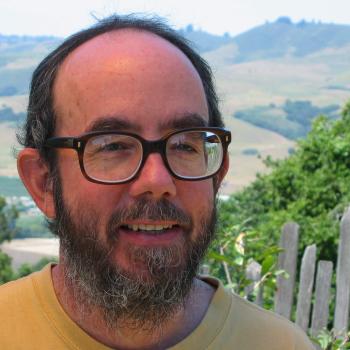
Novelist and poet Paul Fleischman was born in Monterey, California, in 1952. He is the author of the Newbery Award-winning book Joyful Noise: Poems for Two Voices, and numerous works of fiction, non-fiction, drama, and poetry, as well as picture books. Fleischman won the Scott O'Dell Award, which is awarded to the year's best work of historical fiction for children or young adults, for his Civil War novel Bull Run.
Fleischman grew up in a home where reading and writing were very important-his father, author Sid Fleischman, won the Newbery Award for the novel The Whipping Boy. Paul Fleischman has fond memories of his father reading books aloud to the family, of listening to the radio with his mother, and exploring the many books in his father's study. Share some of Fleischman's memories with your class by reading his essay "My House of Voices."
Invite students to brainstorm a list of the voices that fill their own homes (or another location, such as their school or a community building). With their lists for inspiration, ask students to write a descriptive essay, similar to Fleischman's essay, that gives a tour of the voices in these places. Younger students might write a collaborative essay, with individual students or small groups cataloguing the voices of different areas of a place that they have all visited, such as the school or a nearby park.
In addition to reviewers' comments, this site includes excerpts, biographical information, and articles, including "From Seed to Seedfolks," which provides background on Seedfolks.
Candlewick Press offers this guide to Fleischman's first published play, Zap. Included are discussion questions and activities.
This teacher's guide to Fleischman's Seedfolks includes an interview with the author and specific activities and curriculum connections.
EduPlace offers this brief biography of Paul Fleischman, in which the influences of his childhood and of music on his work is highlighted. Also included is a selected list of Fleischman's books.

Children's favorite Where the Sidewalk Ends by Shel Silverstein was published on this day in 1974. While Silverstein's rhymes may have been simple and catchy, his complex and thoughtful themes stick with his readers long after childhood. Silverstein was also a songwriter of such hits as "A Boy Named Sue" and "The Cover of The Rolling Stone."
Everyone remembers Shel Silverstein. Ask seniors in high school who their favorite poet is and half will give his name. This activity can begin for middle and high school students by asking them what they remember about Silverstein. For lower grade levels, introduce them to a short verse of his poetry like the one below, and ask them for their general impressions: If you had a giraffe . . . and he stretched another half . . . you would have a giraffe and a half . . . One quality of Silverstein's work is that even though it is often fantastical, it tends to be quite visual. Ask students to draw what they imagine when they read such lines as "If you're a pretender, come sit by my fire" or "Some whatifs crawled inside my ear."
After students have presented their drawings, ask them to write a line or two of their own that continues the passage and matches the flow and style of Silverstein's work. Then have students paraphrase the author's purpose in writing the poem. This is where they will find that though the words of a Silverstein poem are easy enough, the ideas are often difficult to communicate.
This entry from the Academy of American Poets includes a biography, bibliography, and samples of Silverstein's poetry.
This site includes resources related to Silverstein's poetry for parents and teachers, as well as an area "For Kids Only!"
This site includes an easy-to-read biography of the author and analysis of his work.
HarperCollins, publisher of Silverstein's books, offers a guide to using Silverstein's poetry in the classroom. The guide includes printable sheets for students.
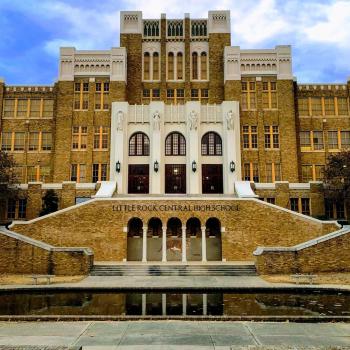
On September 23, 1957, police officers had to be stationed around the Central High School campus to ensure the safety of the Little Rock Nine, a group of nine African American students who were to attend the school and, thus, break the color barrier. The right to an equal education was granted to all African American students by the United States Supreme Court's 1954 decision in Brown v. Board of Education.
Begin by viewing some of the footage from the actual event (you can access some of the footage at the PBS website). Ask students to jot down the thoughts and feelings they think might have been going on in the minds and hearts of the Little Rock Nine. Have students use these notes as the basis for a bio-poem that might have been written by one of the African American students on that historic day.
An alternative activity might be to show students portions of "The Oprah Winfrey Show" that reunited the Little Rock Nine with some of the classmates who threatened and taunted them upon their arrival at Central High School. After viewing each segment, ask students to summarize their reactions to what they have seen and heard on the program. Were they surprised by anything they observed? If so, what surprised them and why?
This site celebrates the 50th anniversary of the integration of Central High School. Links to the historic event are provided, including links to information about the nine African American students who attended the school.
In celebration of the 50th anniversary of the Supreme Court decision that paved the way for the integration of Central High School, NPR compiled an extensive collection of resources, including interviews with Supreme Court Justice Thurgood Marshall.
This Teaching Tolerance page includes resources that focus on primary documents from Brown v. the Board of Education, poetry, arts, and critical thinking. Additional links at the end connect to photographs and more classroom resources.
PBS offers a section on Southern School Desegregation as part of its Eyes on the Prize: American Civil Rights Movement feature.

The United Nations has declared September 21 as the International Day of Peace. In a message commemorating the Day in 1995, Secretary-General Boutros-Ghali stated that "the world, once more, cries out for peace. And for the economic and social development that peace alone can assure... Let us keep our goal clear and simple... Let us work for peace."
For middle and high school students:
- Have students brainstorm a list of conflicts that are happening around the world: Israel-Palestine, Iraq, etc.
- Ask students to generate a list of reasons why people fight: religion, economics, etc.
- Have students form groups and assign each group one reason from the list they generated above. In groups, students should discuss and be ready to present possible solutions that could address the causes. It is important to emphasize that students are not trying to solve a particular world crisis, but rather are trying to identify solutions that can work in general (education, tolerance, debt relief, etc.).
- The groups could then create posters that promote their particular solution. See the lesson plan Designing Effective Poster Presentations for tips and ideas on making posters. For elementary-age students, follow the same process as above, but instead of looking at the world, ask students to focus on conflicts, reasons, and solutions in their school.
This site contains a number of links to other websites dealing with ways to become active in promoting peace around the world and in the local communities.
This site, part of the United Nations Cyberschool Bus, contains five curricular units that focus on ecology, tolerance, critical thinking, social justice, and global citizenship.
Read about the outstanding people who have been awarded the Nobel Peace Prize on the official site for the award. The site includes biographies, lectures, and additional information for all the award winners as well as educational material.